Monday, November 05, 2007


MySpace fights back
Or maybe i should say... MySpace punches first.
Just one day before the announcement of the new advertising technology of facebook, Myspace upped the stakes by announcing their own "hyper targeting" system. What sound impressive is their claim that more than 50 advertisers have signed up to the MySpace scheme, including Procter & Gamble, Microsoft, Ford and Toyota.
And yet again, this raises the ever growing issue of privacy, but MySpace have prepared an answer for that as well. They say that the company’s new “hyper targeting” system should not generate the same sort of concerns. “There’s a big difference between behavioural targeting and our interest-based targeting,” he says. “The difference is that our users are in full control – what they say about themselves is public.”
More info at:
Just one day before the announcement of the new advertising technology of facebook, Myspace upped the stakes by announcing their own "hyper targeting" system. What sound impressive is their claim that more than 50 advertisers have signed up to the MySpace scheme, including Procter & Gamble, Microsoft, Ford and Toyota.
And yet again, this raises the ever growing issue of privacy, but MySpace have prepared an answer for that as well. They say that the company’s new “hyper targeting” system should not generate the same sort of concerns. “There’s a big difference between behavioural targeting and our interest-based targeting,” he says. “The difference is that our users are in full control – what they say about themselves is public.”
More info at:
Google to boost mobile internet
By Richard Waters in San Francisco and Paul Taylor in New York, FT
Published: November 5 2007 16:58
Google vaulted past Microsoft on Monday by unveiling a long-awaited mobile strategy in a bid to speed up the use of the internet on mobile phones.
The plan, involving a new software platform for mobile handsets and a broad international alliance of more than 30 handset makers and communications companies, could prove a disruptive force to the economics of the mobile industry in the long-term, according to analysts.
Read more at http://www.ft.com/cms/s/0/0e9c2da4-8bbf-11dc-af4d-0000779fd2ac.html
Sunday, November 04, 2007
Oprah on YouTube
Oprah Winfrey Show Launches YouTube Channel
Oprah Winfrey Show Launches YouTube Channel
NEW YORK (AdAge.com) -- Guess who's the latest YouTuber?
Oprah's YouTube channel represents the largest external media partnership Ms. Winfrey has entered for her content.
Oprah Winfrey launched her first dedicated YouTube channel today through her Harpo Productions, offering up show highlights as well as behind-the-scenes footage from the "Oprah cam," Harpo Studios' green room and candid moments backstage. In a YouTube message to fans today, Ms. Winfrey said the channel was so new "we don't even have a name for [it.] So we're just going to call it, 'Hey, what about Oprah's channel?'"
The partnership will be formally announced on "The Oprah Winfrey Show" Nov. 6, when YouTube founders Chad Hurley and Steve Chen will be special guests, along with YouTube all-stars such as P. Diddy's new assistant, the "evolution of dance" guy and Tyson, the skateboarding dog. Of the latter, Ms. Winfrey said in her message, without irony: "If we all had the passion and intensity of that dog then everybody would be successful."
The Oprah channel represents the largest external media partnership Ms. Winfrey has entered for her content; she already hosts a comprehensive archive of show clips on her own website, dating back to 1999. Tim Bennett, president of Harpo Productions, described the YouTube relationship as more of a social-networking play.
"It provides another platform for people online to communicate with us and share in some of the one-of-a-kind experiences that occur behind-the-scenes at 'The Oprah Winfrey Show,'" he said.
Ms. Winfrey has partnered with other media companies before to share behind-the-scenes footage of her show, most notably with the Oxygen Network in 2002. Her "Oprah After the Show" was comprised of 60 minutes of additional guest interviews and backstage footage, not unlike what will be available on the new YouTube channel. But after four years, the show was quietly removed from Oxygen in 2006, around the time Ms. Winfrey cashed out her investment in the fledgling women's network, which was recently acquired by NBC Universal. "Oprah After the Show" still lives online, however, in archive form.
And if strong ratings were equal to page views, then Ms. Winfrey's channel should have no trouble gaining impressions. "The Oprah Winfrey Show" remains the undisputed ratings champ in daytime talk, regularly reeling in more than 5 million viewers daily.
Saturday, November 03, 2007
Verizon Shows Off Its Future Tech
There is an interesting NYTimes article on the future of Verizon mobile phone technology. The article focuses on the seamless connection of devices such as PCs, Mobile Phones, TVs, etc depending on where the user is. The article suggests that much of the technology already exists and their application to consumer devices is just a matter of time. I feel like this is long overdue and personally can't wait for these transitions as it doesn't seem there should be a need for cutting off email or IM (blog posts??) conversations due to user movement, nor, if someone has a preferred communication technique, such as texting vs. IMing, should they not be able to send and receive messages one way while their counterpart uses their own preferred application!
VERIZON SHOWS OFF ITS FUTURE TECH
http://www.nytimes.com/cnet/CNET_2100-1039_3-6216358.html?_r=1&oref=slogin
"Imagine how much easier life could be if your phone company's network was smart enough to route your messages to the device you're using right now, freeing you from keeping track of independent and separate e-mail, SMS, and instant messaging accounts.
Or what if you could start playing your favorite game, Bejeweled, on your PC and then continue playing the same game without interruption on your cell phone as you leave the house to commute to work.
For Verizon customers, services such as these may be just around the corner. Last week, Verizon invited several members of the press to its development facility here, where Chief Technology Officer Mark Wegleitner and his team of executives showed off how some of these innovative services might work."
Will Facebook join OpenSocial?
OpenSocial is a common set of APIs that allow developers to write social applications that span multiple social networks. MySpace just joined the group which now leaves Facebook as the last big social network that is not part of the initiative.
"Our partnership with Google allows developers to gain massive distribution without unnecessary specialized development for every platform,” said Chris DeWolfe, Chief Executive Officer and co-founder of MySpace. “This is about helping the start-up spend more time building a great product rather than rebuilding it for every social network. We’re pleased to collaborate with Google to establish a landmark standard for social applications.”
"Our partnership with Google allows developers to gain massive distribution without unnecessary specialized development for every platform,” said Chris DeWolfe, Chief Executive Officer and co-founder of MySpace. “This is about helping the start-up spend more time building a great product rather than rebuilding it for every social network. We’re pleased to collaborate with Google to establish a landmark standard for social applications.”
Thursday, November 01, 2007
FTC Wants Tighter Control Over Online Ads
In today's NYTimes article, the FTC chairman, Jon Leibowitz said that the FTC will be exerting a tighter control on online ads. Particularly, he's concerned by ads towards children and privacy issues around data collection. He doesn't say what exactly the FTC will be doing to exert a tighter control. The article does say that there should be more opt-outs and easier to understand privacy policies. This will probably get more interesting as the FTC figures out its policies as it listens to privacy lobbyists and internet businesses.
Here's the link to the full article.
Here's the link to the full article.
T-mobile claims color Magenta
T-mobile is suing Dutch software company and radio channel for using color Magenta.
T-mobile registered the color Magenta at the European patent office a short while ago. Now it is suing small companies in the Netherlands to test its case. According to T-mobile, companies are not allowed to use the color for marketing purposes, website and other communication.
It's unclear when T-mobile will start suing in any of the other 19 European countries where they registered the color.
T-mobile registered the color Magenta at the European patent office a short while ago. Now it is suing small companies in the Netherlands to test its case. According to T-mobile, companies are not allowed to use the color for marketing purposes, website and other communication.
It's unclear when T-mobile will start suing in any of the other 19 European countries where they registered the color.
Publishing: Content to Mobile & MKTG
Hey all,
So a mobile media company I've worked with has been signing deals with publishers, mostly magazine, after developing a platform that allows them to easily produce and deliver text and visual/media content to subscribing customers. Thus, Wired Magazine can pay a monthly fee based on the number of subscribers and traffic to produce a mobile version of their mag. The idea is that the magazine wouldn't charge subscribers to the feature, but rather use it as a value add service and marketing tool to promote greater subscription, etc.
Q: In light of increasing accessibility to the internet via mobile devices, can such a platform find a market in the future or serve as a meaningful marketing/advertising tool? So far, the primary benefit to the publishers, in contrast to competitors, appears to be the ease-of-use it offers in transferring content of different formats (not just text), but could there also be some opportunities for expanding advertising potential? Anyone know of any competitors emerging to provide similar services or technologies?
So a mobile media company I've worked with has been signing deals with publishers, mostly magazine, after developing a platform that allows them to easily produce and deliver text and visual/media content to subscribing customers. Thus, Wired Magazine can pay a monthly fee based on the number of subscribers and traffic to produce a mobile version of their mag. The idea is that the magazine wouldn't charge subscribers to the feature, but rather use it as a value add service and marketing tool to promote greater subscription, etc.
Q: In light of increasing accessibility to the internet via mobile devices, can such a platform find a market in the future or serve as a meaningful marketing/advertising tool? So far, the primary benefit to the publishers, in contrast to competitors, appears to be the ease-of-use it offers in transferring content of different formats (not just text), but could there also be some opportunities for expanding advertising potential? Anyone know of any competitors emerging to provide similar services or technologies?
Wednesday, October 31, 2007
OpenSocial: Getting Social Networks To Talk
 Tomorrow Google will be announcing a new social networking initiative called OpenSocial, which will provide a common, free platform for social networking sites to open up their data to third-party application developers. Social Networks which adopt the standard will be able to share information about user profiles, friends, and activities with other sites in a standardized way, which should greatly facilitate the transfer of information about the social graph between services. In addition to their own Orkut site, Google has partnered with Ning, LinkedIn, Hi5, Friendster, Salesforce.com, Oracle, and others, all of which will be supporting OpenSocial.
The rapid uptake of the Facebook Platform since its May launch has left little doubt about the value of allowing third parties to build functionality on top of existing social networks. Their are currently over 7,000 Facebook apps deployed, and these apps are getting about 32 million hits per day. This frenzied activity has been one of the primary drivers of the company's stratospheric $15 billion valuation. Yet, all of this value creation remains locked within Facebook's "walled garden". OpenSocial is a significant step towards breaking down the walls between the currently-siloed social networks, and so threatens to take considerable wind out of Facebook's sails.
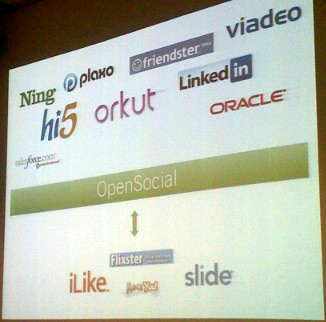
Marc Andreessen, founder of Ning (not to mention Netscape), has an excellent overview of the new standard. TechCrunch has their own overview, as well as a preview gallery of applications built using OpenSocial.
Search Engine Optimization Basics
A pretty useful article on SEO basics.
While the nature of marketing web sites has continually evolved from a focus on optimizing text to include an array of media optimization such as images, audio, video and content delivery formats like RSS and mobile, there continues to be a significant value in basic SEO.
In many cases, small businesses or small web sites especially, there’s a lot the site owner or webmaster/developer can do to improve the search engine friendliness of the site, i.e. fundamental content optimization, before pursuing outside help. However, those that do end up outsourcing on-page optimization and link building often do so because of a lack of resources or the desire to leverage expert experience to avoid big mistakes that can end up costing more to fix than a SEO consultant in the first place...
http://www.toprankblog.com/2007/10/search-engine-optimization-basics/
Web Users Now Spend Half Their Time Visiting Content, Far Outpacing Time Spent With Search, Communications And Commerce
| An interesting article that came out a few months ago shows that internet users today are spending nearly half their online time visiting content, a 37% increase in share from four years ago. |
If you see below, the index is basically showing that over the last four years, the primary role of the Internet has shifted from communications to content

| ||||||||||||||||||||||||||||
* 2007 includes January through May.
More people seem to be going to the internet now for news, weather, and information rather than more traditional means (newspaper, TV, radio, etc). Internet speed and search quality are also likely factors in more people searching for content online.
http://64.13.250.16/newsletter.php?newsId=242&newsType=pr
The Ads You Won't Take Home To Mom?
There were a couple of interesting articles in October highlighting studies about which advertising mediums earn the greatest trust by consumers. Seems like as online ads continue to grow and newspapers, magazines and TV scramble to keep their business models afloat, the true value of an ad is being overlooked. According to Nielsen, the tradional forms of ad messaging far outscore their new online counterparts. Obviously there are probably lots of reasons for this discrepancy. First, as mentioned in class, online advertising is both blessed and cursed by its low barrier to entry. Almost any sized company selling virtually any type of product can get its ads placed on 1000s of websites. The cost of TV and print advertising on the other hand is quite expensive and has a much tighter supply of inventory so the companies that can utilize these ad channels are basically pre-qualified as "legitimate" brands. Within the online advertising inventory I am sure that name brands from auto companies, big name retailers and large media companies earn as much trust as their offline counterparts. It's just when evaluating online advertising as a whole, there is tremendous trust dilution from the myriad of ads from small unknown brands and out-and-out fraudulent scams.
One positive highlight of the study was that among all online messaging, recommendations from other consumers was the most trusted form of "advertising." So can companies leverage customer recommendations to build brand awareness and buzz for its products? Maybe so, but it better be careful how it does it. Another study in October by WPP Group PR shop Burson-Marsteller indicates that online "influencers" - those most likely to recommend a product to friends - are beginning to distrust the opinions they find on product review sites and forums. There is growing skepticism by these brand advocates over the credibility of positive reviews with 30% believing that fake reviews are becoming a significant problem.
That being said, brands should still focus on building positive online "word of mouth" through legitimate means. Viral applications and user generated content are two ways that companies can provide customers a positive brand experience that they will share with others. If you have a good product then raising awareness through these types of user-focused campaigns can be a real winner among influencers and the rest of us alike.
Visit the following links to read the full articles referenced above:
"Do Web Ads Lack Credibility?", AdWeek, 10/02/07 (http://tinyurl.com/2bhh4m)
"Caveat: Influencers Growing Wary of Fakes", AdWeek, 10/23/07 (http://tinyurl.com/2699ye)
One positive highlight of the study was that among all online messaging, recommendations from other consumers was the most trusted form of "advertising." So can companies leverage customer recommendations to build brand awareness and buzz for its products? Maybe so, but it better be careful how it does it. Another study in October by WPP Group PR shop Burson-Marsteller indicates that online "influencers" - those most likely to recommend a product to friends - are beginning to distrust the opinions they find on product review sites and forums. There is growing skepticism by these brand advocates over the credibility of positive reviews with 30% believing that fake reviews are becoming a significant problem.
That being said, brands should still focus on building positive online "word of mouth" through legitimate means. Viral applications and user generated content are two ways that companies can provide customers a positive brand experience that they will share with others. If you have a good product then raising awareness through these types of user-focused campaigns can be a real winner among influencers and the rest of us alike.
Visit the following links to read the full articles referenced above:
"Do Web Ads Lack Credibility?", AdWeek, 10/02/07 (http://tinyurl.com/2bhh4m)
"Caveat: Influencers Growing Wary of Fakes", AdWeek, 10/23/07 (http://tinyurl.com/2699ye)
Is illegal downloading prevalent enough to impact the demand for the long tail in music, movies, games and books?
After reading "The Long Tail" by Chris Anderson, my first thought was "Is illegal downloading prevalent enough to impact the demand for the long tail in music, movies, games and books?" Most of the people I know are savvy enough to download any popular entertainment product from the last 10-15 years and if not, they get it from a friend. (Disclaimer: I DO NOT DOWNLOAD ANYTHING!) If this holds true for others outside of my sphere, then potentially, the demand for the long tail has increased significantly because people are reallocating their demand for popular products (because they get it for free) to more obscure products. Why then is there still a demand for popular products? Those are the people who are less computer savvy or more ethical. So is the demand for the long tail of entertainment products really a result of availability or because of the shift in consumer demand due to illegal dl'ing? Thoughts?
Yes, you can has cheezburger
Internet memes are amazing. They are micro bits of pop reference that evolve into a major cultural phenomenon for a particular in-group. It combines the best of user-generated content and Darwinism to generate a perfect storm on the internets.
It all started with All Your Base Are Belong to Us and probably had something to do with the Star Wars Kid as well. However, the most legendary has been the timeless LOLCats.
If you have no idea what I’m talking about, your friends don’t really like you….
“O RLY?” you ask?
The only acceptable answer is “YA RLY”.
This phenomenon is very difficult to reconstruct. While viral videos can be produced and I Love Bees can be launched, most people who deliberately try to construct them only end up with a big ol lemonparty…
How to monetize the Meme? We are do for another good one at any moment...
It all started with All Your Base Are Belong to Us and probably had something to do with the Star Wars Kid as well. However, the most legendary has been the timeless LOLCats.
If you have no idea what I’m talking about, your friends don’t really like you….
“O RLY?” you ask?
The only acceptable answer is “YA RLY”.
This phenomenon is very difficult to reconstruct. While viral videos can be produced and I Love Bees can be launched, most people who deliberately try to construct them only end up with a big ol lemonparty…
How to monetize the Meme? We are do for another good one at any moment...
Hold on, let me get the graaaawwaaaahhh
the more you watch it, the funnier it gets:
http://www.omfg.info/wp-content/uploads/ATT287869.gif
http://www.omfg.info/wp-content/uploads/ATT287869.gif

Tuesday, October 30, 2007
Why "SPAM" is here to stay.
Some of you may define SPAM as the Rolex and Viagra emails that don't actually seem to be selling anything and are chock full of misspellings. I've always looked at it with a much broader scope to include the barrage of emails from retail companies that you get every day at like 3:23am because you once bought something from them and had to include your email address to complete the transaction. I realize that's fairly pessimistic, especially as someone who fully intends to do marketing for a major retailer when I graduate! That said, I've often wondered why J.Crew bothers to send me 4 different emails a day when the most I'll do is click one a month to check out what's new - and then I came across this article, "E-Mail ROI High, Response Rates Low".
While interactive marketers are clearly using metrics beyond ROI, no matter how you cut it, email still makes sense (or cents!) - in fact over $45 for every $1 spent - and generates leads. That was shocking to me until I remembered my last internship, where I (an unpaid intern) was responsible for the creative, which the company then emailed out to current customers - all pretty much for free. Email marketing is cheap, almost free, and therefore relatively effective and here to stay...
While interactive marketers are clearly using metrics beyond ROI, no matter how you cut it, email still makes sense (or cents!) - in fact over $45 for every $1 spent - and generates leads. That was shocking to me until I remembered my last internship, where I (an unpaid intern) was responsible for the creative, which the company then emailed out to current customers - all pretty much for free. Email marketing is cheap, almost free, and therefore relatively effective and here to stay...
Monday, October 29, 2007
Blog from another Blog - URL Lengths and Click Throughs
I saw the below blog on the Marketing Sherpa website. It basically details a study that was done on click through rates based on URL Length. It appears that the shorter the URL length in a list of returned items, the more likely it is to be clicked on, especially when a short URL length follows a longer URL Length.
In wondering why this might be, I imagine that the longer a URL, the further embedded in a website a page might be and this may lead people to believe that it's not worth reading if you have to go further to find it.
Blog Link:
http://www.marketingsherpa.com/article.php?ident=30181
Blog Text:
By Anne Holland, Content Director at MarketingSherpa
Search pay per click (PPC) URLs are fairly short because of the nature of the beast. You are not given much room to type in a long URL.
So, the hot search PPC testing tactic is specific wording and capitalizations. Example: Should your text ad say www.ClickHere.com, or will you get better response with www.ClickHERE.com, or perhaps www.ClickHereFREE.com?
As all experienced search marketers know, organic search results get the lion's share of traffic instead of PPC ads.
Naturally, your first concern must be to make sure your site or blog gets high organic rankings for critical keywords in your marketplace. For seven years now, in fact, when marketers debated SEO-tactics, practically all anyone talked about was rankings, rankings, rankings.
But once you get high rankings, what's next?
Are you even tracking your click rate for those SEO ranks?
And, once you've measured your organic click rates, are you running any tests to optimize them? Most marketers aren't.
I think that's partly because marketers perceive SEO-driven traffic as "free" so why invest in it? Also, testing SEO listings involves some risk; if you tweak inexpertly, you might damage your ranking. And, lastly, testing SEO listings often means involving your IT and Web departments, which means get in line and take a number.
If you are one of the super-lucky marketers who can measure and run tests to optimize SEO-driven traffic, however, the payoff could be enormous. Just look at how much traffic you get from organic search today and do the math -- how much more would you get if your tests raised clicks 50%?
A 50% lift in organic traffic sounds insane, doesn't it? But it's based in new lab tests. Here's how:
MarketingSherpa ran lab tests this year for our newest Search Marketing Benchmark Guide asking real-life business professionals to conduct Google searches. Among other results, we discovered that executives are 250% (yes 250%!) more likely to click on an organic listing if it:
(a) had a fairly short URL and
(b) appeared directly below a listing with a long URL.
So, in SEO, keeping your URLs as short as possible can be an enormous competitive advantage.
Why not search for your company or brand online right now by a super-competitive keyword? Look at how long your organic listing URLs are compared to the URLs of your competitors on the page. How does your URL stack up?
If your company is considering a new microsite, blog, Web content management system or revamped site for SEO purposes in 2008, please add to your specs list: "Must make short page URLs." I bet you it's a factor your IT department won't think of. Marketing has to bring this type of knowledge to the meeting.
Want documentation? Here's a free PDF link to the Search Benchmark Guide's Executive Summary, which includes color heatmaps of the lab tests I just mentioned:
http://www.marketingsherpa.com/exs/Search08Excerpt.pdf
In wondering why this might be, I imagine that the longer a URL, the further embedded in a website a page might be and this may lead people to believe that it's not worth reading if you have to go further to find it.
Blog Link:
http://www.marketingsherpa.com/article.php?ident=30181
Blog Text:
By Anne Holland, Content Director at MarketingSherpa
Search pay per click (PPC) URLs are fairly short because of the nature of the beast. You are not given much room to type in a long URL.
So, the hot search PPC testing tactic is specific wording and capitalizations. Example: Should your text ad say www.ClickHere.com, or will you get better response with www.ClickHERE.com, or perhaps www.ClickHereFREE.com?
As all experienced search marketers know, organic search results get the lion's share of traffic instead of PPC ads.
Naturally, your first concern must be to make sure your site or blog gets high organic rankings for critical keywords in your marketplace. For seven years now, in fact, when marketers debated SEO-tactics, practically all anyone talked about was rankings, rankings, rankings.
But once you get high rankings, what's next?
Are you even tracking your click rate for those SEO ranks?
And, once you've measured your organic click rates, are you running any tests to optimize them? Most marketers aren't.
I think that's partly because marketers perceive SEO-driven traffic as "free" so why invest in it? Also, testing SEO listings involves some risk; if you tweak inexpertly, you might damage your ranking. And, lastly, testing SEO listings often means involving your IT and Web departments, which means get in line and take a number.
If you are one of the super-lucky marketers who can measure and run tests to optimize SEO-driven traffic, however, the payoff could be enormous. Just look at how much traffic you get from organic search today and do the math -- how much more would you get if your tests raised clicks 50%?
A 50% lift in organic traffic sounds insane, doesn't it? But it's based in new lab tests. Here's how:
MarketingSherpa ran lab tests this year for our newest Search Marketing Benchmark Guide asking real-life business professionals to conduct Google searches. Among other results, we discovered that executives are 250% (yes 250%!) more likely to click on an organic listing if it:
(a) had a fairly short URL and
(b) appeared directly below a listing with a long URL.
So, in SEO, keeping your URLs as short as possible can be an enormous competitive advantage.
Why not search for your company or brand online right now by a super-competitive keyword? Look at how long your organic listing URLs are compared to the URLs of your competitors on the page. How does your URL stack up?
If your company is considering a new microsite, blog, Web content management system or revamped site for SEO purposes in 2008, please add to your specs list: "Must make short page URLs." I bet you it's a factor your IT department won't think of. Marketing has to bring this type of knowledge to the meeting.
Want documentation? Here's a free PDF link to the Search Benchmark Guide's Executive Summary, which includes color heatmaps of the lab tests I just mentioned:
http://www.marketingsherpa.com/exs/Search08Excerpt.pdf
Facebook...Facebook...Facebook
Dear Little Class,
Forgive me for the lack of originality, but I must begin by discussing Facebook and then question myself or even contradict myself. So here are my thoughts:
Microsoft bought Facebook equity at a $15B value. This is a mind boggling fact, one which I personally find insane. Not to say that Gates and Co. don't have a clue to what they're doing, but does anyone believe that FB would generate future cash flows of $15B? Think about it - Google is worth around $157B, Apple is worth over $160B. Is FB worth 10% of these two ginormous entities, or is this just the newest mutation of the internet bubble? Let's call it the Social Network Bubble...
So what makes Facebook so attractive to the world? As mentioned in class, Facebook offers the complete Big Brother experience, one which enables advertisers and marketers to reach all of us more effectively than ever, as they snoop into our demo-techno-psycho-AndEverythingElse-graphics. This does not only enable marketers to send us pinpoint targeted messages to the extent of replacing our personal assistants in reminding us of our anniversaries (which we were about to forget and for which they would be handsomely rewarded), but also helps President W types to get all of the information they need about any of our terrorist friends. I just hope FBI agents don't come knocking on my door due to a blog.
I will summarize and say:
Indeed, Facebook offers a unique opportunity for advertisers, one which only a few years ago did not exist. But just as Facebook busted into the scene as the biggest thing since Chicken Noodle Soup, more or less out dating MySpace, as MySpace did to Friendster, who says that MyHotFriends.com, a futuristic social network for people who want even more intimate relationships with their communities, would not do the same to Facebook.
So is Facebook really here to stay? The answer is probably yes.
$15,000,000,000 has lots and lots of 0's. In my opinion, a few too many.
Forgive me for the lack of originality, but I must begin by discussing Facebook and then question myself or even contradict myself. So here are my thoughts:
Microsoft bought Facebook equity at a $15B value. This is a mind boggling fact, one which I personally find insane. Not to say that Gates and Co. don't have a clue to what they're doing, but does anyone believe that FB would generate future cash flows of $15B? Think about it - Google is worth around $157B, Apple is worth over $160B. Is FB worth 10% of these two ginormous entities, or is this just the newest mutation of the internet bubble? Let's call it the Social Network Bubble...
So what makes Facebook so attractive to the world? As mentioned in class, Facebook offers the complete Big Brother experience, one which enables advertisers and marketers to reach all of us more effectively than ever, as they snoop into our demo-techno-psycho-AndEverythingElse-graphics. This does not only enable marketers to send us pinpoint targeted messages to the extent of replacing our personal assistants in reminding us of our anniversaries (which we were about to forget and for which they would be handsomely rewarded), but also helps President W types to get all of the information they need about any of our terrorist friends. I just hope FBI agents don't come knocking on my door due to a blog.
I will summarize and say:
Indeed, Facebook offers a unique opportunity for advertisers, one which only a few years ago did not exist. But just as Facebook busted into the scene as the biggest thing since Chicken Noodle Soup, more or less out dating MySpace, as MySpace did to Friendster, who says that MyHotFriends.com, a futuristic social network for people who want even more intimate relationships with their communities, would not do the same to Facebook.
So is Facebook really here to stay? The answer is probably yes.
$15,000,000,000 has lots and lots of 0's. In my opinion, a few too many.
Monday, October 08, 2007
Facebook Fatigue?
Just in case you don't read all of your industry e-newsletters, here's a compilation of articles about Web 2.0 superstar Facebook. Once an also-ran to the MySpace juggernaut, it has gained tremendous momentum in the past 9 months and is clearly being viewed as the company to beat in Social Networking. Here's just a sample of what's being reported on and speculated about the company:
Facebook: New Threat to LinkedIn? (Just An Online Minute)
http://blogs.mediapost.com/online_minute/?p=1576
Facebook Charges Forward (USA Today)
http://www.usatoday.com/money/industries/technology/2007-10-02-facebook-suitors_N.htm
Facebook "Barnacles" Find Success (The New York Times)
http://www.nytimes.com/2007/10/04/technology/04facebook.html?pagewanted=1&_r=1&ref=technology
Three Warnings For Facebook (Wired)
http://blog.wired.com/business/2007/10/three-potential.html
Facebook Grabs Fed-Up MySpace Users, Lifting Value (Bloomberg)
http://www.bloomberg.com/apps/news?pid=20601087&sid=a8RinPzEzIPQ
Facebook Initiative Will Help Define Digital Future (MediaDailyNews On Media)
http://blogs.mediapost.com/on_media/?p=18
Facebook Targets Musicians (Just An Online Minute)
http://publications.mediapost.com/index.cfm?fuseaction=Articles.showArticleHomePage&art_aid=68803
Would love to ready anyone's predictions on the future of the Social Networking space. Will Facebook topple both MySpace and LinkedIn? Will Microsoft value the company at over $10B? Can Facebook actually develop a sustainable business model?
Facebook: New Threat to LinkedIn? (Just An Online Minute)
http://blogs.mediapost.com/online_minute/?p=1576
Facebook Charges Forward (USA Today)
http://www.usatoday.com/money/industries/technology/2007-10-02-facebook-suitors_N.htm
Facebook "Barnacles" Find Success (The New York Times)
http://www.nytimes.com/2007/10/04/technology/04facebook.html?pagewanted=1&_r=1&ref=technology
Three Warnings For Facebook (Wired)
http://blog.wired.com/business/2007/10/three-potential.html
Facebook Grabs Fed-Up MySpace Users, Lifting Value (Bloomberg)
http://www.bloomberg.com/apps/news?pid=20601087&sid=a8RinPzEzIPQ
Facebook Initiative Will Help Define Digital Future (MediaDailyNews On Media)
http://blogs.mediapost.com/on_media/?p=18
Facebook Targets Musicians (Just An Online Minute)
http://publications.mediapost.com/index.cfm?fuseaction=Articles.showArticleHomePage&art_aid=68803
Would love to ready anyone's predictions on the future of the Social Networking space. Will Facebook topple both MySpace and LinkedIn? Will Microsoft value the company at over $10B? Can Facebook actually develop a sustainable business model?
Subscribe to:
Comments (Atom)