I thought this was an interesting article about the ways that media companies are fighting for share of the digital streaming service business by targeting college students. At TCU, HBOGo is free for all students living in residence halls at no cost to the university or the students. HBO realized that the residence halls were already paying for a cable subscription for all of their residence halls. They then decided that, since the "bill" was already being paid for and most students were watching content on streaming services like Hulu and Netflix, they should extend this deal to the students there. I think this is a great marketing strategy by HBO to attract the exact demographic that is watching content mostly through streaming services. I think we will begin to see a lot more competitive pricing tactics by streaming services for networks and providers as more and more consumers go online to get their content. This is just the beginning of a new form of competitive marketing.
Link: https://www.tcu360.com/2015/11/hbo-go-launches-for-on-campus-students/
Friday, November 27, 2015


For the Future of Banking, It's All About the Apps
In this article, the author speaks about the migration of banking from branches to mobile platforms. It touches on some findings of a recent Bain study about the banking space. One insight is that consumers who interact with their banks largely through mobile or other digital devices are more loyal than those who interact in branches with their banks. I think this will be an interesting trend for advertisers and for banks with major partnerships such as Chase with the US Open and Citigroup with CitiField. How will these banks begin to transform how they present content and opportunities to their customers based on the shift to mobile? Will we see more geo-targeted deals from without our bank apps? Will we see more in-stadium experiences presented by our banks at partnership events like the US Open? I think the biggest key for banks is to determine how to make their apps more experiential for customers so they see it as more than a transactional app. For many consumers, they see their bank's mobile app as a quick way to deposit checks, check their account, or transfer money to family members. The banks need to figure out how to make the app more holistic and provide the same personalized touch that they current provide in branches. In addition, they need to figure out what to do with their branches. One option is to make them more digital and put in digital kiosks to replace staff. Another option is to minimize the store space and create more, smaller primarily digital locations that customers can go to if they need to. At the end of the day, the most important thing for banks to realize is that the banking environment is changing and if their app isn't on par with competitors they could lose customers.
Link: http://www.cnbc.com/2015/11/25/for-the-future-of-banking-its-all-about-the-apps.html
Link: http://www.cnbc.com/2015/11/25/for-the-future-of-banking-its-all-about-the-apps.html
Wednesday, November 25, 2015
Social media and the war on ISIS
Last week, hacker group Anonymous vowed to strike back at ISIS for its attacks in Paris, Beirut and other cities across the globe.
It's interesting to see how the war on ISIS has taken a digital turn. The terrorist group has been known to use social media, specifically Twitter and Telegram, to communicate.
Over the last few weeks, Telegram has shut down dozens of ISIS channels on its app, while refusing to give Governments a way around their privacy mechanisms. Similarly, Anonymous claims to have taken down hundreds of ISIS Twitter accounts, albeit without any "official" support from authorities.
http://www.forbes.com/sites/parmyolson/2015/11/19/telegram-isis-propaganda-channels/
It's interesting to see how the war on ISIS has taken a digital turn. The terrorist group has been known to use social media, specifically Twitter and Telegram, to communicate.
Over the last few weeks, Telegram has shut down dozens of ISIS channels on its app, while refusing to give Governments a way around their privacy mechanisms. Similarly, Anonymous claims to have taken down hundreds of ISIS Twitter accounts, albeit without any "official" support from authorities.
http://www.forbes.com/sites/parmyolson/2015/11/19/telegram-isis-propaganda-channels/
Facebook, Pinterest and Twitter compete for customers This Holiday Season Using the Hit Buy Button
Facebook, Pinterest and Twitter compete for customers This Holiday Season Using the Hit Buy Button
1> Facebook announced its test of the buy buttion in July 2014, but the service remains limited to a small group of merchants. Consumers are more likely to see a button that says "shop now" alongside ads.
The distinction is significant. With the buy button, a user is purchasing a promoted item and the transaction occurs inside the Facebook app, while the shop now feature sends traffic to the advertiser's app or mobile Web site.
People are increasingly discovering products on mobile and Facebook, and businesses are seeing strong results using the carousel format and dynamic product ads to drive sales
Similarly, Facebook's Instagram app recently launched a shop now button letting advertisers customize their promotions within photo streams. J.Crew is running a holiday campaign around its online gift guide.
2> Pinterest waited years before enabling shopping, but now the online bulletin board is moving faster than any of its peers. Michael Yamartino, Pinterest's head of commerce, said the company carefully vets businesses before letting them onto the platform and is very clear with consumers that support and fulfillment are in the hands of the merchant.
Since Pinterest introduced so-called buyable pins in June, more than 10,000 businesses have jumped on board making over 60 million products available for purchase inside the app. Top-selling items include vegan leather leggings, blanket scarves and women's anoraks.
From July to September, online marketplace Madesmith received 7 percent of its total orders from buyable pins, according to data supplied by Pinterest.
3> Commerce has been less of a focus for Twitter. The company has been noticeably distracted by a CEO change and is contending with troublesome user metrics and a plunging stock price. The buy button didn't even come up in the company's latest earnings call.
But in September, a year after launching the feature, Twitter made some headway. The company announced partnership with Shopify, Bigcommerce and Demandware as well as Stripe's Relay service, which makes it easier for retailers to sell across social networks.
For me, this holiday season is more like a test ground for these three companies and would become a good indicator of who would have the best potential to get the most market share in the next few years.
.
Tuesday, November 24, 2015
GOOGLE's Quest to become market leader in Deep Search
Continuing my previous posts on Google's quest to search content within apps, the current post discusses Google's new technology of using an app without downloading on your mobile phone. Google wants to give the same experience to a user without actually having an app on the phone. Idea here is that Google will have access to all the content generated within the app
Major challenge here is to ensure that user experience is not degraded because of low internet speeds. Within micro seconds this technology has to capture every move that a user makes, send it to Google's servers, generate an appropriate response and create UI changes on a mobile phone. This technology has currently been deployed for a select few Android apps but if successfull, it would be rolled out universally. With this technology, app developers do not need to insert special code into their apps to make Google search work with their apps.
Google is attacking deep search problem at multiple levels - some of the strategies were discussed in my previous posts. Google is expanding Chrome's capability to support mobile websites, partnering with companies like Facebook and Flipkart to enable better search and streaming apps like videos with this new technology. All the above strategies demonstrate 2 things - threat perceived by Google because of mobile app proliferation and Google's out-of-the-box thinking.
Major challenge here is to ensure that user experience is not degraded because of low internet speeds. Within micro seconds this technology has to capture every move that a user makes, send it to Google's servers, generate an appropriate response and create UI changes on a mobile phone. This technology has currently been deployed for a select few Android apps but if successfull, it would be rolled out universally. With this technology, app developers do not need to insert special code into their apps to make Google search work with their apps.
Google is attacking deep search problem at multiple levels - some of the strategies were discussed in my previous posts. Google is expanding Chrome's capability to support mobile websites, partnering with companies like Facebook and Flipkart to enable better search and streaming apps like videos with this new technology. All the above strategies demonstrate 2 things - threat perceived by Google because of mobile app proliferation and Google's out-of-the-box thinking.
Hot debate: Direct mail or digital marketing?
When it comes to advertising, providers who dismiss direct mail marketing in favor of digital platforms could be missing out, says marketing expert Justin Racine.
“The thing with direct mail marketing is, everyone still gets mail,” said Racine, marketing and e-commerce manager at Geriatric Medical. “The demographic that providers are likely going after—the baby boomers—haven’t grown up with digital technology.”
Depending on the demographic information available, Racine says providers can tailor their message to reach a specific customer segment.
For example, Leila Wilkerson’s goal for her company was to increase its audiology customer base. To that end, Wilkerson sent mailers advertising their audiology services to zip code areas without practicing audiologists.
“We saw an increase in appointments and an increase in hearing aid orders,” said Wilkerson, director of Burlington, Iowa-based Heritage Medical Equipment and Supply. “So it did prove very beneficial.”
However, not everyone has been as lucky.
Of 4,000 postcards provider Mike Kuller sent to women ages 55-65 promoting his company, only four responded.
“(The company I worked with) told me 1% was a good return and we’re getting about .01%,” said Kuller, owner of Allstar Medical Supply in Walnut Creek, Calif.
Racine says there are many factors that affect response rates, including content and repetition.
“A basic rule of thumb in marketing is people have to see an ad or marketing piece 16 times before a response will take place,” said Racine. “I would try it four to six times.”
When it comes to messaging, long copy always sells better than short copy, adds Racine.
“Don’t make it about price, make it about something you do that Amazon can’t,” he said.
“The thing with direct mail marketing is, everyone still gets mail,” said Racine, marketing and e-commerce manager at Geriatric Medical. “The demographic that providers are likely going after—the baby boomers—haven’t grown up with digital technology.”
Depending on the demographic information available, Racine says providers can tailor their message to reach a specific customer segment.
For example, Leila Wilkerson’s goal for her company was to increase its audiology customer base. To that end, Wilkerson sent mailers advertising their audiology services to zip code areas without practicing audiologists.
“We saw an increase in appointments and an increase in hearing aid orders,” said Wilkerson, director of Burlington, Iowa-based Heritage Medical Equipment and Supply. “So it did prove very beneficial.”
However, not everyone has been as lucky.
Of 4,000 postcards provider Mike Kuller sent to women ages 55-65 promoting his company, only four responded.
“(The company I worked with) told me 1% was a good return and we’re getting about .01%,” said Kuller, owner of Allstar Medical Supply in Walnut Creek, Calif.
Racine says there are many factors that affect response rates, including content and repetition.
“A basic rule of thumb in marketing is people have to see an ad or marketing piece 16 times before a response will take place,” said Racine. “I would try it four to six times.”
When it comes to messaging, long copy always sells better than short copy, adds Racine.
“Don’t make it about price, make it about something you do that Amazon can’t,” he said.
Digital Advertising – Display Ads Ecosystem
There typically five ways that
advertisers use to reach out to their intended consumers: 1) Display Ads, 2)
Social Media, 3) Mobile, 4) Search engine and 5) Email campaigns.
The combination of technology and
services that connect the advertisers with the publishers is a complex process
and involves many parties.
- Advertising / Media Agencies are dedicated to creating, planning, and handling advertising campaigns for its clients.
- Advertising / Media agency will typically run their ads through an ad server in order to have an additional party track and report numbers for verification reasons. This allows the media agency to have two sets of servers tracking impressions and clicks, the Ad server and the Publisher.
- Ad Servers is a technology platform that can host and serve display advertisements and can manage, optimize and monitor different campaigns analytics (engagement metrics and conversion reporting). It acts as a delivery system, displaying the correct ad when a user visits the publisher’s website. Ad Server also consolidates impression and clicks into one place separating it by media partners which allows Media agencies to accurately monitor vendor performance.
- Creative Optimization companies help advertisers improve the performance of an advertiser’s creative by enhancing the ad unit’s feature set by making it dynamic or interactive ad experiences.
- Measurement companies provide their clients with additional campaign analytics and insights, by measuring, collecting and reporting on the internet data so they can better predict consumer behavior and improve revenue driving decisions. These companies have the ability to query tens of billions of records per second and are able to highlight key metric optimizations in real time for multiple sources. Data Optimization helps to predict an ad campaign outcome based on previously existing data.
- Verification services technology monitors the digital advertising environment to ensure ads appear where and how they are intended to appear. It shows the percentage of ads displayed that were viewable to the end user, what specific websites the ad unit ran on, if it was displayed on the correct real estate and if it was placed next to questionable content. It helps the Media Agency to decide which Publisher, Network or Exchange is the best fit for their next campaign.
- Data Suppliers (DS) compile and sell information from detailed databases on individuals. The data collected by these suppliers include geographic information, household income, lifestyle, preferences and shopping behavior. Data Suppliers sell their information to Data Management platforms. Data Management platforms (DMP) facilitate the access, organization, analysis and segmentation of vast amounts of data readily available for other ad companies to utilize. This packaged data is the used to create targeted audiences and optimize campaign performance.
- Agency Trading Desks (ATDs) are specialized media displaying groups. They use either proprietary technology or a demand side platform to buy and optimize media campaigns on ad exchanges, ad networks and other sources. ATD utilize proprietary technology to buy inventory for their media campaigns like DSPs.
- Advertising / Media agencies can user a few different options when deciding how to buy media for their display advertising campaign.
- Ad exchange, a programmatic buying market place where inventory is auctioned to the highest bidder. In the digital advertising world, currently 400bn impressions are up for bidding to online marketers globally on a monthly basis, which translates into 150k ads per second. Most of these transactions are automated through technology and exchanges are efficient for publishers to monetize previously sold inventory without the need for robust sales team as well as for the buyers to buy direct inventory without a middle man.
- Demand side platforms (DSPs) are sophisticated decision engines that calculate the best value for each impression on exchanges, ad networks and other sources. They are popular ad buying platform because they provide the advertisers the ability to buy from a wide selection of inventory, optimize campaign performance and reporting analytics from one centralized interface.
- Supply Side Platforms (SSP) provide the inventory available on the exchange. It makes it easier for Publisher to manage and sell their inventory on multiple ad exchanges and networks. The Publisher would set the price and audience type of its inventory on the SSP. These baseline metrics enable the Ad exchanges to connect bidders making calls from the DSP to inventory made available on SSP. SSP gain inventory by accessing multiple publishers. Yield Optimizer assist publishers on optimizing ad allocation, sell off inventory, marketing individual impressions etc. in order to maximize revenue.
- Ad network, a company that has direct rights to sell inventory from a specified group of publishers. Ad networks connect advertisers with publishers matching aggregation of ad space supply with advertiser’s demand. It will package inventory from publishers that have the same demographic of consumers and targeted audience set. It will typically pre buy this inventory from the publishers, package it and then resell it to an advertisers at higher price. Advertiser would buy inventory from an Ad Network on a fixed price, cost per 1000 impressions (CPM) basis.
Big Box Retailers Don’t Buy Into Social Commerce
Over the past year, social shopping has grown significantly (26% vs. year ago), and many platforms have added options for consumers to purchase directly from their social network of choice. However, despite this growth in popularity and the development of social network commerce buttons, many brands are not utilizing these options --"just over half of index brands active on Facebook utilize the platform's 'Shop Now' button, only a quarter have adopted Instagram's 'Like2Buy' feature."
Instagram is also exploring this space with its partnership with ShopStyle.It and LIKEtoKnow.it, platforms which allow consumers to purchase products through a third party. Unlike Facebook and Twitter, Instagram isn't a one-click experience and requires more effort.
Given the popularity of these features, and the consumer's mobile usage and desire for convenience, it is interesting that many big brands have not signed on. Only time will tell the impact these social commerce features will have on early adopters.

Instagram is also exploring this space with its partnership with ShopStyle.It and LIKEtoKnow.it, platforms which allow consumers to purchase products through a third party. Unlike Facebook and Twitter, Instagram isn't a one-click experience and requires more effort.
Given the popularity of these features, and the consumer's mobile usage and desire for convenience, it is interesting that many big brands have not signed on. Only time will tell the impact these social commerce features will have on early adopters.

Domino’s Dashes to Easy Order with Connected Button Launch


You may have seen commercials recently by Domino's Pizza that show the new ways that individuals can order pizza. Seattle Seahawks star cornerback Richard Sherman uses Twitter, while Desperate Housewives star Eva Longoria pokes fun at herself sitting in front of her TV and using it to order Domino's. Following on the success of the advertising campaign, Domino's Pizza has launched an Easy Order Service in the UK that allows users to re-order their favorite pizza using the push of a button on the Domino's app. However, Domino's has also partnered with Tech firm Flic to create physical buttons that can be paired with your mobile phone and perform the same function. Simply place the button between your remote and favorite beer, and press whenever those hunger pains strike. Rather than ignite a nuclear war, your favorite pizza will be there in under 30 mins. Where do I sign up?
http://mobilemarketingmagazine.com/dominos-pizza-easy-order-connected-button/
How low can you go?
Hi All,
Wanted to share a quick note regarding the ethical aspects of social media marketing. A piece earlier today in The Guardien ( link below) suggest that companies use ever younger influencers to market their products to teenager. Whether or not marketing and advertising towards children is ok as a business practice depends a lot on how they are being influenced. When seeing obvious commercials on TV promoting clothing or toys, there seems to be little issues, however, how do we feel about a depending on 12-15 year old to be able to recognize an influencer post that a company has paid for vs a genuine post from a slightly more influential friend?
The question that arises is whether we need to put rules around marketing implicitly through influencers when it is targeting children. Suggest we think about clear transparency as well as some basic rules around type of product.
http://www.theguardian.com/sustainable-business/2015/nov/24/essena-oneill-kids-spot-covert-marketing-social-media-instagram
Tomas
Wanted to share a quick note regarding the ethical aspects of social media marketing. A piece earlier today in The Guardien ( link below) suggest that companies use ever younger influencers to market their products to teenager. Whether or not marketing and advertising towards children is ok as a business practice depends a lot on how they are being influenced. When seeing obvious commercials on TV promoting clothing or toys, there seems to be little issues, however, how do we feel about a depending on 12-15 year old to be able to recognize an influencer post that a company has paid for vs a genuine post from a slightly more influential friend?
The question that arises is whether we need to put rules around marketing implicitly through influencers when it is targeting children. Suggest we think about clear transparency as well as some basic rules around type of product.
http://www.theguardian.com/sustainable-business/2015/nov/24/essena-oneill-kids-spot-covert-marketing-social-media-instagram
Tomas
When is Digital Marketing Really Digital Marketing... a Lesson in Customer Centricity
The question is a bit philosophical at first. But practically every marketing technique nowadays have a digital element to it.
Sampling is probably the best way to understand the strength of digital marketing - the main differentiator, if that's a word. Understanding the usage patterns of products of the right consumer, and also getting the product/service into the hands of customer in the first place.
Food for thought: "Your customer doesn't care how much you know until they know how much you care." - Damon Richards
It's not about big data and knowing a lot about the details of a customer. It's about the effort of really understanding the customer and caring about their user experience and purchasing journey.
http://www.huffingtonpost.com/david-sable/when-is-digital-marketing_b_8633532.html
Video marketing for startups
When it comes to marketing, startups often dont put too much effort on video marketing. However, here are some stats that enforce the importance of video marketing:
- Online videos have 100 million watchers everyday
- 75% executives admit watching work-related videos at least once weekly
- Videos influence purchasing decisions of 90% online shopper
Here are a few steps that can help you create a great video for marketing:
- Create a personalized video
- Make it simple and clear to get the message home
- Offer some value
- Include a call to action add the end
- Add a demonstration to make it convincing
More information can be found in the following posts:
http://www.videobrewery.com/blog/18-video-marketing-statistics
http://www.steamfeed.com/top-5-tips-describing-video-marketing-startups/
The End of the News Website
NowThis is a young media and news company that exclusively publishes its content on social media platforms. After being a news startup like many others, in february 2015 they decided to take their website with content offline and focus on tailored videos through external channels. This DIGIDAY article about how NowThis tries to crack mobile video made me generally think about the future of media businesses, websites and their mobile publishing channels.

"NowThis, founded by former Huffington Post execs Ken Lerer and Eric Hippeau and backed by $5 million in venture capital, plays to the sensibilities of an always-on, always-social, always-sharing audience." That's why they optimize their video content, with a goal of 15-20 daily videos published, for mobile platforms and screens. With a team of more than 30 editors and content creators in their New York office they are constantly producing news for a young generation of media consumers.
In my opinion, this is further intensifying the battle about the future of the news industry. Traditional players are not only challenged by how to monetize their content in a digital world. The concept of a website with paywall, also known as "walled garden", is still an experiment to many while startups like NowThis are already moving beyond this and claim that a website is out of date.
There are numerous young companies like Circa, Quartz, or Insider that are innovating distribution and content creation. Insider for example is a Business Insider spinn-off from the German media conglomerate Springer, starting exclusively with a Facebook page. Bild Online, the web spinn-off of Germany's most popular daily newspaper produces their own daily news in a smartphone screen format. What you can observe there is that not only the distribution of content is changing, but the entire storytelling. Original content from print or web media is not just cut down to make it fit into another platform like Instagram or Snapchat. NowThis and its ambitious peers are creating original content individually for all relevant mobile platforms like Snapchat, Instagram, Facebook, and Kik. That's how they are able to respect the particular cultures, tones, and follow the best practice success codes of every platform.
Mobile is a great opportunity for innovative news companies but it is also an additional stress factor that challenges traditional players.
Brick-And-Mortar Stores Are Finding New Uses for Smartphones
It is widely known how online shopping and the advancement of Amazon has affected traditional brick-and-mortar stores. This pressure make traditional stores innovate on how they interact with the consumers.
Some examples of this innovation are:
Some examples of this innovation are:
- Macy's helps its customers find the product they are seeking in-store through their smartphone app.
- JC Penny allow customer snap pictures of a product they see on another customer in-store and tell them if it is available to buy
- Staples is working on an app to let users compare prices against amazon and other stores
The objective of this stores has a dual mission, fight onlines sales and try preventing customers find deals online while shopping at their sotres.
There is no doubt that brick-and-mortar stores face tough challenges. They will need to keep innovating and offer customers a different value proposition in order to capture them.
You cna find out more at: http://www.entrepreneur.com/article/253187
Google launches app streaming service
Today I read a post about another one of Google's initiatives, which is based around app streaming. The streaming service has not been particularly popular on other platforms - for example, Playstation 4 users were reluctant to use the service for streaming PS3 games. However, on mobile platform the dynamics might prove to be very different.
With this move Google is basically decreasing the distance between customer and his needs, assuming the app publisher provides his approval. This effort shows how desperate Google is to tap into the mobile users market - because they spend a majority of their time in apps instead of web browsers. If successful, this could mean another huge chunk of revenues going to Google - because I strongly believe that once the service takes off Google will do one of three things:
a) either start charging publishers a fee from their sales
b) create a subscription-based service for consumers
c) make money through advertising in streamed apps
Whether this effort is going to be successful remains to be seen, but I am quite pessimistic about it.
http://adage.com/article/digital/google-lets-people-view-app-content-downloading/301443/
With this move Google is basically decreasing the distance between customer and his needs, assuming the app publisher provides his approval. This effort shows how desperate Google is to tap into the mobile users market - because they spend a majority of their time in apps instead of web browsers. If successful, this could mean another huge chunk of revenues going to Google - because I strongly believe that once the service takes off Google will do one of three things:
a) either start charging publishers a fee from their sales
b) create a subscription-based service for consumers
c) make money through advertising in streamed apps
Whether this effort is going to be successful remains to be seen, but I am quite pessimistic about it.
http://adage.com/article/digital/google-lets-people-view-app-content-downloading/301443/
Fidelity writes down investment in Snapchat by 25%
Fidelity wrote down the value of its large investment in Snapchat two weeks ago. This represents, among other things, a lack of trust in Snapchat's ability to advertise successfully on its app.
Snapchat has recently begun displaying ads on its app. They largely consist of short videos not unlike the ones that people send to each other. There are short clips from television shows, news headlines from online and television shows and other non-media ads. They are displayed in an array that allows consumers to select which ads they want to view. They tend to have some entertainment value themselves, which offers at least some encouragement for people to watch them.
Fidelity's write down can be viewed as a strong indication that this model of displaying ads is not as strong as was once thought. As we have learned, ads are valued at their ability to actually convert to consumer behavior. One question that comes to mind is that if people are selecting ads on the basis of their personal preferences, are the ads actually incentivizing any new behavior. Instead, maybe consumers are just watching clips of shows they already are watching anyway.
The Snapchat business model is under serious doubt at the moment. Their ads need to prove their value to sustain the value that is the source of their continued funding.
Snapchat has recently begun displaying ads on its app. They largely consist of short videos not unlike the ones that people send to each other. There are short clips from television shows, news headlines from online and television shows and other non-media ads. They are displayed in an array that allows consumers to select which ads they want to view. They tend to have some entertainment value themselves, which offers at least some encouragement for people to watch them.
Fidelity's write down can be viewed as a strong indication that this model of displaying ads is not as strong as was once thought. As we have learned, ads are valued at their ability to actually convert to consumer behavior. One question that comes to mind is that if people are selecting ads on the basis of their personal preferences, are the ads actually incentivizing any new behavior. Instead, maybe consumers are just watching clips of shows they already are watching anyway.
The Snapchat business model is under serious doubt at the moment. Their ads need to prove their value to sustain the value that is the source of their continued funding.
The Social Commerce Growth Wave
While still a small contributor to overall e-commerce sales volumes, social commerce is becoming hard to ignore. Social media driven e-commerce revenue grew 26% in 2013 compared with 16% growth in e-commerce overall. With the recent introduction of advertising on Instagram and "Buy" buttons on Pinterest social commerce growth has the potential to grow significantly. Currently Facebook is the primary driver with 50% share of social referrals and 64% of total social revenue but Instagram and Pinterest are likely to start taking share with the introduction of "Sponsored" posts and "Buy" buttons.
Before the introduction of sponsored posts Instagram was primarily used for brand building purposes but with the introduction of call to action tools such as LiketoOwn.it, it is also becoming an e-commerce tool. The visual and mobile-first nature of Instagram drives significantly more engagement than Facebook and Twitter. Brands can now capitalize on the higher engagement and credibility of recommendation factors to drive sales via Instagram. Even the sponsored ads on Instagram are much less disruptive to the user experience than say a Facebook ad or promoted Facebook post.
Pinterest recently introduced shoppable pins. They have the potential to drive significant conversion due to the search engine nature of the site. Consumers usually go to the site to search for things they are already looking to buy. By targeting users with shoppable pins based on past pins they have the potential not only to drive sales for their retail partners but also to increase engagement with their users by providing with what they are looking for. According to initial data shoppable pins are doubling the rate at which searches result in sales.
Before the introduction of sponsored posts Instagram was primarily used for brand building purposes but with the introduction of call to action tools such as LiketoOwn.it, it is also becoming an e-commerce tool. The visual and mobile-first nature of Instagram drives significantly more engagement than Facebook and Twitter. Brands can now capitalize on the higher engagement and credibility of recommendation factors to drive sales via Instagram. Even the sponsored ads on Instagram are much less disruptive to the user experience than say a Facebook ad or promoted Facebook post.
Pinterest recently introduced shoppable pins. They have the potential to drive significant conversion due to the search engine nature of the site. Consumers usually go to the site to search for things they are already looking to buy. By targeting users with shoppable pins based on past pins they have the potential not only to drive sales for their retail partners but also to increase engagement with their users by providing with what they are looking for. According to initial data shoppable pins are doubling the rate at which searches result in sales.
Target's Big Digital Holiday Campaign
Target is amping up it's social presence for the holiday season, making use of Snapchat, Facebook, Instagram and other apps to engage consumers, reports AdWeek. Target puts a total of 12% of its total media spend towards social, which represent a 30% increase over last year.
This is on trend with other brands' shift in advertising budget away from traditional media (print and TV) and towards digital, including social and new emerging platforms. According to the senior director of social media at Target, the 2015 - 2016 holiday ad campaign represents "Target's most ambitious social spend for a single campaign."
A cornerstone of the campaign is the geofilter feature on Snapchat, which are special overlays for Snaps that can only be accessed in certain locations. Snapchat has rolled out this feature with several brand partners (including Target) and is planning a broader launch later this year. Target's Snapchat campaign includes a special Thanksgiving-themed filter as well as a daily filter for the month of December.
AdWeek also mentions that Target will be taking advantage Facebook's Canvas e-commerce ads, which boast faster ad load times and a new Facebook section that curates shoppable products and provides direct-to-retailer buy buttons.
- Olympia
Source:
http://www.adweek.com/news/technology/targets-big-digital-holiday-campaign-combines-snapchat-facebook-and-instagram-168274?utm_source=Sailthru&utm_medium=email&utm_campaign=Daily%20-%20Good%202015-11-24&utm_term=Good%20Daily
This is on trend with other brands' shift in advertising budget away from traditional media (print and TV) and towards digital, including social and new emerging platforms. According to the senior director of social media at Target, the 2015 - 2016 holiday ad campaign represents "Target's most ambitious social spend for a single campaign."
A cornerstone of the campaign is the geofilter feature on Snapchat, which are special overlays for Snaps that can only be accessed in certain locations. Snapchat has rolled out this feature with several brand partners (including Target) and is planning a broader launch later this year. Target's Snapchat campaign includes a special Thanksgiving-themed filter as well as a daily filter for the month of December.
AdWeek also mentions that Target will be taking advantage Facebook's Canvas e-commerce ads, which boast faster ad load times and a new Facebook section that curates shoppable products and provides direct-to-retailer buy buttons.
- Olympia
Source:
http://www.adweek.com/news/technology/targets-big-digital-holiday-campaign-combines-snapchat-facebook-and-instagram-168274?utm_source=Sailthru&utm_medium=email&utm_campaign=Daily%20-%20Good%202015-11-24&utm_term=Good%20Daily
Can Facebook at Work Succeed?
Facebook has recently launched 'Work Chat', a messenger chat version of Facebook at Work. Facebook at Work is the enterprise version of Facebook rolled out in a testing mode to about 300 organizations. Work chat allows its users to communicate in one-on-one and group chats with colleagues, share documents and do voice calls. Facebook at Work is going to compete in the work place collaboration and communication space, currently dominated by players such as Slack and Microsoft's Yammer.
Facebook has the advantage of being very familiar to all users already and that could drive the uptake in using Facebook at Work and Work Chat as preferred workplace communication tools. However, on the flip side Facebook is entrenched as part of peoples' personal lives and it could be difficult for people to switch between their personal and professional Facebook accounts. The association of Facebook as a tool to take time off from work could also be a hindrance to get people to use Facebook for work.
With Facebook's plans of launching Facebook at work full scale soon, it would be interesting to see how the competition plays out and how established players including Microsoft fare. Eventually, this service can be a replacement for workplace e-mail too.
Source: http://www.forbes.com/sites/theopriestley/2015/11/24/killing-email-can-facebook-at-work-succeed-where-others-have-failed/
http://androidcommunity.com/facebook-at-work-debuts-work-chat-in-its-private-testing-mode-20151123/
http://www.networksasia.net/article/facebook-starts-testing-long-awaited-work-chat-app-businesses.1448329266
Facebook has the advantage of being very familiar to all users already and that could drive the uptake in using Facebook at Work and Work Chat as preferred workplace communication tools. However, on the flip side Facebook is entrenched as part of peoples' personal lives and it could be difficult for people to switch between their personal and professional Facebook accounts. The association of Facebook as a tool to take time off from work could also be a hindrance to get people to use Facebook for work.
With Facebook's plans of launching Facebook at work full scale soon, it would be interesting to see how the competition plays out and how established players including Microsoft fare. Eventually, this service can be a replacement for workplace e-mail too.
Source: http://www.forbes.com/sites/theopriestley/2015/11/24/killing-email-can-facebook-at-work-succeed-where-others-have-failed/
http://androidcommunity.com/facebook-at-work-debuts-work-chat-in-its-private-testing-mode-20151123/
http://www.networksasia.net/article/facebook-starts-testing-long-awaited-work-chat-app-businesses.1448329266
Facebook Debuts Location For Pages To Help Local Ad Business
Among other benefits, Facebook’s mobile transformation has given marketing partners more ways to track consumers. Running with that theme, the social giant is adding two new location-based ad products for local businesses.
Designed for businesses with multiple locations, the new products should make it easier for them to create local ads for each store and provide more information about nearby consumers.
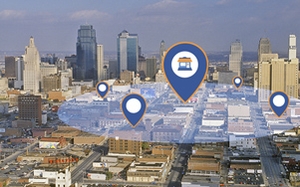 Using
Locations for Pages -- a tool for connecting and managing business Pages
with multiple store locations -- businesses can now use information
from
each of their Pages to create location-specific ad copy, links and
call-to-action buttons.
Using
Locations for Pages -- a tool for connecting and managing business Pages
with multiple store locations -- businesses can now use information
from
each of their Pages to create location-specific ad copy, links and
call-to-action buttons.The call-to-action buttons are also dynamic, so when consumers clicks on a “Call Now” or “Get Directions” button, for example, they will be connected to the store nearest to them.
Because each store Page has an address associated with it, advertisers can also now select the stores they want to run ads for, and choose a targeting radius around each one. In turn, ad reports will be available for each location so businesses can track their individual success.
The Page Insights feature has a new tab with information for local businesses to more easily track aggregate demographics and trends associated with the nearby consumers.
Among other insights, this could shed light on businesses’ peak hours and days, the ratio of tourists to local shoppers, and general age and gender trends.
For the first time, Facebook says it will also now show advertisers the percentage of people nearby who have seen their ads.
For Facebook, the changes are part of broader effort to establish itself as the perfect partner for retailers. To that end, the social giant recently rolled out Flightplan -- a self-serve ad tool that combines dynamic product ads and local awareness ads to promote locally-available products to people near a physical store.
The company also recently began inviting more retailers to sell their wares right in users’ News Feeds, and on their respective brand Pages. In partnership with retail software company Shopify, Facebook began giving select U.S. merchants the chance to try out a “Buy” button.
Earlier this year, Facebook also unveiled Product Ads -- a format for brands to show off multiple offerings, and in some cases, their entire inventory.
Despite its promise, however, social media has yet to carve out a significant share of the ecommerce market. In fact, social media channels -- including Facebook, Twitter, Instagram, and Pinterest -- contributed just 1.7% of total e-commerce sales, last year, research firm Custora recently reported.
http://www.mediapost.com/publications/article/262073/facebook-debuts-location-for-pages-to-help-local-a.html
Subscribe to:
Posts (Atom)