Showing posts with label Yi Zhao. Show all posts

Tuesday, March 10, 2015

Marketing on the Apple Watch: terrible idea?

I’ve yet to be thoroughly convinced about the importance of wearable tech in our everyday lives. I think it’s far more niche than developers and marketers would have us believe.
However the application of wearable technology in the world of health and fitness is huge and is genuinely making a massive difference to the lives of a wide range of people. From athletes needing a convenient and accurate way to store data to regular people who just want to improve their everyday fitness with a pedometer. 
Outside of this though there is very little to convince me that the Apple Watch is little more than a device for people who are too lazy to take their phone out of their pocket when they receive an alert.  
There’s nothing that can be done on the watch that can’t be done on an iPhone. The difference is that on an Apple Watch it will be much smaller. Is anyone really going to look at Instagram on a 38mm screen?
As for advertising on the Apple Watch, imagine how irritating it would be if the basic function of a watch, showing you the time, is obscured by an ad too tiny to read.
That’s probably an extreme example, as the Apple Watch is notification-based and hopefully marketers have learnt from experience that an ad format served successfully on one device will not necessarily work just as well on a different one.
On a smartphone, marketers use notifications to advertise. These notifications only occur of course if the user has the specific app downloaded. If the notifications are too intrusive or frequent, the user will delete the app. 
Now translate that to a screen which is 81mm smaller and that you carry on your wrist all day long.
I’ll keep my old Casio thanks. It's got a calculator on it.

Friday, February 27, 2015

Three Marketing Lessons from Apple Emoji: Embracing Diversity or Simply Racist?

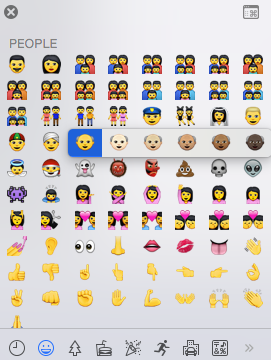
Apple recently released its updated emoji list, adding up more diversity to its current palette. Along with new national flags, an Apple Watch icon for 'watch' and updated iPhone 6 icon for 'phone', varying skin tones of characters attracted vast attention, including heated criticism from Asian consumers.


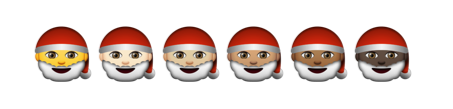
Users can now click and hold on the icon to change the skin tone on OS X 10.10.3 as well as iOS 8.3 beta 2. It is fun that we can now have Santa in different colors, and while general public celebrates the introduction of different type of family as advocating equal rights for LGBT families, Asian consumers are not too impressed with those 'ultra-yellow' emojis.

A microbloggers wrote, "It looks like the yellow people have jaundice". The single post received thousands of likes on Chinese social media Weibo. Due to the long racist history of using "yellow" to describe Asians, many found the bright yellow tone uncomfortable or inaccurate. 'This can't be an Asian person', many said, and even more claimed that they are not inclined to use such emoji to describe themselves or their friends. (For more try weibo.com and search for a keyword combination of '苹果'-Apple,'表情' - Emoji, '黄'-yellow)

Regardless of the pathetic technical reasons that the yellow is simply brought by a standard set by UNICODE, what could we marketers learn from this unfortunate backfire when taking ethnical groups into account?

1. Don't think too highly of yourself. 
It gets extremely complicated when marketing on a global scope - different cultures, different rituals, and different traps that you definitely hope to avoid. Your Asian friend might be okay with the super hilarious campaign to use in Taiwanese market - I personally very much enjoy the French comedy Qu'est-ce qu'on a fait au Bon Dieu? (Serial Bad Weddings) where a Chinese son-in-law is constantly laughed about trying too hard to please the in-laws, but the case would hardly be the same if the movie is to be broadcast over a Chinese national network. Take your time. Research your consumers. And be extremely generous when it comes to running tests on ethnical topics.

2. Monitor the social media your target actually use.
High conversion rate of Facebook Ads? Yes. Instagram great for luxury marketing? Yes. Your global consumers care about them? It depends. Line, Wechat, Kakao Talk, Weibo, and many other social platforms that I may have little knowledge of might be the center of world for your target consumers. If your new campaign has been retweeted thousands of times, try to get some sleep before you excitedly tell your colleagues several time zones away to work on it immediately. Those paying for your product might never own a Twitter account.

3. React. FAST.
No excuse to wait longer even if complaints are breaking out in another part of the earth. If negative comments appear, try to act as promptly as possible as if your boss is watching from your back. If the bright yellow color is a UNICODE default and not Apple's fault, let your consumers know. While I can find a detailed and convincing article explaining the yellowish color in English, I have yet to find any similar content in the Chinese world. And it has been FOUR DAYS since the initial controversy blurt out.

Friday, February 20, 2015

Red Envelope War: Fighting over Mobile Payment Playfield on Chinese New Year

Gifting red envelopes stuffed with cash to relatives and friends is one of the most ancient traditions during the Chinese Lunar New Year, also known as Spring Festival. This centuries-old custom now has a new face in the digital age. On the eve of the Year of Sheep, China’s Internet giants, mainly Tencent and Alibaba, have turned the holiday tradition into a wildly popular phenomenon that helps them tap into the digital wallets of millions of Chinese.

What exactly is digital red envelope? The marketing strategy first gained popularity during Spring Festival last year, when Tencent rolled out the feature on its popular messaging and social network app WeChat. Users – both individuals and businesses – could post links to the digital “red envelope” either on their news feed or in group chats. Those who click the link get a small cash coupon that can be applied on services like online shopping or paying for taxi. But here’s the catch: only a limited amount of “red envelopes” are given out each time, so those who open the links too late are left with nothing.

While sending cash as a way of celebration may sound bizarre to some, the marketing strategy has proved to be a bonanza for Alibaba and Tencent. On New Year’s Eve alone, WeChat recorded more than 1 billion red envelope transactions, a 200 percent increase from last year. Thanks to its partnership with CCTV during the popular New Year’s Eve live television broadcast, WeChat sent out 120 million red envelopes during a segment when audience “fought” for the cash gifts.


After WeChat first rolled out its first red envelope promotion last year, Jack Ma called it “the Pearl Harbor attack.” To rival Tencent’s success, Jack Ma himself led Alipay’s fight by posting his customized Alipay red envelopes on Weibo (China’s Twitter). On New Year’s Eve, Ma posted a photo of himself with a question: “Who looks like an alien?” The lucky ones who gave the correct answers (“Me”) got red envelopes directly from the billionaire himself. According to Chinese media reports, Ma’s 99,999 red envelopes with a total amount of 990,000 yuan were grabbed within the first three minutes. In the week leading to the New Year, Alipay gave out 430 million red envelopes with total value of 600 million yuan.

The red envelope war between Alibaba and Tencent is the latest showdown in China’s  increasingly competitive third-party mobile payment market. Will China’s largest ecommerce company or its most popular messaging tool have an edge on winning over Chinese digital wallets? Though Alipay has a head start with its 190 million active users thanks to its affiliation with Taobao, TMall, and other Alibaba’s e-commerce sites, Tencent’s WeChat payment has grown rapidly since it pioneered the red envelope promotion. The competition escalated so rapidly that Tencent blocked Alipay’s red envelopes on WeChat since early February to fend off its “invasion.”

But getting active users hooked on their payment tools is only the beginning. The bigger opportunity lies in the one-stop platform that Alibaba or Tencent plan to build. From taxi-hailing to food ordering, both Internet giants are increasingly battling over the same services that bring mobile users to offline spending. Moreover, both companies aim to attract users to their money market funds as they seek to expand in the alternative investment market. Between billionaires Jack Ma and Pony Ma, whoever wins the digital wallet war would get a head start in the next round of competition.

Thursday, February 12, 2015

Mobile SEO: More than a Smaller Screen

Google 'Mobile SEO best practice', and you would see experts and enthusiasts giving countless bullet points on how to succeed over a handheld device.

Some top results have given explicit details on 'make your website mobile friendly', 'content optimization plus mobile ads' as well as other definitely 'do's for website managers and business owners. I attach two useful links in case you would like some background information. Optimizing for Mobile - Moz Best Practices for Mobile SEO | Mobile Marketing

However, it takes a lot more than that to adapt to the emerging mobile market. A recent report claimed that in holiday season 2014, mobile device drove 39% of paid traffic in 2014 Q4, and the share is still growing. Besides adding a mobile url to your website or calling up the mobile ads sales rep, there are a few trends to take into account for both marketers and search engine operators (Baidu I'm talking to you!).

1. Shorter key words
Mobile searchers often type in shorter phrases - especially with non-Roman languages. Who wants to tap out a long sentence on a touchscreen keyboard? Longer phrases such as 'what's the best pizza in Upper West' could be shortened as 'pizza upper west' or even 'pizza UWS', and the basket of keywords would be optimized if more typos are considered. 

2. Geographic information
Phones go wherever users go, while desktops stay still in homes and offices. For the local business who hesitated to build up a website and start a campaign, now it is the time. Either it is a pastry shop or a food truck, start with small and attract those nearby.

3. Search on the go (and in the bed)
Mobile searchers move fast, act fast, and expect the results to appear in the first screen. More impatient than traditional searchers, they are also more interested in actionables. Those considering promoting sleep remedy or instant in-store coupon might find mobile ad a worthier investment.

5. Revised algorithm
Type 'Bose' in regular Google you get a handful of ads. Type the same keyword via phone and you get one - sometimes, none. The search engine giants are more cautious with what to place in front of their users - quality score, especially measured by websites' mobile device performance, take a larger portion compared to bidding price.

6. Bye search hi apps
Search engine got all the users flow on desktops. But this is no more the situation with mobile users. Yelp, Accuweather, Chase and other apps are giving users shortcuts avoiding search engines. Can't rule Google? Go for Yelp, or your own app to promote your business.

Saturday, January 31, 2015

Beauty blogger secrets: what marketers should take in mind before their digital campaign

I recently came through a post regarding 'Top Digital Marketing Mistakes in the Beauty Industry' by Sukesh Jakharia. It pointed out several fatal mistakes marketer should avoid, which I heartly agree, such as lacking a complete brand strategy, forgetting about men, as well as not connecting your digital platforms.

However, the solutions were nowhere to be found - marketers are accused of there mistakes but not provided with actionables.

In the meantime, many individuals who started their beauty blogger as amateurs, had made remarkable success. Not to mention the famous Temptalia, whose website contains thousands of swatches, reviews, comparisons and attract millions of visitors, even a graduate student at University College London who call herself 'SEPTEMBER the life recorder' has attracted 40K enthusiastic followers in two months on the Chinese microblog Weibo. And the number is much greater than many beauty brands including Elizabeth Arden.

A few secrets that those beauty bloggers utilized that digital marketers might find useful:

1. 'Retweet Lottery'

The prize could be as tiny as a lipstick or an eyeshadow platte - regardless of however costless it might seem, it is one efficient way to conduct market test and increase followers. The number of retweets for lottery of a specific item could be insights on how popular the item is in the market, and as consumers have to become followers first to enter the lottery, the beauty blogger/ the brand account could attract users that actually consider making future purchase. As far as I'm concerned, a recent retweet lottery with a Chanel limited edition blush (value ~80USD) has attracted 20,000 eager users to retweet.

2. Engage the Men

Some smart moves are surveys conducted by bloggers such as - "ask your BF/BFF what's the most flattering eyeshadow color on you". Surprisingly while the question is targeted at female users to answer, many males had been bold and brave to contribute opinions. Traditionally straight men had been portrayed as '' silly dude unable to tell between no-makeup and expertly-done-heavy-makeup", but the opinion of men could matter as much. In fact, a SUQQU eyeshadow palette named SAKURAHABA had been constantly sold out for six months because it was depicted as 'THE first date eyeshadow' in a blogger survey.
THE first date eyeshadow that made women crazy

3. Talk Beauty and BEYOND Beauty.

A close friend of mine, and also a beauty enthusiast and Sephora VIBR, followed almost every popular beauty bloggers. However, whose posts does she read?

Only those bloggers she likes and feels like a real person, who live, eat, talk, date, and occasionally feel upset.

It is no time that beauty products are hidden in counters and available for VIP only - it is time that they bring along their personality with them when communication with digital audience. It does not imply that a bottle of YSL nail laquer should has a boyfriend named Ken, but rather bringing genuine experience instead of superficial descriptions of movie stars and supermodels.


4. Let Followers Interact with Each Other.

I always find users' comment more interesting than beauty posts themselves - there are green hands to be educated, experienced beauty assistant volunteer to share, eager full time moms seeking friends to hang out, and high school teens anxious to find the perfect eyeliner for a night out. That's the magic of beauty bloggers that marketers should catch. That great contents could be generated by followers, and the content team would never have to stay awake for the new idea.


Sunday, January 25, 2015

Reward for refering a friend: NOT always generating WOM in promotional emails

The holiday season just ended, and my inbox is piled up with various promotional emails. A consumer behavior student at Columbia myself, I am extremely interested in the hidden motives behind those beautiful pictures and persuasive words. In those emails, many desperate business owners tried hard to use my credibility to create 'word of month' with baits such as cologne sample, gift card as well as coupons, providing bonus for referring the product to a friend.

Snapshot from a Jo Malone promotional email

But do people actually refer and forward those emails to friends? Does the orange blossom body creme sample actually seduce email recipients to spread the words on how they love the Jo Malone cologne?

The answer is: sometimes yes, and more often, No.

Consumer behavior researchers had traditionally name the phenomenon as 'Referral Reward' programs.Those programs are designed to encourage existing customers to recommend product with stimuli such as vouchers, gifts, free minutes or miles. CPG, hospitality as well as credit card are some of the most common industries to apply such practice.

What determines the possibility of referral?

A wide range of studies covered factors such as overall satisfaction with previous purchase (Chandon et al., 2000), strength of the brand (Ryu and Feick, 2007), sensitivity of product (Kornish and Li, 2010), and price of the product (Xiao et al., 2011). Some of the results are more intuitional. For example, tampon, an extremely sensitive and personal product, is not likely to be recommended via emails regardless of the promised benefits provided.

Some more interesting papers discussed the category of rewards. Shi and Wojincki accalimed in their 2007 paper that category of rewards (tangible versus intangible), has a decisive impact over likelihood of referral. It is stated that to promote WOM (word of month) of tangible products, it is better to use tangible rewards (use body creme to promote cologne), whereas for intangible products such as airline tickets, intangible rewards such as miles work better.
Credit card company use cashback bonus,
an intangible reward to motivate referral


What makes the right product to use referral reward?

The below statement are more of my own research than some established consumer theory. Based on studies over hedonic consumption, I believe that the differentiation of hedonic versus utilitarian products could be extremely important when voting for or against referral reward program.

Scholars such as Hischman and Holbrook (the later a well known Columbia faculty) started a heated discussion on hedonic consumption in the early 80's, and Dhar and Weterbroch further developed the theory. It is first hypothesized then proved that the product attribute would influence the overall product choice, and consumers make decisions based on different concerns. Bring such insight into the study of referral reward program, congruency framework is considered to be one of the major discovery, summarized by Chandon in his 2000 publication. An easy example - to promote toothpaste, better reward consumers with toothbrush rather than some random product which does not fit into the congruency framework.

Three simple rules to follow:

1. Reward referral of cologne, not detergent. 

Rewards for purchasng hedonic products, such as cologne, vocation home and candle; generate more referral than for utilitarian products, such as detergent, airport hotel and cigar lighter.

2. Use egg to reward referral of chicken, not milk.

To generate more WOM, use hedonic product to reward referral of hedonic products, and use utilitarian rewards for utilitarian purchases.

3. Talk about the beautiful view, not the convenient location.

A product with both hedonic values and utilitarian values, when emphasizing hedonic values, would generate more referral with rewards. When selling an apartment and trying to make people recommend it to friends, try to focus on the beautiful view rather than how close it is to the nearest subway station.