Showing posts with label app advertising. Show all posts

Monday, November 09, 2015

Retailers' Digital Initiatives to prepare for the Holidays


With the holidays approaching, retail brands have reached its annual climax in unleashing marketing creativity. Given the growing popularity of online and mobile platform, brands like Sephora and Net-A-Porter have invested heavily on digital this year to forge an omni-channel shopping experience.

Sephora, the subsidiary brand of LVMH, has rolled out its first Flash Boutique in Paris, which served to ramp up its consumer experience through a mobile-connected experience. Consumers will be able to shop from a digital catalogue featuring more than 14,000 items from approximately 150 beauty markets in addition to its usual makeup collections. Should shoppers unable to locate certain products, they could virtually add the merchandise to their digital baskets that enable them to pick up the desired cosmetics from Sephora in the future.

In addition to digitalize its product catalogue, Sephora has opted to experiment its digital perfume testers, allowing shoppers to pick up a Communication tag for the scent so that they could scan it on a nearby screen to smell the fragrance and explore more about the product. Of course, if they are interested in purchasing the fragrance, they could simply add it to their digital basket.

Moreover, the Flash Boutique offers a selfie mirror to allow consumers snap photos whilst trying on new items. Sephora even offers customers the opportunity to win a 1,000 Euro gift card should they disperse their selfies across social media with appointed hashtags.

Net-A-Porter, the British online retailer, made use of Sky’s Adsmart platform to target ads at viewers based on a number of demographic factors so that different consumers will see different versions of its video campaigns. For example, for its most recent “All For You” advertisement, viewers who prefer to watch long and HD videos on YouTube would be shown the long version that delineates the retailer’s stellar service and transparency. On the other hand, should users demonstrate a viewing preference for short and catchy ads, the short 30-second version would appear.

Net-A-Porter has previously implemented multiple mobile initiatives this year. The social media app it launched in April – The Net Set, is now available for iPhone, iPad and Apple Watch. The app enables designers, brands, fashion personalities and consumers to interact with each other real-time, sharing inspirations and their own sense of style in a two-way dialogue. Consumers will also be able to scroll through a feed of trending fashion items from across the world, give friends shopping advice, share images, interact with style icons, and view personalized “love lists”.

According to the 2015 GPShopper Holiday Mobile Shopping survey, 35 percent of consumers plan to create shopping lists and 24 percent intend to check product inventory from their phones. Pinterest has upgraded Product Pins so that they allow retailers to automatically update their merchandise inventory information through their product posts. Facebook, Instagram and Tumblr have planned to implement similar initiatives such as collaborating with fashion bloggers to make social media channels the forefront of fashion enthusiasts’ discussions.

Given the current social media trend, brands should perhaps learn from Sephora and Net-A-Porter, and to synthesize digital and Brick-and-Mortar shopping experience by allowing greater transparency of their product inventory and pricing information, creating target contents for different customer segments, and fostering long-term customer relationships through interacting more with followers.


Links:


Tuesday, September 22, 2015

New Rankings on Ad Fraud of Mobile Exchanges

As we've discussed in class, fraud is a real problem when it comes to advertising online. According to an article I found (link below) on AdAge, it is estimated that 38% of mobile app ad inventory is fraudulent compared to about 27% of desktop inventory. This leaves advertisers in the dark, not knowing which ad exchanges can be trusted to provide real inventory.

An ad-fraud prevention firm called Pixalate has now created a "Trust Index" that ranks mobile app exchanges on their trustworthiness. This will be an extremely helpful tool for advertisers. Pixelate also ranks desktop and mobile web sites as well, but the addition of the mobile app rankings is brand new. Rankings will be updated on a monthly basis.

Hopefully, rankings like these will hold exchanges more accountable to take steps to eliminate fraudulent inventory and increase their transparency on the issue. This would be a win-win for exchanges and advertisers alike.


http://adage.com/article/digital/pixalate-launches-trust-index-mobile-app-exchanges/300473/
http://www.pixalate.com/sellertrustindex/mobile/#!global

Saturday, February 21, 2015

Youtube for Kids: not just a $$ move? Yuan (Danny) Xu

Google is about to release a kid-version youtube app for smartphones and tablets featuring popular television shows for preschoolers.  Interestingly, this App will not be available at the popular IOS platform, at least initially. You might want to ask, what, no IOS app? And how do the ads work, if any, for these kids audience? One thing for sure, there are still a lot of uncertainty around the economics of this App.

Sources has indicated that Google is planning on showing ads in the App, but one legal concern is that “Google will have had to comply with the Children’s Online Privacy Protection Act, which is overseen by the Federal Trade Commission. Among other COPPA rules, websites that cater to children must notify parents if they collect personal information.” (WSJ.com) If individual level data cannot be collected, then it is unclear how Google is going to effectively do their ad distribution job. Another concern might come from the lack of platform support. The data has shown that on average, IOS users have higher income than Android users. If there is no IOS platform support, then is there a strategic portion to the move as well?

A $$ Move

No doubt that an App just for kids will attract a vast amount of advertisers who are thirst for a channel that they can use effectively to target the kids “consumers”. Think about it, preschoolers rarely have any kind of smart phone, thus almost impossible to identify among all the mobile device users. Given such a kid specific channel, advertisers could finally identify this segment easily. According to WSJ, “Darcy Bowe, vice president and media director at Starcom, an advertising agency, said her clients are often frustrated by lack of digital advertising venues geared for children.” Given that there aren’t many competing platforms that have such a huge potential for attracting kids (yes, kids are in general addicted to watching TV programs), the bargaining power of Google is in much favor.

But could there be a deeper level of reason for such an App, Given all the potential hassle of getting it approved?

A Strategic Move

Well, one thing we know is that at least in the US, the annual sales of android devices are dropping compared to IOS. Just last quarter in 2014, the IOS devices accounted for 47.7 percent of sales compared to 47.6 percent for Android. Although Android is still dominating the overall smartphone market, Google does need to worry about this change in sales trend. Having an App like this, if later proven to be popular, will likely to fuel the sales of Android devices.

One thing they might miss though, are the higher income families that mostly use IOS devices.  If the advertisers on this App can only target kids from the comparatively lower income families, then that might be a slight disappointment for potential advertisers.


A more important aspect might be the long term effect on people’s consumption habit both for the mobile platform and how they interact with TV programs. First, if a kid growing up using Android platform, this could potentially affect their choice of devices when they become teens. Second, kids nowadays are shifting away from the traditional TV-watching habits that the last generation might have. One director from Comcast once said that the 7-11PM prime time is the “God intended” way to watch TV programs. However, it seems that the majority of teens do not think that way. Watching TV programs on mobile devices has increasingly become popular not just among teens, but also among young adults and even mid-ages. An App like this one could further catalyze the process, resulting in more TV-program consumed from mobile platforms in the future, therefore eating away TV broadcasters’ share. We will see how that plays out in the future.

Wednesday, February 04, 2015

Mobile Advertising Gaining More Popularity

Last week, I wrote that 3 billion new internet users are "coming on-line."  Smartphones are leveling access to the internet and the implications of this are staggering.  A few months ago, Benedict Evans of Andreesen-Horowitz released a presentation called "Mobile is eating the world."  He refers to smartphones as "a pocket super computer."  The smartphone in your hand gives you more access to information than the most informed in the 1990's. 

Everyone is getting connected.  The percent of unconnected adults globally has been decreasing at rapid speed from 100% to 27% and will continue to do so as the cost of smart phones drop and new technologies bring internet access to rural and remote areas worldwide.

Android's mobile ad traffic exploded in 2014.  The company's share of mobile traffic increased by 25 percentage points according to a report from mobile ad platform Opera MediaWorks. There are two reasons for this growth: 1) the global migration to Android and 2) the introduction of more affordable smartphones.  By the end of 2014, Android dominated the low-end market in 2014.

The billions who are getting access to mobile and smart phones and connect to the internet will change the world.  They will now have access to the cloud and the world's information through search.  With access to technology, these new users will contribute to the world's innovation and also to the global economy.  If they are not your customers, they are your customer's customers.  How will your business capitalize on this opportunity?  Here are a few ideas:

Digital Stickers

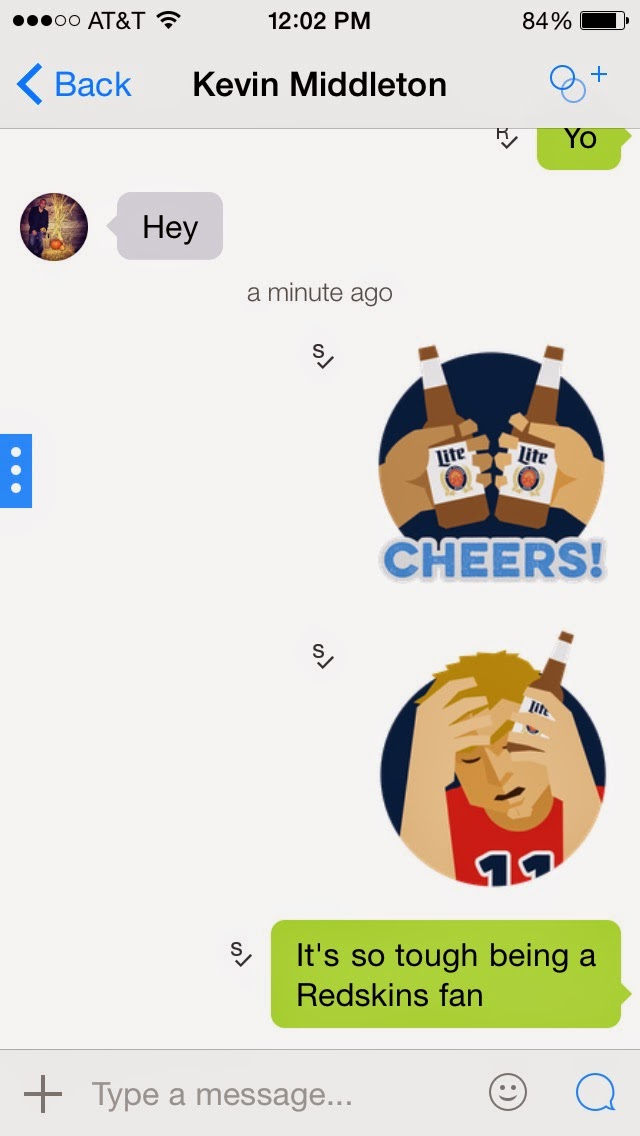
The little images you can attach to chat app messages or on Facebook comments are increasingly being used by advertisers to get their brands in front of people.  During the last Super Bowl, Miller Light ran a campaign aimed at reaching the digitally-inclined in this new way.  They worked with a digital sticker agency, Swyft Media and created a free pack of 12 stickers that people can use with chat apps Kik and video-messaging app Paltalk, users can download for free and send to one another.

http://www.forbes.com/sites/parmyolson/2015/02/03/super-bowl-stickers-future-mobile-advertising/

The digital stickers were a huge success with over 600,000 downloads and millions of sends.  A broader trend towards native advertising, these ads are cleverly disguised as content to make them pleasing and enticing to consumers.

Mobile Coupons

On February 28, 2015, a professor from New York University, Anindya Ghose, will present a paper on “Randomized Field Experiments in Mobile Marketing.”  The presentation will discuss the explosive growth of smart phones and location-based services, which has resulted in a the rise of mobile advertising, and the effectiveness of mobile marketing and promotions.


The paper focuses on 3 main concepts.  The first experiment measures the effectiveness of mobile coupons using data from a location based app for smartphones.  In a second large scale field study, the role of contextual crowdedness on the redemption rates of mobile coupons is examined.  In the third study, the researchers propose a new mobile advertising strategy that leverages full information on consumers' offline course.  "These studies causally show that mobile advertisements based on real-time static geographical location and contextual information can significantly increase consumers' likelihood of redeeming a Geo-targeted mobile coupon."


Personalized Ads

Personalized digital media companies, such as Catalina offers a mobile advertising platform that allows brands to deliver personalized ads based on purchasing behavior and tie their media buy back to in-store sales.  Personalized ads are more successful when brands are able to merge their own shopper data with media and household purchasing data from Nielsen and 4Info’s offline household database.


Apps

Apps will outperform traditional ads because consumers don’t perceive them as advertising, they welcome them for their functionality and thus don’t find them pushy. Apps are more attractive for marketers because they’re more cost-efficient than traditional ads, and sometimes create entirely new revenue streams.  Smartphone apps fall into five categories:  Games and entertainment, Social networks, Utilities, Discovery and Brands.


Marketers should create apps that add value to consumers’ lives and enhance long-term engagement with their brands. To do so, they need to develop apps that add convenience, offer unique value, provide social value, offer incentives, and entertain.


Know Your Customers

Better results will be achieved by communicating with consumers in a format that enhances their lives and offers value.  There may find new vehicles for achieving consumer engagement to ads, but for the time being, these are some of the best ways to win the hearts and minds of mobile consumers.