Showing posts with label social. Show all posts

Friday, June 23, 2017

Looking for a new job? See how Google, Snapchat, and LinkedIn can help you!

If you are looking for jobs, the internet has newer ways to help you! While Google rolled out a search engine for jobs this week, Snapchat launched ‘Snaplications’ in the US! LinkedIn, on the other hand, rolled out a new tool that makes it easier to know who is searching for your profile.

It is interesting to see how brands are continuously leveraging technology to reach their target audience and simplify processes via digital platforms!

Google’s new job search is powered by AI and lets users find the perfect job listings for a search query. What’s more? It pulls data from some of the world’s biggest job boards, including LinkedIn, Facebook, Monster, Indeed and Glassdoor to give users a dense set of search results and help simplify the tedious job search process.

With the launch of ‘Snaplication’, snapchat is all set to revolutionize the recruiting game! A world’s first, snaplication allows applicants to initiate the job process via snaps! Given the evolution of technology and the change in audience behavior, snapchat is empowering brands to engage directly with its potential talent, especially, millennials.

As the world’s largest youth employer, McDonald’s for instance is already using Snaplication to hire more than 200,000 workers this summer! Since ~48 percent of Snapchat users are between the ages of 18 and 24, it makes a lot of sense for a brand like McDonald's to leverage snap for recruitment.


Lastly, I noticed that LinkedIn rolled out a new feature that lets people see who searched for their profile!
The Search Appearances feature is visible on a user's personal profile page (see image), for both mobile and desktop versions. It lets the user find out how many times they've been discovered. With the roll out of this feature, LinkedIn wants to give its users a sense of how frequently they're appearing in queries and how they can strengthen their profile. It also helps people see the companies and job titles of the people who found them in search to help signal what types of opportunities you may be a fit for!


Links:

http://www.foxnews.com/food-drink/2017/06/13/mcdonalds-accepting-snapchat-snaplications-to-lure-millennial-employees.html
https://futurism.com/google-now-employs-ai-to-help-you-land-a-new-job/

https://www.cnet.com/news/linkedin-wants-you-to-know-whos-job-searching-for-you/


Tuesday, December 08, 2015

Is Social Search dead?

Source: Techcrunch

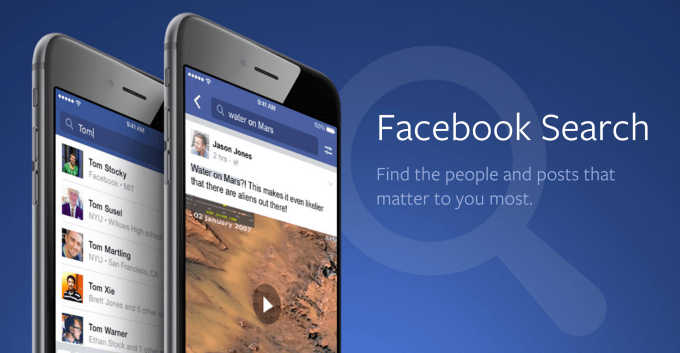
In 2013, Facebook launched what it called its third pillar, "Graph Search". Lead by a team of former Google employees, the company wanted to provide solutions and answers, not just links like Google. Mark Zuckerberg back then said:
What’s more interesting than any of these things (that Facebook currently does) is giving people power and tools to take any cut of the graph that they want.
People were amazed (some also were concerned) about how personalized and specific the search tool worked: You could ask queries like "friends in New York who like Harry Potter and Game of Thrones.” Many were convinced that this could mark the beginning of a serious attack on Google, as you could use the service for recruiting, product recommendations, travel, images, or even dating. The quality of the answers was supposed to be better as they had a "filter", a form of social approval and confirmation. Some even thought it was a feature to make people not leaving the site anymore, as now even search could be done there, but for many things better. Maybe all of that was a bit rash.

Graph Search did not take away significant traffic from Google, or Foursquare or Yelp. In fact, Graph Search was never completely rolled out to all users and its various search features are hidden in different places and subpages. Searching with Facebook again is so bad that Michael Morgenstern, a film maker from San Francisco build his own interface for searching with Facebook, searchisback.com.

As Google failed with its own social network Goggle+, social search still is unconquered territory. Even though Google uses insights about social connections and behavior for its search, Facebook's vast amount of data and user insights are much deeper and richer then that. We are social beings and many of our search requests could be improved by adding a social layer that works approving or just inspiring. Especially in commerce, news and entertainment, the opinion and recommendations of social connections can help prioritizing and filtering web content.
Maybe unbundling search and launching a powerful search app (with personalization features like Google Now) could be a way for Facebook to re-enter the game. I think search still is one of the most exciting spaces in the internet business. Alone because sponsored search is closer to transactions and its success is easier to measure, I think Facebook should keep on considering it a tremendous business opportunity.


Friday, March 13, 2015

Beauty May Be Skin-Deep, But It's Green and It Folds, Too

Just as we were talking about connecting marketing, social, and branding, BeautyCon launched a new site "to connect social media stars with fans and brands". This is a great idea, and it got me thinking about an interesting mix of industry types. As a marketplace or clearinghouse, BeautyCon's site is in excellent shape, because it has all the desirable properties of a sustainable two-sided market. Scale is important, and self-perpetuating. Once BeautyCon becomes the industry standard, it will be extremely difficult for anyone else to compete with it, and BeautyCon can enjoy a long and profitable run at the top. That's of course true of other business models, whether they relate to fashion or not: retailing, warehousing, publishing, etc. All of these businesses have had longtime dominant players at one point or another.

However, fashion itself - now that has been elusive. Western fashion essentially began in the mid 14-th century, and it has not stopped since. There has not been a singular driving force behind it since the death of Marie Antoinette in 1793. Sure, there is always some person or institution exerting influence over it, but that never lasts, and it is never pervasive.

I wonder if the application of web technologies to the field will enable a kind of grand consolidation for the first time in centuries. Web-enabled de factor monopolies like YouTube do seem to be fairly durable. Yet human taste is famously fickle, and I think that fashion will continue to be the glorious, constant flux that it is.


source: http://blogs.wsj.com/cmo/2015/03/12/beautycon-launches-its-own-media-site/

Wednesday, September 24, 2014

Pinterest to Let Brands Target Their Existing Customers With Ads


Following the successes of Facebook's and Twitter's sophisticated advertising businesses, Pinterest is gaining ground on developing its own advertising products.  Pinterest is developing a method for companies to advertise to their customers on their email list with ads on the Pinterest platform catered to the specific target consumer.  The social scrapbooking service is also building a conversion tracking and audience targeting measurement tool so that marketers can track and analyze their ads on Pinterest with the purchases that customers make on the company’s own e-commerce site.

The customer-database targeting option on Pinterest is similar to Facebook’s Custom Audience tool which allows a marketer to upload to email addresses and phone numbers of its customers to the social network’s platform.  Facebook then uses “hashing”, an encryption process, to anonymize the company’s list to match them to Facebook’s own database of users.  Subsequently, these matched customers are then shown the advertisers’ native ads on Facebook.


Pinterest is undergoing the same advertising strategy from Facebook with its own conversion tracking tool.  A marketer will drop a “pixel”, or a tracking tool, on its own website that will track the activity of the customers on its website.  The pixel will then show the Promoted Pins on Pinterest to the same customer after the customer logs into the social website.  This tracking tool will be limited to measuring and attributing ad performance to online sales.  


Source: http://adage.com/article/digital/pinterest-advertisers-target-existing-customers/295094/ 

Monday, September 22, 2014

ZEFR Looks to Expand Advertising Power Beyond YouTube

ZEFR, a video monetization platform, has acquired Engodo according to a report in TechCrunch. ZEFR has traditionally been a video monetization platform that has focused on YouTube. The company currently provides insights and software solutions so that brands can create more impactful media and better connect with their consumers.

They currently focus on two products: brand management and rights management which includes:

Brand Management Suite:

  • Brand ID- allows brands to identify conversations about their brand and engage in the conversation
  • Channel ID- allows brands to create an effective YouTube channel
  • Performance Marketing- gives brands the tools to reach consumers with targeted advertising.
Rights Management enables studios or labels to:
  • Protect their assets on YouTube
  • Maximize the monetization of copyrighted content
  • Understand how content is being used across YouTube
With the addition of Engodo, ZEFR is looking to expand their capabilities beyond video and YouTube. Engodo is a "social influencer advertising platform" that connects brands or agencies with "influencers" or content publishers who create content across different media networks on behalf of brands.

The acquisition will allow ZEFR to expand their monetization beyond YouTube and provide advertisers with insights across numerous channels. As companies look to create native advertising and directly connect with their consumers, they can now look to ZEFR to assist them in developing effective media advertising across platforms.

Sources: 
ZEFR Has Acquired Social Advertising Startup Engodo, Techcrunch.com
Engogo.com
ZEFR.com

Monday, November 25, 2013

Video has become the new photo

When companies evaluate their digital marketing strategies, text and photos are synonymous with “branded content.” However, more organizations are finding ways to capture digital momentum with arguably the hardest medium to search for: video. YouTube is the second largest search engine in the world, and now that Twitter and Facebook are experiencing booming trends in video sharing on their platforms, brands are chomping at the bit to find quality, sharable video content.
            Marissa Mayer announced today that Katie Couric will become a “global anchor” for Yahoo in an unprecedented partnership deal. This play by the media organization is one of many pushes towards building their video content library and virality. They have invested heavily into original content creators and curators, but Katie is the first established brand name to grace the purple banner.
            As more of these media organizations turn to established talent for their content, it is important to recognize the change in the winds for digital video. YouTube brought reach down the long tail in a big way, allowing any individuals to create a niche for themselves and build a significant following. As the platform evolves and Google finds additional ways to monetize it, more established brands and talent are looking to capture a piece of the pie.

            The future of digital video is a convergence of independent and professional content. Katie Couric will soon be synonymous with hundreds of similar voices each finding their own niche.  In order to remain relevant and more importantly valuable, media organizations will curate a diversified offering of both.