Friday, May 18, 2018

7 Trends On How Big Pharma Uses Social Media


Social media is changing the digital marketing landscape across all industries. The Pharmaceutical industry is particularly interesting due to the regulations and compliance restrictions that surround it. The following are some trends which have been observed for the social media in this industry:

1) decrease in content
2) rise on video
3) Facebook engagement in on the rise
4) more content is being promoted on Facebook
5) OTC (over the counter) Brand Profiles are declining
6) companies reply to fewer tweets than ever
7) firms were active across social networks, with firms preferring Twitter, LinkedIn, Facebook and YouTube. 

The high engagement on Facebook and videos was pleasantly surprising from such a regulated industry. The creation of videos is more expensive and the content needs to align with the FDA regulations. Several brands are also focusing on increasing the shelf life for videos.  

There is a lot of data from social media for the Pharmaceutical industry. It will be interesting to observe the future trends, where this industry will start making data driven decisions for social campaigns.


Nano-Influencers

 This article talks about utilizing nano-influencers as opposed to well-known influencers. In terms of customer acquisition it is very important to get customers to trust you. If you can't convert a potential customer to a customer your business will never take off. I am interested in the concept of nano-influencers and how to target them. If there were an easy way to identify a set of people that were the ideal customer of a new business venture you could send them free products or offer them free services in exchange for a share to their social media following on twitter or facebook or instagram (positive or negative). It seems like this type of endorsement would be more authentic in the eyes of a potential customer than the recommendation of a paid sponsor. It is almost akin to the long-tail phenomenon in the products world; appeal to a lot more people on a smaller scale.

https://www.forbes.com/sites/ryanerskine/2018/04/30/a-modest-digital-marketing-proposal/#7f8dab816c10
The intersection of real estate and technology has always fascinated me as the two industries seem to be at odds with another. On one hand, you have a fast-paced industry with trends and optimization that changes by the minute. On the other hand, you have an antiquated industry that typically relies on relationships and stacks of paperwork.

However, with the advent of social media sites like Instagram, those in real estate can have wider audiences than they ever have before. In a piece recently published by Time Magazine, Elizabeth Finkelstein leverages the use of technology to run her blog, Cheap Old Houses. With more than 140K followers, Finklestein highlights beautiful old homes from around the country that reaches a large community of historic house hunters. While the current residential real estate marketing industry typically advertises homes by listing their square footages and high-tech appliances, Finklestein recognized a gap that needed to be filled- highlighting the mystique of old homes, including details and charm.

To monetize her account, Finklestein charges $45 for a 90 day ad up to $150 to have a property featured as an “editor’s pick”.


Rise of the Ad Blockers


Most people I know, myself included, have not seen a single digital ad on youtube or any other internet media platform for the past few years. Ad blockers are rising in popularity and are almost ubiquitously used by people working in the tech industry. The current digital advertising industry is worth close to $200 billion and at this point should definitely feel threatened by the gaining popularity of ad blockers. Most ad blockers run only as web browser extensions but recent creations such as the Pi-Hole (a software that runs on Raspberry-pi) have gone a step further and block ads on an entire network. Pi-Hole lets you play your free online games without seeing ads in between sessions and even hear silence instead of sponsor messages while streaming NPR!

Around 18% of current web-users in the US have ad-blockers and the numbers are as higher in other countries (29% in Germany and 39% in Greece). With software such as PI-Hole, I would expect the percentage to rise in coming years. It would be interesting to see how the internet ad industry reacts to such trends.

Sources:

Bloomberg: https://www.bloomberg.com/news/features/2018-05-10/inside-the-brotherhood-of-pi-hole-ad-blockers

Top 6 Digital Marketing Trends for 2019


Top 6 Digital Marketing Trends for 2019

“Business 2 Community” recently published their take on the top 6 trends heading into 2019. Summarized as follows:

1.       More and more virtual/augmented realities
2.       “Voice” becoming the ultimate search-marketing tool
3.       AI starting to hit business (small and large)
4.       More and more desire to capture ‘video views’
5.       More and more native ads
6.       Programmatic advertising going mainstream

As Internet advertising evolves into more individualized campaigns (using people’s personal search history to deliver unique ads/links), I find myself personally more susceptible to marketing!

Growing up, I never felt the need to click on any of the advertisements linking to products of zero interest to me, but in the past month alone I’ve probably clicked at least 3! The digital age has certainly reshaped buying patterns and the ability for digital vendors to close sales.


Thursday, May 17, 2018

Luxury designers are making waves on Chinese social median channels

According to PARKLU, an influencer marketing agency, Gucci, Chanel, and Dior are leading the way in generating customer awarement and engagement on Chinese social media channels. I think it is very interesting to note how companies must adapt to changes and unique preferences that may vary geographically. 

For example, WeChat and Baidu's Index results rather the Google search results are used as a benchmark or reference point for brand awareness. 

Accoding to the report, 82 percent of luxury consumers currently consider themselves heavy social media users. In China, the main platforms influencing luxury customers today are WeChat, Weibo, Xiaohongshu, and Douyin. For international brands trying to navigate the social medial scenes in China, they would have to scratch off what may be working for them else, and relearn the entire process. It is critical to hire local influencers who dominate these channels.

"How Digital Natives Are Changing B2B Purchasing"

As we learnt from the first class, Digital marketing is upending the ways consumers make decisions, and the ways companies influence consumers. So, digital marketing is changing B2C businesses' marketing landscape for good. But what is happening with B2B? An HBR article(link below) shows that digital is changing B2B marketing as much as B2C. Among all the changes, the changing role of a salesman is the most fascinating: "when a salesperson eventually is invited to the table, buyers will have already formed a strong opinion about many aspects of the value expected from a vendor," says the author. In a way, a salesperson is walking into a purchase managers room with a product catalogue seems no longer a value-add. The author concludes by saying, "Today, though, that first look comes through websites, user forums and quick case studies, not flesh-and-blood sales pitches. The key question for a vendor: Does your online footprint communicate your chosen elements of value?"

https://hbr.org/2018/03/how-digital-natives-are-changing-b2b-purchasing


Kroger beefing up digital


Check out the following link about Kroger Co. making the push to e-commerce, following trends from Amazon/Whole Foods and Walmart.


What’s interesting to me is their decision to partner over acquire – by partnering with Ocado, a proven expert in online grocery, Kroger doesn’t need to reinvent their business, build their capability from the ground up, or outlay significant capital through acquisition (albeit Kroger does own a minor stake and have increased their ownership by 5% in this latest move). The move to partner with Ocado sent the stock soaring nearly 6% today after a dismal -10% start to the year.

Kroger has also been partnering with 3rd party online food delivery services, such as Instacart, to take advantage of the trend for people wanting food delivered straight to their doorstep.


Only to find they currently don't cover my area, which could change with the Ocado deal. Ocado will apply their technology to the U.S., and will possibly establish up to 20 US distribution centers over the next three years. Due to their late entry I'm sure my digital food habits will be even more entrenched by the time they offer online service (for better or worse), for which I'm sure they will pay the price for being this late to the game.

By partnering they potentially can move quickly on initiatives, though I’d imagine this might hurt them later when they want to act nimbly in response to new market developments since they will be dependent on their external business partners. They will also likely have to concede more of the value from the enhanced service capability due to not having the entire process in-house. Contrast this with Amazon acquiring Whole Foods or Walmart’s tactic of making significant investments in their e-commerce capabilities. Amazon and Walmart stand to benefit from owning the entire value chain in exchange for their greater initial investment. In this sense, they have taken a bolder step towards a digital future than Kroger. Given that Kroger is partnering only now, the move seems reactionary to Amazon and Walmart’s earlier bets.

Being new to the study of the digital landscape, the comparison makes me wonder the circumstances in which partnering or having full control might be preferred in one’s digital platform offering? 

Wednesday, May 16, 2018

Algorithmic digital attribution

Check out the following write up on a more analytically driven approach to attribution.  First click, last click, and everything in between can be very misleading.  The following link points you to a write up on using data mining and machine learning to give you a more accurate picture of true attribution. 

https://blogs.sas.com/content/customeranalytics/2015/12/08/making-case-algorithmic-digital-attribution/

"How Personalizing Voice Skills Can Give Your Brand a Digital Boost" - KF Blog #1


Voice is one of the hottest trends right now in digital marketing. In this Ad Week article, it states that “31 percent of digital marketers at Fortune 500 companies believe voice is the next big thing” and that “the market for smart speakers will hit $3.5 billion by 2020.” Amazon has Alex and the Echo, Google has the Google Home and Google Assistant, and there are many more companies trying to play in this upcoming space. These devices have become essentials in many households, and now brands are recognizing the huge opportunity there is to market products within this new voice activated world.

The article describes “skills” and “actions” that consumers can make with their voice devices. One example was “Ask Patron,” which is a way to help users find recipes to tequila cocktails. Zyrtec created AllergyCast which tells people the pollen count and other allergy related information for their day. I’ve seen these used by many media brands to promote new shows, and you can even do some cool marketing stunts by releasing easter eggs through this platform. In any case, this is a creative way to market to the next generation of consumers and to keep a brand top of mind. This is a creative way to interact with consumers on a level that we haven’t seen before.

The articles also goes on to give some guidelines on what makes a successful and impactful “skill” and how to actually go about doing this for your brand. They take a “crawl-walk-run” approach which I totally agree with. 

Research on Voice:

New Alexa Voices:

Blog 1 - Creativity's Bottom Line

Creativity's Bottom Line: How Winning Companies Turn Creativity Into Business Value and Growth (McKinsey & Company - Digital McKinsey)

In this article, McKinsey investigates connections between use of creativity in marketing and top-performing companies.  By developing the "Award Creativity Score", based on the Cannes Lions award index, McKinsey explored how the most creative companies also performed in business.  The results showed that the most creative companies outperformed their peers in two specific aspects of business:  financial and innovation.

As the investigation continued, McKinsey found that those top performing companies specifically did four things differently in practice: hardwiring creativity and innovation into daily business, customer understanding, quick decision-making, and leaning into adaptation.

While the article explores these four areas in relation to marketing in general, I believe these topics go hand-in-hand to how businesses must approach the digital realm of marketing.


  1. Hardwiring Creativity and Innovation
    • "...almost 60 percent of companies in the top ACS quartile self-identify as industry shapers or innovation leaders versus slightly more than one-third of their peers."  While it might seem obvious, it is easy for companies to lose sight of the important of innovation and creativity with the pressures of looming financial goals - but the article finds that the best companies view marketing spend as an important investment, with creativity shaping the decisions on where that money goes.  This is especially true at the moment when digital spend is on the rise and marketers are challenged with how to connect their campaigns across new digital platforms.  Are the best companies winning on these attempts because their creative can successfully appeal to the consumer across multiple platforms?
  2. Customer Driven
    • In class we explored the shift between previous ad-spend models (CPM) and the new-norm of performance-based spending.  The rise of digital marketing will continue to allow marketers and their business to understand the customer more so than we could have ever fathomed.  In reference to the best performing and most creative firms - "Creative firms also combine insights gained about customers’ needs with technologies and new business models to come up with white-space solutions and distinctive marketing campaigns."
  3. Quick Decision-Making
    • While digital has changed the marketing industry, it has also greatly transformed the consumer.  As consumers, we expect everything in our life to be lightening fast, making it unacceptable for digital marketing to fall behind.  The best performing companies stay on top of tracking results, but they also report "fast" decision-making in order for the campaigns to stay consumer-relevant; and digital seems like the perfect platform to allow flexibility in this area.
  4. Adaptation
    • "The top-performing companies recognize that launch is just the beginning of a process of obtaining marketplace feedback, which serves as the basis for ongoing evolution and improvement."  Digital not only allowed quick marketplace feedback, but a less-costly option for changes and improvement within a marketing campaign.  In class we discussed how companies commonly use one campaign but shape it for various mediums now, including digital.  It seems top-performing companies take advantage of the ability to transform their campaigns as necessary - and digital is an accommodating space to do so.


A shift to video ads in the social media platform and some tips to make a nice ads.

Nowadays, people spend their time on the social network more than before. From past two years, the daily time spent on social networking increased from 109 minutes in 2015 to 135 minutes in 2017. It also seems to be that the growth of spending in digital ads has continually risen to follow this change in user behavior. Within the U.S., the spending share of the advertisement in digital ads has overcome the traditional ads in 2016 and kept rising. Especially in social media video ads, about the half of buyers will spend on this kind of advertising in the next 12 months. (April 2018)

Apart from the increase in daily time spent in a social platform, the reason to support the shift from traditional ads to digital ads in social media like Facebook is about the more efficient in reaching the target audience. It can optimize the brand spending and also relate to the possibility to gain more conversion rate as it can attach the link to the product providing the convenience to the audience in the immediate online purchase.

Focusing on Video ads especially on Facebook, to success on that, the content is one of the critical parts that can attract the audience not to skip watching the commercials. Moreover, mobile usage seems to be the highest one from other devices. The vertical video like Instagram Story becomes more popular that can attract the social media users from the mobile view as the users often use their phones upright and the vertical video can provide full-screen resolution in this view. But the brands have to include in the minor detail. For example, to avoid the skip from a not understanding story without a voice, the subtitle is necessary as many of audiences cannot play the video with the sound when they are outside, but they still can understand the story from reading the subtitle. Therefore, the brands need to consider in every perspective to produce the best video ads that can be productive in both spending and conversion rate.

Reference:

https://www.statista.com/statistics/433871/daily-social-media-usage-worldwide/

https://marketingland.com/digital-video-ad-spend-keeps-rising-with-social-media-i-e-facebook-set-to-see-most-growth-239209

https://www.emarketer.com/Article/TV-Digital-Dead-Heat-US-Media-Dollars/1014552

https://adparlor.com/blog/social-media-guide-vertical-video/

https://www.exabytes.digital/blog/facebook-video-ads-the-ultimate-guide-best-practices


Proposed Brand Response to Digital Natives

Proposed Brand Response to Digital Natives


Individual members of the millennial generation are indeed unique and often resist the thought of being bucketed into one defined category. In fact, standing out and embracing diversity of thought, expression, etc. is a defining characteristic of the most diverse and educated generation yet. Despite this reaction, the world is changing and so should marketing approaches. Several important trends have emerged about both millennials and Gen Z that brands and their marketing teams should note if they want to stay relevant. 


  • Balance. Cost savings is important, but not as important as our time and convenience. We often spend money on experiences, like travel, over purely material things as we love to learn and embrace the separation between work and life

    Solution: Brands can tap into the reason behind why millennials buy. What kinds of experiences are we hoping to achieve, and how can a new hairstyle, better shoes, or a certain kind of tent help us achieve our dreams?
Image result for car tent Image result for braids for concert

  • Engagement. Millennials are used to sharing personal opinions openly on social media and enjoy instant gratification through Likes, comments, and other forms of feedback. 
    Solution: “If you want to know what we think, we are right here, all around you. All 140 million of us. Just ask us.” (Wharton). It's also easier than ever to push anecdotes aside and observe Millennial behavior through user data. One approach that may ease ethical tensions is compensating the younger generations fairly for providing user data that will result in benefits like product optimization. 

  • Activism and Authenticity. The world as millennials and Gen Z's know it is changing rapidly. Most will not achieve the fortunes, status, wealth, or prosperity that was available to their parents due to the rapidly increasing inequality gap.

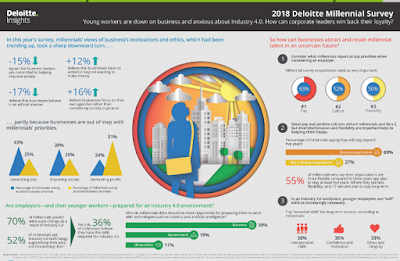
    Solution: Brands can feel more confident taking a stance as it will resonate with activist millennials. They should be very clear about the ways they give back to the community, fight climate change and pollution, and contribute to a more peaceful world.  "Today, only a minority of millennials believe businesses behave ethically (48 percent vs 65 percent in 2017) and that business leaders are committed to helping improve society (47 percent vs 62 percent in 2017)." (Deloitte).


Read more about Digital Natives here
http://knowledge.wharton.upenn.edu/article/viewing-your-company-through-a-digital-natives-eyes/

Deloitte Millennial Survey Results 2018
https://www2.deloitte.com/global/en/pages/about-deloitte/articles/millennialsurvey.html

How does ad-free Whatsapp make money?

Whatsapp - messenger mobile application which holds 1.5 billion users worldwide today, whereas Facebook and Facebook messenger have 2.5 billion and 1.2 billion users. It was founded in 2009 and acquired by Facebook in 2014, and has a large number of users especially in India, Brazil, and Europe.

Unlike other text message app, Facebook Messenger, Kakao Talk, LINE, WeChat which having advertising space or timeline function that let business accounts to stream their posts, or paid features for users, Whatsapp is ads free application allowing uses to send text/video/image/file messages and make VoIP call.

Until 2016, it charged users $1 annual subscription fee, though it dismissed this $1 fee and became free app. Before its ban of annual fee, Whatsapp blog mentioned it doesn't sell ads since the app is not for big companies. ("Why we don't sell ads")

But then how can Whatsapp generate revenue?
In 2016, the company announce its launch of paid features for business accounts, that enable companies to communicate with their customers and send direct messages for marketing to enhance their customer engagement. The app also provide data analytics to companies, such as how many users read their messages. For large companies, the app supports e-Commerce function via text messages where customers can buy items by replying.

Whatsapp transformed its business model from almost-free app in order to expand its number of users, then by obtaining a big asset of clients, it can sell themselves as marketing platform.

The app may make changes under Facebook empire, so it is still getting lots of attention what's going on for ads free user friendly app.


Reference:
https://www.econsultancy.com/blog/69738-what-marketers-need-to-know-about-whatsapp-business
https://www.investopedia.com/articles/personal-finance/040915/how-whatsapp-makes-money.asp
https://www.feedough.com/how-does-whatsapp-make-money/

Getting Real- What it costs to take your Business Online

 As modern Day Entrepreneurs Toggle with the idea of getting their business' out of the water, Digital marketing is one of those unspoken necessities of modern day enterprise, feared by most thanks to the attribution problem.

A quick search however, to calm your worries,

Freelancers are cheaPPPP! - Monthly contracts from 3 digit dollars and full projects from some K-Dollars.

The monthly charge from a TOP TOP shop shouldn't exceed $3000.

Small Business' such as yourself are the best clients.

SEO and PPC services are the one's that are mostly in demand.

Analytics and UX are the future. Adapt and Adopt!!


I hope this calmed the nerves.

Till Next time.

Tuesday, May 15, 2018

Unskippable ads finally arrive on Snapchat

When Snapchat announced back in April that was planning on testing and later launching unskippable six-second spots on its Shows analysts were anxious to see what the net impact of this move was going to be.

Snapchat has had a tough time getting people to watch ads on the platform. A 2017 study by customer acquisition firm Fluent found that 69 percent of Americans “always” or “often” skip ads on the app, a figure that goes up to 80 percent for 18- to 24-year-olds, the key Snapchat audience and one that’s highly coveted by advertisers.

On one hand it is hard to argue the business need to monetize on its growing user base, and the ads inserted in the middle of shows, similarly to traditional TV, are one way to do it, but on the other, forcing users to watch ads for products such as Samsung's Galaxy S9 and Snapple could turn them off further, to the detriment of the advertisers and the shows’ producers.

It remains to be seen what the net impact on Snapchat the new ads are going to have? Will they bring the company on the path to profitability, or will they plunge it into even greater despair as users scatter? The Wall Street and digital advertisers will be watching closely.


Sources:
http://adage.com/article/digital/snapchat-starts-showing-ads-viewers-skip/313509/
https://digiday.com/media/unskippable-six-second-video-ads-coming-snapchat/

Mobile-First Indexing

Almost two months ago Google announced that it was ready to roll-out mobile-first indexing. 

This means that Google will use mobile websites first when indexing a site. This could affect SEO as those brands who are either not mobile-friendly or have different properties for mobile and desktop as Google will start to penalize those sites that do not have a mobile presence.

Google is responding to the trend of more and more people searching on their mobile devices. This is ultimately pushing marketers to always consider mobile as a way to communicate content to possible prospects.

It is interesting to see how regular consumers are moving more and more from desktop computers to more mobile, always accessible mediums (such as smart phones).

For more on this topic:

https://techcrunch.com/2018/03/26/google-begins-to-roll-out-its-mobile-first-index/

https://moz.com/blog/mobile-first-indexing-seo