For almost any given product, there is an online community where the customers discuss brands, reviews, trends, and unresolved needs, if any. The more technical the product's nature, the more applicable this concept.
You must pay close attention to popular forums about your product, in addition to the standard Facebook, Twitter, and other mainstream social sites. Forums have a smaller reach than mainstream social media but are more effective and trusted. Needless to say, it is a great way to gather customer feedback and source new product ideas. On top of that, it's also a great place to market your products if done correctly.
There are many guides out there on the web that covers this in detail. But here is the summary. Ask friends/employees in your industry which forums they like to go. Decide on a few top ones. Make accounts and lurk. Lurking is the most important--learn their culture. Each forum has a unique one. Then, start contributing and earn their trust. ONLY when you have a good rep and credibility, ONLY THEN, start marketing your products as an insider.
Some more detailed guides below.
http://onlinebusiness.about.com/od/gettingtrafficmarketing/tp/forum-marketing.htm
http://kikolani.com/effective-online-marketing-with-forums-and-message-boards.html
http://www.wahm.com/articles/how-to-use-forums-and-message-boards-to-market-your-home-business.html
http://www.vibetechmedia.com/8-step-guide-for-forum-marketing-success/624
Showing posts with label AMML. Show all posts
Showing posts with label AMML. Show all posts
Sunday, March 08, 2015


Tuesday, March 03, 2015
Google to fact-check the Internet?
A research paper published by Google could potentially revolutionize the way information travels on the web. To this day, Google search results have been primarily ranked by relevance and their popularity (PageRank), determined primarily by exogenous signals. The paper proposes a different approach that ranks factually correct websites at the top using truthfulness as an endogenous signal.
Now, it may not go anywhere since it's entirely theoretical at this stage. But the tools necessary to employ this technique are already in place. Primarily, the Knowledge Graph. Google is slowly developing an internal fact database through the Knowledge Graph project. It's the same database that is powering some of the boxes that show up when you search for specific items. For example, a search for "FLU" would yeild:

In fact, Google even built sub teams under the Knowledge Graph project such as a team of doctors that researched and compiled medical information (5% of all searches are health-related).
Let's switch gears a little bit and think about how this could change the way SEO is done. Is Google actually willing to remake their algorithm that has been so successful? But then, Google is constantly evolving. There's nothing stopping them from one day declaring the new approach or from slowly injecting fact-check mechanisms as small parts of their algorithms. Maybe they're already doing it--maybe it will check this blog and fact check our posts. The results would be interesting. :)
Source
Now, it may not go anywhere since it's entirely theoretical at this stage. But the tools necessary to employ this technique are already in place. Primarily, the Knowledge Graph. Google is slowly developing an internal fact database through the Knowledge Graph project. It's the same database that is powering some of the boxes that show up when you search for specific items. For example, a search for "FLU" would yeild:
Let's switch gears a little bit and think about how this could change the way SEO is done. Is Google actually willing to remake their algorithm that has been so successful? But then, Google is constantly evolving. There's nothing stopping them from one day declaring the new approach or from slowly injecting fact-check mechanisms as small parts of their algorithms. Maybe they're already doing it--maybe it will check this blog and fact check our posts. The results would be interesting. :)
Source
Wednesday, February 25, 2015
Fooling Google

The image below shows a Reddit post where users spam the phrase "gaming console" in the comments. It almost is like the white-text trick that Professor Kagan mentioned earlier in the semester. The difference here though is that the comments are considered more "organic" by Google and therefore carry higher relevance scores. Here's the original post so that you can admire the copy paste skills of the pranksters.

The more interesting part though is when they tried the other way to promote a picture of a gaming console for the word "potato" (see here). That didn't work! Why? Well, potatoes don't typically make it to the news--Google's non-news organic search results stay unhindered.
Then, here is one last example of someone pranking Peyton Manning. You can still find that Nicolas Cage picture in the Google image results of "Peyton Manning" to this day.

Thursday, February 19, 2015
When ad serving technology backfires -- Lenovo + Superfish
Hot topic online right now is how Lenovo's shipped thousands of its computers with a pre-installed adware, called Superfish. Officially, it is supposed to insert ads as users browse the internet. Unofficially, it does much much more than that.
Superfish is able to insert ads on all webpages, including the secured HTTPS connections. How? It has unrestricted authority over creation of security certificates and therefore can inject permissions that lets it read data from the pages and inject appropriate ads. Yes, that includes all user communication with social networks, banks, shopping carts, and email. Such an attack is called the "Man in the Middle" attack--the malicious software reads the data right on the user's computer before it gets encrypted and sent out.

Needless to say, this backfired on Lenovo, who entered the partnership with Superfish not knowing all the details. Although Superfish claimed that it had been using its permission only to inject ads, a number of security researchers have already cracked Superfish's password key and posted proof (see screenshot below). This means that anyone who wants to generate fake security certificates can overload Superfish and abuse its permissions.

Lenovo has confirmed that Superfish disabled activation on existing machines in Jan'15. It has also been removed from new machines leaving the factory.
Source
Superfish is able to insert ads on all webpages, including the secured HTTPS connections. How? It has unrestricted authority over creation of security certificates and therefore can inject permissions that lets it read data from the pages and inject appropriate ads. Yes, that includes all user communication with social networks, banks, shopping carts, and email. Such an attack is called the "Man in the Middle" attack--the malicious software reads the data right on the user's computer before it gets encrypted and sent out.
Needless to say, this backfired on Lenovo, who entered the partnership with Superfish not knowing all the details. Although Superfish claimed that it had been using its permission only to inject ads, a number of security researchers have already cracked Superfish's password key and posted proof (see screenshot below). This means that anyone who wants to generate fake security certificates can overload Superfish and abuse its permissions.
Lenovo has confirmed that Superfish disabled activation on existing machines in Jan'15. It has also been removed from new machines leaving the factory.
Source
Wednesday, February 18, 2015
How far are companies willing to go to increase brand awareness?
Very, VERY far.
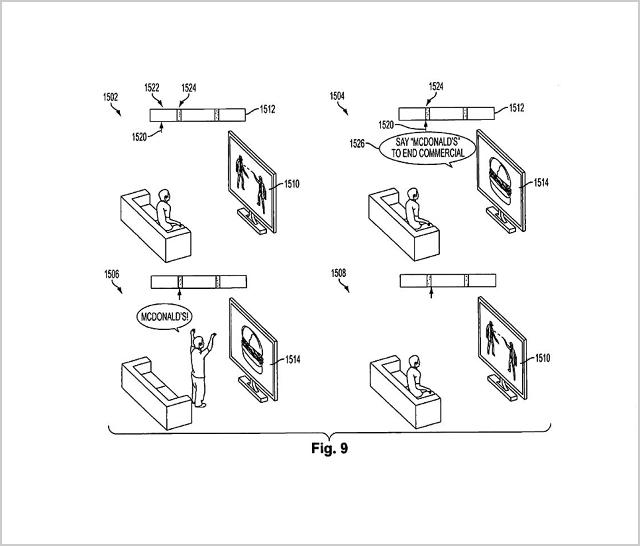
Back in 2012, Sony patented a technology that would turn TV ads into interactive games. A very simple example would be for the viewer to yell "McDonald's!" in order to skip a McDonald's ad, or any other phrase that McDonald's wishes.
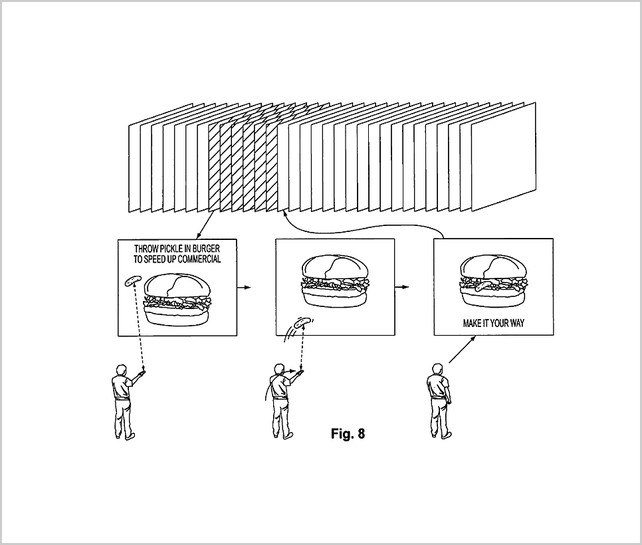
But that's not it yet. Sony's patent intends to cover other actions, such as throwing an imaginary pickle into a big Mac to speed up the rest of the ad.
Source
Back in 2012, Sony patented a technology that would turn TV ads into interactive games. A very simple example would be for the viewer to yell "McDonald's!" in order to skip a McDonald's ad, or any other phrase that McDonald's wishes.
But that's not it yet. Sony's patent intends to cover other actions, such as throwing an imaginary pickle into a big Mac to speed up the rest of the ad.
It is a scary world to imagine, where companies invading all the way to your living room to make you do things during your relaxation time.
Now, would you want to be one of the companies making your potential customers yell, swing, or otherwise, while they unwind after a long day of work?
Source
Monday, February 16, 2015
The Internet of Things
The Internet of Things (IoT) is the inclusion of electronics and software in any device not usually considered computerized in nature, to enable it to achieve greater value and service by giving it an ability to network and communicate with other devices. (wiki)
Some examples of IoT are smart cars that drive themselves, smart panels that monitor your home's temperature, smart mattresses that monitor and improve your sleep, and many more. It is estimated to be a $1.4 trillion market by the end of 2017 (Source: World Economic Forum article).

As far as digital marketing is concerned, that's A TON more of data being recorded to further segment the customers as well as that many more channels to insert ads. How well will digital marketing companies predict and act on this trend? The World Economic Forum article above focuses on how the makers of pervasive computing devices can add value by acting now to stay ahead of the curve.
Marketers must also act now.
Some examples of IoT are smart cars that drive themselves, smart panels that monitor your home's temperature, smart mattresses that monitor and improve your sleep, and many more. It is estimated to be a $1.4 trillion market by the end of 2017 (Source: World Economic Forum article).
As far as digital marketing is concerned, that's A TON more of data being recorded to further segment the customers as well as that many more channels to insert ads. How well will digital marketing companies predict and act on this trend? The World Economic Forum article above focuses on how the makers of pervasive computing devices can add value by acting now to stay ahead of the curve.
Marketers must also act now.
Sunday, February 08, 2015
Mobile First vs Mobile Friendly websites
Building a mobile friendly website used to be a thing to accommodate for the off-chance that the site visitor was using a mobile device. The mobile version of the site would have limited features, short to the point menus, and so on--essentially the watered down version of what you would see from your desktop or laptop computer. It is a feasible approach for websites with high traffic through desktop. (You can track that through Google Analytics.)
But this is 2015. At least in the U.S., the number of smartphone owners have overtaken the number of desktop/laptop users. This means a shift in the visitor patterns. Say, if the majority of your site users (and growing) are going to see the watered down mobile-friendly version of your site, you are going to fall behind. This is where the notion of a "mobile first" development mindset comes in.
From scratch, the engineer(s) designing the site would prioritize the mobile visitor experience. The content will be generated with a mobile audience in mind. The desktop version of the site is built afterwards with a few padded content and tweaks.
Obviously, the shift in traffic patterns would be different from site to site and company to company. Regardless, realize that mobile is now. It would be wise to closely monitor the shift in visitor device patterns of your website.
Inspiration for the topic: http://www.beyondnines.com/independent-voices/4-reasons-your-website-should-be-mobile-first-not-just-mobile-friendly/
But this is 2015. At least in the U.S., the number of smartphone owners have overtaken the number of desktop/laptop users. This means a shift in the visitor patterns. Say, if the majority of your site users (and growing) are going to see the watered down mobile-friendly version of your site, you are going to fall behind. This is where the notion of a "mobile first" development mindset comes in.
From scratch, the engineer(s) designing the site would prioritize the mobile visitor experience. The content will be generated with a mobile audience in mind. The desktop version of the site is built afterwards with a few padded content and tweaks.
Obviously, the shift in traffic patterns would be different from site to site and company to company. Regardless, realize that mobile is now. It would be wise to closely monitor the shift in visitor device patterns of your website.
Inspiration for the topic: http://www.beyondnines.com/independent-voices/4-reasons-your-website-should-be-mobile-first-not-just-mobile-friendly/
Saturday, January 31, 2015
A fun story of how Facebook's targeted ads are served (and can be manipulated)
I started learning about Facebook ads last year when a couple of my other CBS friends and I wanted to test the market for a startup idea that we were developing. During that process, I played with the Facebook ads quite a bit and learned many basics of online advertising. It was incredible to have the power of targeting just a certain segment of the population based on many factors such as geographic location, age, gender, hobbies, and many more. We threw multiple $50 campaigns to gather data on our customer interests right from our hotel room.
I then stumbled upon a story of a guy who spent $1.70 in total to prank his roommate, by serving very specific ads just for him. Instead of summarizing the article, I will let you enjoy the article in its original form: http://mysocialsherpa.com/the-ultimate-retaliation-pranking-my-roommate-with-targeted-facebook-ads/

Thursday, January 29, 2015
A Case Study of Virality
About 10 days ago, a user called "mylifesuxnow" posted on Reddit about how he caught his wife cheating on him. He then proceeded to send updates to Reddit throughout the weekend as his scheme to collect proof developed. It involved private investigators, more cheating women, and the story went on. I personally believe it was fake but it did not matter. Reddit ate it all up as a juicy story full of twists and lies. By the end of the second day of updates, the story received almost 1 million unique views.

Now, my blog post is less about how real or well-written the story is and more about how the internet has changed the way information spreads. A completely anonymous person with just a free weekend and a laptop could have pulled this off with $0 budget. The beauty of virality is that the dollar spend and audience engagement are not necessarily correlated. But of course, the variance of success is much larger and you cannot easily procure virality. The very nature of it requires content going viral to be genuine. Some companies have attempted to game virality through procurement. In the name of learning, enjoy this somewhat successful virality stunt by Nissan:
 Once you do achieve the viral status though, you can begin monetizing it. In the case of mylifesuxnow from Reddit, other people jumped right at the opportunity. Some started making movie posters based on his story and put it on sale for $5 a piece. Others turned the story into an eBook for sale. One made a website called www.mylifesuxnow.com after the original posts were deleted, presumably due to legality/maximum drama reasons. The site apparently received 260k visits in the past five days and the domain is now on sale to the highest bidder.
Make engaging content and count on the internet to make it spread. Quality trumps dollar spend in this age.
Now, my blog post is less about how real or well-written the story is and more about how the internet has changed the way information spreads. A completely anonymous person with just a free weekend and a laptop could have pulled this off with $0 budget. The beauty of virality is that the dollar spend and audience engagement are not necessarily correlated. But of course, the variance of success is much larger and you cannot easily procure virality. The very nature of it requires content going viral to be genuine. Some companies have attempted to game virality through procurement. In the name of learning, enjoy this somewhat successful virality stunt by Nissan:
Once you do achieve the viral status though, you can begin monetizing it. In the case of mylifesuxnow from Reddit, other people jumped right at the opportunity. Some started making movie posters based on his story and put it on sale for $5 a piece. Others turned the story into an eBook for sale. One made a website called www.mylifesuxnow.com after the original posts were deleted, presumably due to legality/maximum drama reasons. The site apparently received 260k visits in the past five days and the domain is now on sale to the highest bidder.Make engaging content and count on the internet to make it spread. Quality trumps dollar spend in this age.
Saturday, January 24, 2015
Significance of a Space on my Life
Given the visit from Patrick today, I'll write about my personal journey in branding myself online.
My name is AungMaw MyoLwin. It used to be Aung Maw Myo Lwin with spaces--it is common practice in Burma to spell out each syllable as a word in English. The removal of spaces is so insignificant a change that there was not even a formal process.
Where it was significant, however, is with Google, and consequently my career.

Red boxes are the irrelevant results. The only valid link was my college link starting with www.wooster.edu. Recruiters were being thrown off by many Aung's and Lwin's (common name in Burma). Whatever a random guy Aung Maw is doing in Burma is tied to my profile. No fault to the recruiters of course; they had no way of knowing how common such a weird name is. Throw into the mix their unfamiliarity with the country itself, and you have a confused recruiter who would rather look at the next resume.
 I removed spaces in my resume. I updated my LinkedIn and Facebook names to the new name. I went to college IT to update the display name on my emails. BOOM! (Okay, the search results didn't update right away. My understanding is that you have to allow time for Google's bots to get around to indexing the new information.) But anyways... BOOM! My search results looked much better. As far as Google was concerned, AungMaw MyoLwin was a new phrase. Remember our class speaker saying how the difference between Pat and Patrick is significant? I cannot agree more. My LinkedIn page shot up to the top spot, followed by my Facebook, which I kept very PG-13.
In a way, my name forced me to learn some basics of SEO. I then found a job.

Certianly still more work to be done. My next steps are to:
My name is AungMaw MyoLwin. It used to be Aung Maw Myo Lwin with spaces--it is common practice in Burma to spell out each syllable as a word in English. The removal of spaces is so insignificant a change that there was not even a formal process.
Where it was significant, however, is with Google, and consequently my career.
2009, Name: Aung Maw Myo Lwin
I was graduating from college in a year and looking for a job. Recruiters would google my name and arrive at a result similar to this:Red boxes are the irrelevant results. The only valid link was my college link starting with www.wooster.edu. Recruiters were being thrown off by many Aung's and Lwin's (common name in Burma). Whatever a random guy Aung Maw is doing in Burma is tied to my profile. No fault to the recruiters of course; they had no way of knowing how common such a weird name is. Throw into the mix their unfamiliarity with the country itself, and you have a confused recruiter who would rather look at the next resume.
2010, Name: AungMaw MyoLwin
I removed spaces in my resume. I updated my LinkedIn and Facebook names to the new name. I went to college IT to update the display name on my emails. BOOM! (Okay, the search results didn't update right away. My understanding is that you have to allow time for Google's bots to get around to indexing the new information.) But anyways... BOOM! My search results looked much better. As far as Google was concerned, AungMaw MyoLwin was a new phrase. Remember our class speaker saying how the difference between Pat and Patrick is significant? I cannot agree more. My LinkedIn page shot up to the top spot, followed by my Facebook, which I kept very PG-13.In a way, my name forced me to learn some basics of SEO. I then found a job.
Present, Name: AungMaw MyoLwin
I built on my SEO knowledge and developed my online presence. I bought out both www.aungmaw.com and www.aungmawmyolwin.com domains to reserve it. During Thanksgiving break of 2013, I decided to teach myself HTML5 and built out a personal website. Today, I'm at a happy place with the search results for "AungMaw MyoLwin" (static screenshot below)--all the top organic links are mine.Certianly still more work to be done. My next steps are to:
- Attach a blog to my site and develop a habit of blogging weekly. This post is the start.
- Look into reserving other domains like .net, .org, etc. Is it even worth the money? I don't know yet.
- Get linked to my site from popular sites. [See how I subtly did that in this post? :)]
Subscribe to:
Posts (Atom)