Showing posts with label Johannes Mueller. Show all posts

Tuesday, December 08, 2015

Is Social Search dead?

Source: Techcrunch

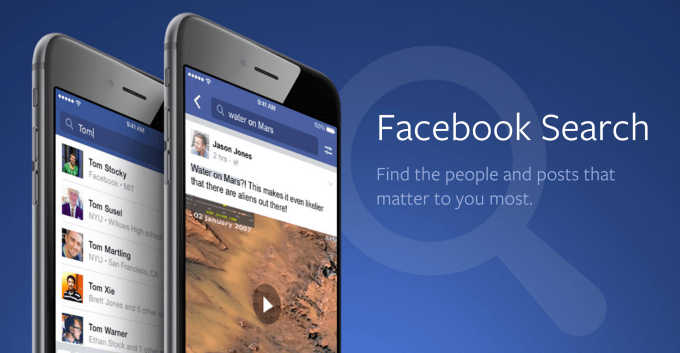
In 2013, Facebook launched what it called its third pillar, "Graph Search". Lead by a team of former Google employees, the company wanted to provide solutions and answers, not just links like Google. Mark Zuckerberg back then said:
What’s more interesting than any of these things (that Facebook currently does) is giving people power and tools to take any cut of the graph that they want.
People were amazed (some also were concerned) about how personalized and specific the search tool worked: You could ask queries like "friends in New York who like Harry Potter and Game of Thrones.” Many were convinced that this could mark the beginning of a serious attack on Google, as you could use the service for recruiting, product recommendations, travel, images, or even dating. The quality of the answers was supposed to be better as they had a "filter", a form of social approval and confirmation. Some even thought it was a feature to make people not leaving the site anymore, as now even search could be done there, but for many things better. Maybe all of that was a bit rash.

Graph Search did not take away significant traffic from Google, or Foursquare or Yelp. In fact, Graph Search was never completely rolled out to all users and its various search features are hidden in different places and subpages. Searching with Facebook again is so bad that Michael Morgenstern, a film maker from San Francisco build his own interface for searching with Facebook, searchisback.com.

As Google failed with its own social network Goggle+, social search still is unconquered territory. Even though Google uses insights about social connections and behavior for its search, Facebook's vast amount of data and user insights are much deeper and richer then that. We are social beings and many of our search requests could be improved by adding a social layer that works approving or just inspiring. Especially in commerce, news and entertainment, the opinion and recommendations of social connections can help prioritizing and filtering web content.
Maybe unbundling search and launching a powerful search app (with personalization features like Google Now) could be a way for Facebook to re-enter the game. I think search still is one of the most exciting spaces in the internet business. Alone because sponsored search is closer to transactions and its success is easier to measure, I think Facebook should keep on considering it a tremendous business opportunity.


Monday, November 30, 2015

Email Marketing in the Mobile Age


112 billions business emails are being sent everyday, 93 billion private mails. Even though it is not perceived as a very "hip" channel, after more then a decade of successful usage, email marketing still is tremendously relevant. 

With the mobile internet on the rise, sending and receiving mails brings new challenges but also opportunities. The obvious advantage is the fact that with our mobile devices we are always online and many check their mails even more frequently then on a PC. 
On the other hand, conversion rates of mails being opened on mobile devices are much worse. This is mainly because most people do not make purchasing decisions while they are on the go. Furthermore, many people have a higher feeling of trust when they are online on a home PC. Also, it is still hard to track people's interactions and purchasing behavior across multiple devices. 

If you research for the best practices of email marketing, most tips have been around for quite some time:

1. Relevant content: Here it will be exciting to see, if automized content can be increasingly contextualized to address people individually in their (mobile) environment

2. Intelligent Personalization (see 1.)

3. Holistic and integral communication across all channels

4. Modern email marketing tool-architecture that allows a data-driven and comprehensive CRM.

5. Staying creative in the way you approach customers or leads (despite automatization and data-drivenness) 

6. One last important point is the format of the mobile screen. Thorsten Blöcker, head of consulting at the marketing agency Netnomics, says in a blog post: marketeers should try to make their mobile mails as interactive and compact as an app. 

This video shows an example how mobile mails can be optimized for the channel and how content can be adapted to a small screen.


It will be exciting how email as a channel will evolve in the mobile age. If email marketeers make their content adaptive to the mobile screen and if data-driven personalization is used more and more for a creative address, its relevance could further increase. 

Tuesday, November 24, 2015

The End of the News Website


NowThis is a young media and news company that exclusively publishes its content on social media platforms. After being a news startup like many others, in february 2015 they decided to take their website with content offline and focus on tailored videos through external channels. This DIGIDAY article about how NowThis tries to crack mobile video made me generally think about the future of media businesses, websites and their mobile publishing channels.


"NowThis, founded by former Huffington Post execs Ken Lerer and Eric Hippeau and backed by $5 million in venture capital, plays to the sensibilities of an always-on, always-social, always-sharing audience." That's why they optimize their video content, with a goal of 15-20 daily videos published, for mobile platforms and screens. With a team of more than 30 editors and content creators in their New York office they are constantly producing news for a young generation of media consumers.

In my opinion, this is further intensifying the battle about the future of the news industry. Traditional players are not only challenged by how to monetize their content in a digital world. The concept of a website with paywall, also known as "walled garden", is still an experiment to many while startups like NowThis are already moving beyond this and claim that a website is out of date.
There are numerous young companies like Circa, Quartz, or Insider that are innovating distribution and content creation.  Insider for example is a Business Insider spinn-off from the German media conglomerate Springer, starting exclusively with a Facebook page. Bild Online, the web spinn-off of Germany's most popular daily newspaper produces their own daily news in a smartphone screen format. What you can observe there is that not only the distribution of content is changing, but the entire storytelling. Original content from print or web media is not just cut down to make it fit into another platform like Instagram or Snapchat. NowThis and its ambitious peers are creating original content individually for all relevant mobile platforms like Snapchat, Instagram, Facebook, and Kik. That's how they are able to respect the particular cultures, tones, and follow the best practice success codes of every platform.

Mobile is a great opportunity for innovative news companies but it is also an additional stress factor that challenges traditional players.


Tuesday, November 17, 2015

The Monetization of Instagram

source: onlinemarketingrockstars

The recent product updates of Instagram and the announcement that the platform has reached 400 million monthly users made me think about some fundamental questions.


The Instagram ad platform is now open for everyone - what are implications for influencers and marketeers? 
There are a lot of brands and influencers that are already monetizing their reach on the platform. Even though you cannot include links into your posts, paid product placement or lead generation through the link in Instagram profiles are generating millions of dollars for influential individuals and brand on the platform. On the one hand, Instagram relies on these profiles for the high quality content they are providing and for engaging with a massive young audience. On the other hand, it is very likely that Facebook in the future wants to participate in the business being conducted on their network. There are no signs of Facebook going to war with influencers but it will be really interesting in the long run, what features or policies they are going to launch in order to monetize on the lucrative category of influencer marketing.


Everyone is talking about influencer marketing - is there something missing for a breakthrough?
Marketing and tech media are talking a lot about influencer marketing, still it seems like a very early category compared to what's the the potential of it. My impression is that many companies are still figuring out how to benefit from it and how to integrate influencers into their campaigns. Many are still struggling with building meaningful relationships to influencers, addressing influencers that fit their brand and target group, and telling authentic stories with them. The landscape seems confusing and companies like Neoreach are still working on making it easier to get access to the right channels here. Once these tools and channels are more established, I expect influencer marketing to grow tremendously and to move on into other categories besides lifestyle and fashion

Will there be a new ecosystem of agencies and affiliates or is Facebook cutting them all out? 
This question is still very open to me and I am excited about discussing it people who work in marketing. Affiliates like Megachat hugely benefit from their reach on Instagram and they reach more than 1.8 million followers with all their accounts. They build up own accounts and work with other influencers to maximize the value of their affiliate services. At the same time Facebook launched its own Instagram partner program that starts with 40 agencies which are supposed to help bringing brands on the platform. The experience from the Facebook ad platform but also from the early days of Google has shown that they might offer short term incentives for agencies in order to kick off their ad services. In the long run, media blogs expect only a marginal share of less than 2% for intermediaries like ad agencies. Once the platform has matured to a major player, Facebook is likely to cut out many other players and exclude them from the revenues made on the platform.


Monday, November 09, 2015

The Future Of SEO


For many years unpaid search results have been a great driver for websites and online shops, a massive service industry around it has evolved. Updated algorithms and decreasing space for organic search results have led to a discussion about the relevance of SEO today.

A recent interview on the German tech news platform "Gründerszene" dealt with that topic as well. "Customer Relationship Marketing is the new SEO", Florian Heinemann, a successful entrepreneur from Berlin says there without going into the details of this statement. Furthermore, he points at the fact that Google's rank algorithms and link analysis are not completely transparent and fully in the control of the company. Therefore he argues, the risk-return relation of SEO investments are getting worse for companies in the long run.

Another aspect that might have an impact on the future relevance of SEO is the rise of content marketing. The interview touches the idea that content marketing is being seen as the cure-all in online marketing as valuable content can be leveraged in social media, SEO and other channels.

I think, SEO will remain highly relevant. What changes is the way brand are telling their stories and building their identity. More and more, valuable brand content has to enrich the life of the audience in order to build loyalty. Marketeers have to understand how to leverage the content they create for their content marketing and make it work in the context of SEO. From a business perspective Heinemann certainly wanted to emphasize that SEO just is not enough anymore to stay competitive. In todays online marketing landscape (especially in e-commerce), cost cutting measures become increasingly relevant and new marketing channels have risen. While SEO has to be a sustainable and efficiently managed tool, CRM can help to cut marketing expenditures and outperform the competition. Therefore, only the relative relevance of SEO' in the marketing mix decreases.

Tuesday, October 27, 2015

Facebook's War for Push Notifications


Recently, a German Article in the magazine "Online Marketing Rockstars" made me think about mobile push notifications as a not completely new advertising space that might be swirled up again soon. It is about Facebook's new app "Notify" and the key features the media expect. Basically, publishers and advertisers can partner up with Facebook in order to send push notifications to the app user's phones. So this is not just about breaking news, but also about creating purchasing pressure with pushed deals and offers.

That's why it can be seen as a general approach to conquer the push notification game - a very hot space as it is not yet overcrowded and information comes between private messages on the user's home screen. Very few apps like Yo! have tried to gain a stake in this market which is and most likely always will be dominated by the mobile OS giants Google and Apple. The whole topic is about the opportunity to "tip 2 billion people on their shoulder", as an Israeli mobile entrepreneur says.

A crucial aspect of this race for the user's attention is getting the permission to send push notifications to phones - a challenge with a 42% permission rate, according to the US service provider Urban Airship. As Facebook allocated an impressively sized team of developers to that project, one can see the relevance of the push notification space. This is nothing less than the race for the last white spots on the map of advertising space.

I think it is really exciting how one environment after the other gets in the focus of publishers and tech companies. In my opinion, audio messages being send to your earphones will be one of the next things. Ultimately we could talk about VR glass projections, wearable vibrations and more.

Again, the implications for marketeers and service providers in the space are still unclear. Ultimately, Apple and Google still control the mobile world and are the ones with the last word.


Tuesday, October 06, 2015

Ad Blocking: Another Driver of Effective Content Marketing

Seth Godin, one of my favorite marketing bloggers and authors wrote about ad blockers and the implications it brings for advertisers. I'd like to share my thoughts on some of the most interesting points he made. 

Basically he points out that more and more people are automatically blocking the ads in their browser. However, "ad blockers undermine a fundamental principle of media, one that goes back a hundred years: Free content in exchange for attention. 
The thing is, the FCC kept the ad part in check with TV, and paper costs did the same thing for magazines and newspapers. But on the web, more and more people have come to believe that the deal doesn't work, and so they're unilaterally abrogating it. They don't miss the ads, and they don't miss the snooping of their data."

Godin goes on and hints at some developments I also wrote about previously: Good marketing is not advertising as we know it. It is valuable content that contributes to our culture and daily life or even better: it is just a remarkable product. This campaign of Nike is just one great example that shows how to create value and kick of a conversation around one's brand by offering content and entertainment.
This new set of rules is exactly what I tried to map out when I blogged about content marketing and the challenges of native advertising. The new era of advertising also implies that you have to earn the privilege to contact customers and potential customers and followers. Gary Vaynerchuk is one other perfect example for that. He creates impressive amounts of valuable content where he answers the questions of his followers and where he always provides a good dose of entertainment. With everything he does he expresses great care about his audience and he is willing to work hard to deserve their attention. In the end, after a lot of consumed free content, a fair amount of them buy his books. And not just that - they also talk about the experience with their friends and they share the content. 

Just because I think Godin perfectly hits the nail here, I'd like to close with this wonderful quote of him:
Media companies have always served the master who pays the bill... the advertiser. At some point, the advertiser will wake up and choose to do business in a new way, and my guess is that the media that we all rely on will change in response. But in the meantime, it seems as though many online consumers have had enough.

Tuesday, September 29, 2015

Technology as a Driver of the Consumerization of B2B


I am at the Founder.org conference right now, where I see many young B2B and B2C startups pitching to silicon valley investors (Founder.org is a VC fund investing in student founders in North America and Europe. I am working for the organization as an associate who sources and screens startups in Munich, Germany and New York City.)

What I found interesting among many of the B2B companies here is how they approach marketing and sales and how it differs from how traditional B2B marketing is often understood and taught. It's not just that their technology is the necessary 10x better (according to the rule of thumb for adoption) than the current market solutions, most of them are also trying to create a competitive advantage by using marketing technology to outpace traditional players.

There is Konux for example, a sensor startup that develops the hardware and software for the future of industry, an internet of sensors. They are automating and structuring marketing in a way that traditional sensor companies just cannot perform because they lack the digital mind set and skill set. They are doing content marketing to tell stories about their team and how their sensors are being used. They build up a CRM and an automated sales cycle that allow a leaner organization, wider reach and faster and more personalized follow-ups.

There also is Building Radar, a lead generation platform for the construction and interior design industry. Their algorithms not just screen the internet for future construction projects, their data management system also allows them to personalize their service and address the best matching supplier for any project.

I've talked to both teams and studied how their competitors are doing marketing and sales. For a so called digital native it is shocking how manual they still work and how slow they have grown over the years. Leads are being generated mostly offline, sometimes fax and telephone still are their preferred means of communication. They are operating in multi-billion dollar industries and they are now threatened by new companies who not just disrupt the technology used but first and foremost the marketing and sales technology. The Economist already brought up the topic in 2014, hinting to the fact that technology is one of the drivers that leads to a personalization of B2B sales. The core idea of this trend is that also businesses are run by people and business to business sales decisions are being made by human individuals. For me, it is exciting to see how digital technologies allow to transform not just products and services but also all aspects of business in any particular industry.


Sunday, September 13, 2015

Influencer Marketing - the next big Thing?


I recently read a post on Adweek about why Influencer Marketing is the next big thing. Some of the points the author Misha Talavera (co-founder of the startup Neoreach, an Influencer Marketing service for brands) made, were the following: 
1. It’s Powerful: Influencer marketing presents a glaring opportunity for brands to leverage the power of word-of-mouth at scale through personalities that consumers already follow and admire.
2. It’s Social: People expect brands to talk with them rather than at them. They no longer expect brands to sell to them, but to entertain and inform them. In this new paradigm, influencers are a force to be reckoned with. 
3. It’s Sexy: When 50 influencers posted an Instagram picture of themselves wearing the same Lord & Taylor dress, on the same day, they told the Instagram fashion niche that the dress was a must-have article to be in the in-crowd. The dress sold out the following weekend.
talavera1
Working with influencers and tastemakers will communicate to the market that your brand may very well be the next big thing. In addition, you can repurpose the content they create to impress your existing customers.
4. It’s An Arbitrage: There is a massive supply of influencers, but few marketers running influencer campaigns, meaning that the cost of buying an influencer promotion is below its real value (as measured by your ROI).
5. Consumers Are Tired Of Paid Ads: With all of the advertising interrupting them, it’s no surprise that people love products like AdBlock, Netflix, and Spotify Premium that take ads out of traditionally ad-saturated media experiences.
6. It Helps Your SEO: On top of building your brand and improving your sales numbers, influencer marketing also helps your search engine ranking.

I've worked with influencers at two startups, Chuisy and Freeletics, over the last few years. We found that this new form of online marketing indeed still is an arbitrage. Especially younger influencers often are not aware of the value of their massive audience and charge low prices for the reach they provide. However, we also experienced some significant limitations that have to be considered. 
If you have several influencers posting for you (e.g. if an agency sells you a package and just adds up their audiences to charge more), the actual reach is hard to estimate. Most social media users follow a long list of similar influencer accounts why you have a significant overlap in the audiences. Have people seeing your content several times isn't generally a problem, but tracking KPIs like reach or CPM is a challenge. 
Tracking also is a challenge if you are on platforms where links cannot be placed yet, like Instagram or Snapchat. That's why some companies consider influencer campaigns rather as a measure for awareness and accept not knowing about CTR or similar KPIs. 
Furthermore, we where sometimes surprised how imprecise information about  the audience of influencers where. Targeting audiences of a certain age or location is then extremely difficult if you are working on platform with no precise targeting tools. 
One last aspect, which is more a qualitative one:  We found that influencer marketing often lacks authenticity if product endorsement/placement doesn't happen in the context of a long term relationship between influencer and brand. Influencers who constantly post new products (especially if it's about subscription services or other items for long-term consumption) cannot authentically demonstrate brand loyalty. You want your product mentioned over a longer period and among a limited set of products, an influencer is recommending.

I think it generally helps to understand that influencer marketing is not just about the added total number of followers reached. A more appropriate formula is: Influence = Audience Reach (# of followers) x Brand Affinity (expertise and credibility) x Strength of Relationship with Followers. To be fair, most of these limitations are being worked on and companies like Neoreach contribute greatly to the innovation process. 
BDMI Graph On Influencers           BDMI Graph On Influencers


Tuesday, September 08, 2015

The Ubiquitousness of Advertisement and It's Evolution


In the streets, on the subway, on busses and taxis, on radio and TV, in your mailbox, on any website and in social media, on the bags you carry and on the shirts you wear - advertisement is everywhere and we cannot escape.

If you follow the original definition of advertisement by the American Marketing Association, ads are all about informing and persuading target groups about a product or a service. However, since 1886, when Coca Cola launched its first ad in print, the role and appearance of advertisement has dramatically changed.

Coca Cola's first print advertisement from 1886


With technology and social media, advertisement has not just become more targeted. It also feels like it has made its way into the last corners of our private life with all the insights of what we do and feel. Understandably, most people increasingly get annoyed and immune to ads, use ad blockers, and try to avoid or ignore any form of advertisement.

Advertisers are seeking new ways to get their message to the audience without harming brand image or the customer relationship. Content marketing (brands trying to provide valuable content associated with their products) and native advertisement (mostly advertisement that is camouflaged as journalistic content) are just two strategies to be observed in that context. Recently, the discussion about native advertising has gained traction again. This contribution by John Oliver, wich is not just humorous but also insightful, made me think about two different perspectives on the topic.


Perspective #1
Let's face it: we will never be able to escape from advertisement. Especially with a culture of free content and social media infrastructure, ads are necessary to finance what we consume. So in that regard, it would be great if marketing becomes more valuable for the consumer and contributes to our daily life in a positive way. We are already used to fashion brands sponsoring art galleries or museums, so why can't they participate in the value chain of entertainment and information?
Online media publisher Vice is taking an interesting approach with what they call "content sponsored by brands" (opposed to branded content which means native advertisement). It means that brands are sponsoring a team working on a specific story while Vice claims that the journalistic process completely goes without external influence. One could argue this kind of content will never be truly independant. However, as long as the connection is being communicated transparently, it is up to the consumer to evaluate and filter the information.


Perspective #2
On the other hand, ads which aren't clearly marked as advertising are manipulating audiences in a way that is ethically questionable. Most people expect the news to be independant and there are good reasons for a press and for content which is not just entertaining or informative but also uninfluenced. Advertising is legitimate as long as people understand that there is a brand behind that is trying to influence consumer behavior.
Consumers are less and less able to make conscious purchasing decisions if every piece of content is being influenced by brands. It is already hard to tell, how uninfluenced and conscious our behavior is as media consumers. In Germany, we currently have a discussion about the influence of youtube stars and bloggers who exploit the loyalty of their immature audiences. They use their credibility and the trust they gained to promote products and brands without mentioning that they are being paid for it. New laws that dictate a clear communication of this kind of placement are being discussed. While the content contributors argue, such a labeling would destroy the originality of their seemingly user-generated content, most people appreciate the initiative.


Generally I think, if advertisers try to create ads with an inherent value proposition (e.g. entertaining like a Superbowl ad), it is a positive development. However, the line of a consciously consuming consumer is easily being crossed and with new forms of marketing the (legal) boundaries have to be redefined. What do you think?