Showing posts with label Instagram. Show all posts

Friday, January 18, 2019

Are they trying to steal my face?


While some people find it funny to participate in #tenyearchallenge (303k posts Instagram as of today), others are concerned that it was initiated by Facebook in order to collect even more personal data for their own sake. It sounds quite logical that it might be a perfect database for creation and training of a mechanism, which will generate an image of a person in different age stage as well as recognize a current age.

“Imagine that you wanted to train a facial recognition mechanism on age-related characteristics and, more specifically, on age progression”, O’Neill.

However, Facebook representatives deny the fact that this challenge is initiated by them and have benefits to their company. Even though they are trying to be convincing, let’s not forget the Facebook-Cambridge Analytica scandal, when data of millions people was used without their agreement.

Why are we so afraid of companies having our face information stored? In fact, a huge amount of data has already been generated on each of us related to our preferences in food, web search and other intimate questions, and we just don’t want to admit it. According to The Guardian, in 2016 already a half of US adults’ faces were stored in police databases. It sounds scary that someone is watching you, but we also should not deny that it can do our lives better.

Firstly, face recognition system can make the World a better place. It can definitely serve the need to find people, who were lost, or those, who committed a crime. Aging part of the mechanism might be especially useful for searching kidnapped children after a long period of time. There is a case when facial recognition helped to find a child after 27 years.

Secondly, it might be an aid for providing a better customer experience using targeting. I can imagine Sephora scanning my face in order not only to know my skin tone, but also my age, making a better recommendations as a result.

It is a personal choice whether or not to raise a concern about privacy of personal data. But if it is inevitable, why not to focus on the bright side?

Fake Sponsored Content is Changing the Landscape of Influencer Marketing


We have all become accustomed to seeing sponsored posts from influencers littered all over our social media. What you may have not considered before is how someone becomes an influencer. The Atlantic ran an article which discussed how influencers are posting fake sponsored content on Instagram in order to kickstart their influencer career.

When a brand is selecting an influencer to promote their message, they are looking for someone who has sufficient reach but also has track record of success. Similar to how a page with many inbound links form reputable sites looks attractive to Google’s search algorithms, an influencer who already has many sponsorships is more desirable for brands. Essentially an influencer gains more credibility with each additional sponsor they add. Given this dynamic, the first deal for an influencer it is often the hardest to land. As a result, what aspiring influencers are creating fake posts to give the appearance that they are already have sponsorship deals.

These fake posts are intended to mimic a sponsored post in everyway except that the influencer has no relationship or is being paid by the brand. To the average person it would be difficult to tell the difference, if they even cared to stare long enough at the post to scrutinize them. Given all this free publicity, it would seem that brands would stand to benefit from this trend; however, it is a bit of a mixed bag for them as well. When an aspiring influencer creates a fake post, the brand has no control over the content and it runs the risk that these posts can be off-message. Brands are caught in an interesting position where they want to continue to benefit from the free publicity, but they also want to ensure consistency in the brand message.

How quickly influencers have increased their digital presence makes you wonder if the influencer marketing is here for the long-term or if we as a society will be all “influenced” out in a few years. Me personally, I’ve already become numb to these ads and sponsored posts (or at least I think I have) and with fake posts on the rise it could accelerate the whole process. With brands getting free posts from these fake influencers, could this saturate the market and undermine the whole influencer marketing society?

Saturday, July 28, 2018

The popular in Instagram Stories on the marketing campaign


Refer to the survey in February 2018 from Activate, influencer marketing agency, nearly 90% influencers worldwide were active in Instagram for the marketing campaign with the brand rather than in Facebook like before. Apart from the ordinary post on Instagram, Stories becomes the most powerful and favorite among the other features.

Source: eMarketer.com

As of June 2018, there are 400 million people daily using Instagram Stories. People use this feature to matching with their preference to fast, fun and playful update their lifestyle or kinds of stuff within the day with the interacted function that allow the viewers to respond on the Stories posts. Moreover, the full-screen resolution results in the better audience’s experience. That is not surprised why Instagram Stories becomes such a favorite feature even it just launched in August 2016.

 Source: Facebook Business

Not only just for fun with friends and families, but people also discover the Stories for what they are interested.  Therefore, it is the opportunity for the brands or influencers to work on the campaign to connect and increase brand engagement with their customers by creating the content in Stories. Moreover, there is the function that the users can attach the link to the webpage within the post that facilitates the audience to explore more about the posts, and it is possibly helpful for the brand to increase the conversion rate as well.


Reference:

https://www.emarketer.com/content/instagram-is-the-leading-platform-for-influencer-marketing

https://www.facebook.com/business/news/stories-theyre-where-your-customers-share-and-discover-things-they-love

Thursday, March 31, 2016

Instagram Update: The Algorithm Change Explained

By Blaire Townshend

A recent email blast sent out by Capacity Interactive—a digital arts marketing consultancy company—focused on the use of Instagram for digital marketing efforts, offering advice on best practices and updating its readership about the recent changes to Instagram—namely, the change from chronological feed to algorithm.

For those unfamiliar with how Instagram has worked up until this point, the platform has used a chronological approach on its users' newsfeeds since its inception in 2010. The projected change means that, rather than seeing your friends' posts in the order in which they were posted, you will now see posts "based on your relationship with the person posting and the timeliness of the post" (Valinsky 3.15.2016). The company has argued that the current format does not maximize viewing potential - in fact, they cited that users miss about 70% of the content on their feed. They believe that the implementation of an algorithm will curate content better suited to user interests. Instagram also assures its users that they will roll out this change slowly, and that it will not affect its advertising procedures. In fact, these adverts already utilize this same targeting technology to reach their intended audience—so in a way, the algorithm change is ensuring that social and marketing content operate in the same manner.

So what does this change mean for the 200,000 brands that utilize Instagram as an advertising platform (Instagram 3.29.2016)?

Not much, actually. At this point, you cannot actually directly target people with Instagram ads as you can on Facebook. On top of this, "organic" posts cannot be used for advertisements—the only promotional material allowed on Instagram is that which has been developed specifically for marketing purposes. On Facebook, on the other hand, marketers can post their own organic content and use it for promotional purposes. The algorithm will not change any of this (Instagram all).

However, Capacity Interactive made sure to remind its readership of a few important takeaways when considering Instagram advertisement for the arts: 


  • Make "thumb-stopping", visually arresting content a priority
  • Remember that Instagram is an overwhelmingly mobile platform, and plan accordingly
  • Make sure you are comfortable with Facebook first before graduating to Insta-advertising
  • And finally, don't worry about the algorithm change. It changes the user experience, not the advertising landscape.
As an Instagram user myself, I will be interested to see how my experience will change. I, for one, welcome the algorithm in theory, as I have often felt that the chronological template did not allow me to engage with my closest friends in a way that I would have liked. However, as a future arts marketer, it is heartening to know that this change will not negatively affect the advertising efforts of the organizations I hope to work for.  


Sunday, November 29, 2015

Instagram and its ad platform


With more than 400 million active users, Instagram is now one of the world's largest mobile ads platforms. Its photo and now also available, video sharing features differentiate it aside from other social media platforms such as twitter and facebook. Visual expression’s creative, artistic and chic nature make Instagram a very engaging platform for users and brands can easily resonate with its followers expressing a certain lifestyle spirit. The demographic and behavioral characteristics of Instagram users make the platform a great place for brands to promote brand metrics and interactivities. According to GlobalWebIndex, around 70% of Instagram audience are under 35 and about 53% users follow brands using this platform, ranking the highest among all major social media platforms.

Recently, the platform has launched a new targeting tool for marketers, which allows them to capture the segment of audience who are excited about holiday shopping i.e. Black Friday, Cyber Monday and Christmas purchase, by locating keywords and hashtags. A lot of brands are using Instagram to provide gift ideas and promote festive sales. It will alert advertisers when people posting content relevant to holiday buying.

A special thing about Instagram is that it does not have filtering algorithms, which allows ads be seen by a higher percentage of audience comparing to other social media platform which implement filtering algorithms. Instagram also provides good measurement functions for advertisers to evaluate campaigns’ ROI and effectiveness.

However, a weakness of Instagram as a marketing platform is that it lacks behaviorial data beyond the trending hashtags. As mentioned by Sarah Vizard, brands could hardly draw insights on how audience engage on Instagram.

Reference:


Tuesday, November 24, 2015

The Social Commerce Growth Wave

While still a small contributor to overall e-commerce sales volumes, social commerce is becoming hard to ignore. Social media driven e-commerce revenue grew 26% in 2013 compared with 16% growth in e-commerce overall. With the recent introduction of advertising on Instagram and "Buy" buttons on Pinterest social commerce growth has the potential to grow significantly. Currently Facebook is the primary driver with 50% share of social referrals and 64% of total social revenue but Instagram and Pinterest are likely to start taking share with the introduction of "Sponsored" posts and "Buy" buttons.

Before the introduction of sponsored posts Instagram was primarily used for brand building purposes but with the introduction of call to action tools such as LiketoOwn.it, it is also becoming an e-commerce tool. The visual and mobile-first nature of Instagram drives significantly more engagement than Facebook and Twitter. Brands can now capitalize on the higher engagement and credibility of recommendation factors to drive sales via Instagram. Even the sponsored ads on Instagram are much less disruptive to the user experience than say a Facebook ad or promoted Facebook post.

Pinterest recently introduced shoppable pins. They have the potential to drive significant conversion due to the search engine nature of the site. Consumers usually go to the site to search for things they are already looking to buy. By targeting users with shoppable pins based on past pins they have the potential not only to drive sales for their retail partners but also to increase engagement with their users by providing with what they are looking for. According to initial data shoppable pins are doubling the rate at which searches result in sales.  

Tuesday, November 17, 2015

The Monetization of Instagram

source: onlinemarketingrockstars

The recent product updates of Instagram and the announcement that the platform has reached 400 million monthly users made me think about some fundamental questions.


The Instagram ad platform is now open for everyone - what are implications for influencers and marketeers? 
There are a lot of brands and influencers that are already monetizing their reach on the platform. Even though you cannot include links into your posts, paid product placement or lead generation through the link in Instagram profiles are generating millions of dollars for influential individuals and brand on the platform. On the one hand, Instagram relies on these profiles for the high quality content they are providing and for engaging with a massive young audience. On the other hand, it is very likely that Facebook in the future wants to participate in the business being conducted on their network. There are no signs of Facebook going to war with influencers but it will be really interesting in the long run, what features or policies they are going to launch in order to monetize on the lucrative category of influencer marketing.


Everyone is talking about influencer marketing - is there something missing for a breakthrough?
Marketing and tech media are talking a lot about influencer marketing, still it seems like a very early category compared to what's the the potential of it. My impression is that many companies are still figuring out how to benefit from it and how to integrate influencers into their campaigns. Many are still struggling with building meaningful relationships to influencers, addressing influencers that fit their brand and target group, and telling authentic stories with them. The landscape seems confusing and companies like Neoreach are still working on making it easier to get access to the right channels here. Once these tools and channels are more established, I expect influencer marketing to grow tremendously and to move on into other categories besides lifestyle and fashion

Will there be a new ecosystem of agencies and affiliates or is Facebook cutting them all out? 
This question is still very open to me and I am excited about discussing it people who work in marketing. Affiliates like Megachat hugely benefit from their reach on Instagram and they reach more than 1.8 million followers with all their accounts. They build up own accounts and work with other influencers to maximize the value of their affiliate services. At the same time Facebook launched its own Instagram partner program that starts with 40 agencies which are supposed to help bringing brands on the platform. The experience from the Facebook ad platform but also from the early days of Google has shown that they might offer short term incentives for agencies in order to kick off their ad services. In the long run, media blogs expect only a marginal share of less than 2% for intermediaries like ad agencies. Once the platform has matured to a major player, Facebook is likely to cut out many other players and exclude them from the revenues made on the platform.


Sunday, September 13, 2015

Instagram's newest addition

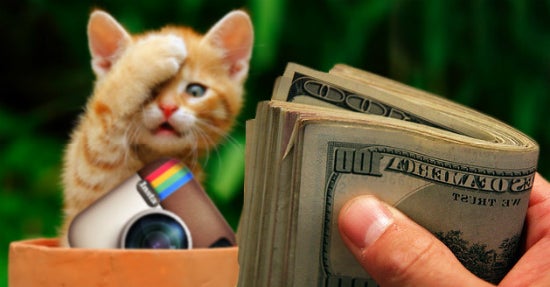
Over the summer, Instagram added sponsored advertising to their services. I was very annoyed by it and didn't like this suddenly surge in completely irrelevant ads on my Instagram. I wasn't sure if these ads were even doing what the companies pumping valuable marketing money into these were accomplishing what they needed to.

Then I read this article about how this kind of advertising could make an impact on the non-profit world. As someone who is very keen on discovering new organizations that I could be involved with and also creative ways in which these kinds of organizations can build awareness and donations.

https://www.linkedin.com/pulse/instagram-gets-advertising-what-can-mean-your-nonprofit-wayne-elsey?trk=pulse-det-nav_art


Influencer Marketing - the next big Thing?


I recently read a post on Adweek about why Influencer Marketing is the next big thing. Some of the points the author Misha Talavera (co-founder of the startup Neoreach, an Influencer Marketing service for brands) made, were the following: 
1. It’s Powerful: Influencer marketing presents a glaring opportunity for brands to leverage the power of word-of-mouth at scale through personalities that consumers already follow and admire.
2. It’s Social: People expect brands to talk with them rather than at them. They no longer expect brands to sell to them, but to entertain and inform them. In this new paradigm, influencers are a force to be reckoned with. 
3. It’s Sexy: When 50 influencers posted an Instagram picture of themselves wearing the same Lord & Taylor dress, on the same day, they told the Instagram fashion niche that the dress was a must-have article to be in the in-crowd. The dress sold out the following weekend.
talavera1
Working with influencers and tastemakers will communicate to the market that your brand may very well be the next big thing. In addition, you can repurpose the content they create to impress your existing customers.
4. It’s An Arbitrage: There is a massive supply of influencers, but few marketers running influencer campaigns, meaning that the cost of buying an influencer promotion is below its real value (as measured by your ROI).
5. Consumers Are Tired Of Paid Ads: With all of the advertising interrupting them, it’s no surprise that people love products like AdBlock, Netflix, and Spotify Premium that take ads out of traditionally ad-saturated media experiences.
6. It Helps Your SEO: On top of building your brand and improving your sales numbers, influencer marketing also helps your search engine ranking.

I've worked with influencers at two startups, Chuisy and Freeletics, over the last few years. We found that this new form of online marketing indeed still is an arbitrage. Especially younger influencers often are not aware of the value of their massive audience and charge low prices for the reach they provide. However, we also experienced some significant limitations that have to be considered. 
If you have several influencers posting for you (e.g. if an agency sells you a package and just adds up their audiences to charge more), the actual reach is hard to estimate. Most social media users follow a long list of similar influencer accounts why you have a significant overlap in the audiences. Have people seeing your content several times isn't generally a problem, but tracking KPIs like reach or CPM is a challenge. 
Tracking also is a challenge if you are on platforms where links cannot be placed yet, like Instagram or Snapchat. That's why some companies consider influencer campaigns rather as a measure for awareness and accept not knowing about CTR or similar KPIs. 
Furthermore, we where sometimes surprised how imprecise information about  the audience of influencers where. Targeting audiences of a certain age or location is then extremely difficult if you are working on platform with no precise targeting tools. 
One last aspect, which is more a qualitative one:  We found that influencer marketing often lacks authenticity if product endorsement/placement doesn't happen in the context of a long term relationship between influencer and brand. Influencers who constantly post new products (especially if it's about subscription services or other items for long-term consumption) cannot authentically demonstrate brand loyalty. You want your product mentioned over a longer period and among a limited set of products, an influencer is recommending.

I think it generally helps to understand that influencer marketing is not just about the added total number of followers reached. A more appropriate formula is: Influence = Audience Reach (# of followers) x Brand Affinity (expertise and credibility) x Strength of Relationship with Followers. To be fair, most of these limitations are being worked on and companies like Neoreach contribute greatly to the innovation process. 
BDMI Graph On Influencers           BDMI Graph On Influencers


Monday, September 07, 2015

Instagram is no longer framed by square. Pros and Cons of its format change.

Link from AdAge

    Instagram has recently renounced the rigid square format limitation, allowing users to upload portrait and landscape photos and videos. Its action is a reaction to the popularity of vertical video – the dominating format on mobile. The flexibility of format avoids pictures and videos being cropped at awkward angles, and makes them more cinematic on the feed. It also allows marketers to migrate their Facebook campaign videos directly onto Instagram, greatly saving the time and energy of creating distinct campaign videos for each social media channel.

    Nevertheless, Instagram could lose some of its identity after initiating this change. According to TNW News, at its creation, Instagram limited the format to a square to pay homage to the original size of instant pictures and to promote the retro feel of instant photos. The flexible format and filter options have made the resulting pictures less artistic. In addition, Instagram could risk of being flooded by mundane and kitschy advertisement as the pliability of format might lead to marketers throwing everyday TV ads that would disturb users’ experience. Moreover, rather than creating unique user experience, some marketers might duplicate Facebook contents and post on Instagram, making Instagram indistinguishable from other networks.

    Beyond the format, other compelling issues should also be heeded. Marketers have long yearned for the ability to post through social marketing dashboards rather than merely via Instagram’s mobile app. This feature, if added, could help companies take greater control on contents and on posting schedule, as well as mitigate the risk of accidentally posting a damaging photo. Additionally, on other social media sites, companies have been posting links to connect users from their networks to brands’ websites that provide further details about an image. This is especially useful if the brand is promoting its product or publicizing its campaign. Given Instagram’s picture-oriented focus, it could potentially serve as façades for e-commerce stores. Moreover, Instagram doesn’t currently provide notification outside the app and would stop notifying the poster after certain numbers of likes and comments. It would be great if Instagram could, as other media networks did, offer the option of email notification so as to facilitate brands’ follower engagement.

Wednesday, September 02, 2015

How Social Media Advertising is Disrupting Political Campaigns

In his latest online video ad, Donald Trump uses an out-of-context quote from Jeb Bush to simultaneously attack his rival GOP presidential candidate and stoke racial anxieties about undocumented immigration. Like all of Trump's other ads posted to Instagram, the video does not include any disclaimer stating that it was paid for by the Trump campaign. 

Why didn't Trump attach that otherwise ubiquitous disclaimer? The reason is that the Federal Election Commission doesn't require the disclaimer on online ads that a candidate's campaign did not pay to place or promote.

The FEC explains on its website that it generally requires public communications paid for by the campaigns of candidates for federal office to include a disclaimer noting just that. The definition of such political advertising, however, "does not include Internet ads, except for communications placed for a fee on another person's web site."

In other words, candidates are freed from the disclaimer rule on social media sites like Instagram.

There are also exemptions for small items, like bumper stickers and buttons, and impractical items, like skywriting and water towers. But Trump's ads garner much more attention, since almost anything he does, says or posts these days receives extended free play on TV and online news sites.

Some supporters of campaign finance regulation think the Trump ads should not be exempt. "It would seem to me a disclaimer should be applied," said Larry Noble, counsel for the Campaign Legal Center and former general counsel for the FEC.

Getting the FEC to make such a ruling would be difficult, however. Last year, the commission was asked by the Democratic firm Revolution Messaging whether political ads aimed at mobile phones and tablets could be exempt from the disclaimer requirement. The FEC deadlocked in a 3-3 vote, with Republican commissioners in support of the exemption and Democratic commissioners opposed.

http://www.huffingtonpost.com/entry/donald-trump-instagram-disclaimer_55e5eed5e4b0aec9f354b857 

Friday, March 13, 2015

The New York Times Gets Instagram!

In the face of hyper-digitialization, one could say that the newspapers struggled the most to find ways to survive. It was no exception for the worldly renowned company like the New York Times in its 160-year history. Last year was especially difficult with the executive editor Jill Abramson suddenly fired and leak of an internal report how the paper has been struggling to keep up with digital trends.

Well, it seems like this year has brought a fresh scene of change for the beloved newspaper company. Earlier this week, the Times got -- drumroll please -- Instagram! 

Already with 27.9k followers in four days, they have been posting photographs and snippets from their articles on the theme of "Beginnings" as exemplified by their first post on Insta:


On the company's new presence in social media, the new executive editor, Alexandra MacCallum said, "It's raising our profile with a different set of people than we're used to reaching, and I think that's a really important thing for the Times going forward." (source: Mashable article

So what does this mean for the Times and social media in the long run? People have increasingly been using social media as a source of their news feed (literally), and does the Times' Instagram acknowledge that? Is it simply a way to reach out to and engage more variety of audience for them? Or, is this a new way for the people get the real news fed into their minds while spending infinite hours on Instagram? How will the stories be curated anyways?

So many questions aside, many are responding with warm welcoming into their Insta world, instead of raising their eyebrows. I have a gut feeling that we could be witnessing a milestone moment in the history of news and journalism. 

Friday, February 27, 2015

Social Media Is Not PR

If you've been using your social media platforms as a way to broadcast your messages, it's not going anywhere but lost amid a plethora of contents that a viewer sees every day.

You must create a context; conduct and execute a strategy to start a conversation with your viewers. Create a value that will endure in the consumer's mind that he/she will want to follow you, like your posts, share them, and become your loyal consumer for -- who knows -- a lifetime. *marketer's dreamy sigh*

"I LOVE THAT BRAND" is what you want to hear; qualitative measurement of success right there folks.

So how do you do that? Create a story and narrate it creatively through your social media.

Yes, creativity is key. Don't just publish a picture of your product; get to the consumer's end goal of your product and trace back.

Example:
If you're an art museum, it's not effective to publish pictures of your artworks everyday. People care less about static images; they simply see too many.

Alternative strategy: do something like what these guys are doing - Dave Krugman and Zach Glassman
Krugman randomly dresses up and goes to the Met after its hours, takes some baroque pictures and publishes them. Zach is a wonderlust who takes astonishing yet enigmatic photographs around the world.

We get curious. We want to know more about their story and what places they're going to. So Krugman has 155k followers on his Instagram, while Glassman has 199k on his

Social media posts that tell people what to do (i.e. "Exhibition opens this Friday! Come check it out!") won't do the trick anymore. Compel your audience.

2015 is no longer the year when you tweet, people will buy. Social media is not a PR means; it's a marketing strategy. Think creatively and curate your story. 

 
Zach Glassman @zachspassport

Dave Krugman @dave.krugman

Friday, February 13, 2015

Cookie Monster in NY Art Museums: Digital Marketing Efforts in the Arts

 Source: Instagram @sesamestreet 

 On this bitter cold day in New York, my Intagram feed was warmed up by a series of pictures showing Cookie Monster checking out my favorite museums in the city - MoMA, Guggenheim, and the Met.

 Little did I know that Sesame Street had an Insta account (@sesamestreet) where their characters appear at the US Open and Jimmy Fallon's Late Night Show, but I also didn't know MoMA gave out lifetime memberships to nonhumans:

http://instagram.com/p/zDyFwBDMDQ/?modal=true

 So what's the message here? I say marketing. Using social media to promote both parties, the art museums and Sesame Street. It's just something simple and silly -- a Sesame character casually roaming around the galleries of these world-class museums -- but it's effective. Catches the eye immediately and especially take a look at what MoMA social media team did with it!

 Unlike the other two museums that admitted Cookie Monster today, MoMA took the initiative to give a more thorough tour of the place to expose relatively unseen parts of the Museum, such as the Modern restaurant (visitors/tourists often don't know that it's an official, Michelin-starred restaurant of the MoMA) and the Art Lab that people rarely engage in:

Caption reads: "Time for a cookie break! @THEMODERNnyc pastry chef Jiho Kim baked a special treat for Cookie Monster. #CookieArtTour

Caption reads: "Cookie Monster stopped by the #MoMAArtLab to make some art of his own. #CookieArtTour

 I say this is how marketing in the arts should be done: creative interdisciplinary collaboration, consistent message, and strong (not violent) visuals that resonate in consumers' minds for a while. Great job (again) MoMA.


Monday, November 17, 2014

Brands Create Authenticity with New Content Partners

AdAge is reporting that brands have stepped up their efforts to create engaging content with two specific strategic partners; publishers and independent content creators.

For example, Victorinox is partnering with both Wired Magazine and the Instagram-celebrity couple @withhearts and @bethanymarieco to outfit the duo with Victorinox products while they trek among various mountain destinations throughout the world. While providing comp'd swag to influencers is nothing new for brands, Victorinox and Wired Magazine plan to repurpose the content from the pair's own social media channels to the publisher's various content platforms as well as the brand's.

This approach is somewhat novel given that brands are building up their own media properties by supplying them with premium content while relying on publishers, who continue to expand their footprint, to push branded content as well. However, both the brands and publishers realize they lack the all-important "authenticity" factor which makes partnerships with digital influencers so important in this new media equation. All of these efforts ladder back to the growing reality that consumers' eyeballs are increasingly fragmented and brands can't rely on just one channel to break through the clutter.

Publishers such as InStyle are also experimenting with emerging social media channels such as Snapchat to break through to consumers. InStyle has been building up its Snapchat following all year but releasing exclusive content in expectation of marketing a Holiday gift guide through the channel for 20 different advertisers. This tactic will probably prove successful since Snapchat is still a relatively innovative platform for brands and consumers are more open to following brands/publishers and consuming their content.

All of these tactics all boil down to the same marketing truth: Consumers are increasingly expecting the unexpected when it comes to advertising - innovative content and context is not only successful, it is becoming mandatory.

Thursday, November 13, 2014

Can I get paid to post on Insta, too?!

A recent article in AdAge caught my attention due to its linkage with our last class on Thrillist. We talked about the challenges of combining e-commerce with editorial content, and now we’re starting to see publishers putting sponsored content on Instagram and Snapchat, and also paying other influencers to feature their products on social media.

The article first talks about Wired Magazine and Victorinox. A recent ad campaign the magazine was doing with Victorinox was done in partnership with Bethany Olson and Cory Staudacher, a recently engaged couple known for chronicling their adventures on Instagram . “What you're seeing is publishers embracing the broader media ecosystem and finding ways to create new and innovative ways to capture people's attention and retain it over time," said Adam Shlachter, chief investment officer at DigitasLBi.


Victorinox gave the couple clothes for their recent travels, including a trip to Victorinox's headquarters in Ibach, Switzerland. The couple posted content on their Instagram accounts, tagging the Victorinox brand. Some of these images will also appear in print ads in the December issue of Wired. In addition to the free gear, the couple was also paid for doing these posts. The program has generated more than 65,000 "likes" on Instagram and about 500 comments since its October 6th launch.

InStyle magazine is also planning on doing something similar. The magazine will run custom ad campaigns on its main Instagram and Snapchat accounts. Beginning on December 8th on InStyle’s Instagram feed (which has more than 671,000 followers), the magazine will share one post each day for five days highlighting a luxury accessories company's product. In addition, “Style in Snap” will be a campaign that InStyle will launch on Snapchat. This campaign will feature short videos for 20 days featuring 20 advertisers, including Jimmy Choo Fragrance, Chantecaille, Sisley and Aeffe. The magazine will then give these 20 items away as prizes. Along the same lines, Teen Vogue partnered with Keds to launch an Instagram contest where fans would post pictures of their outfits.


While I think these campaigns and contests drive engagement and allow brands to interact with publishers’ reader base, there are definitely risks similar to what we talked about in class. Some readers might be upset about the promotional nature of these posts, so publishers will have to be careful about maintaining their voice and brand image.