Thursday, February 04, 2016

Why digital marketing is missing the target

If you're annoyed by the massive amounts of marketing that often block the web page view, and most likely is completely unrelated to a product or service you would ever think about purchasing? Here is the explanation... and yes, I also thought it was done on purpose to irritate me.

If most digital marketing programs or campaigns have a weak area, it’s analytics. One recent study identified that the biggest talent and hiring gap in online marketing is in the analytics space.

HBR declared that data scientist is the sexiest job of the century. Research company Gartner suggests that there will be 4.4 million big data jobs available in the next two years, and that only a third of them will be successfully filled. It’s no surprise. Everything is moving toward data: big data, mobile data, performance data, campaign data and product data.
So hopefully very soon, the new generation that is more tech savvy, will enter the workforce and will be able to make some sense of all this data collected about our consumer preferences to actually strategize digital marketing.

Like many things in life, the information you retrieve from your business intelligence software is only as good as the data going in. Online marketers have certain indicators they should be monitoring on a continual basis, like changing in consumer preferences. For example, the girl that used to “like” a certain store on Facebook is becoming a woman and entering the workforce; she might not have spare time to “like” stuff on Facebook anymore with the same frequency. How will the analytics identify the changing in trend and proper adjust to market the proper merchandising?

Top 3 Digital Marketing Trends for 2016


Being a digital marketing novice I started doing some research on what the latest trends are and found a few articles that I found interesting. Most articles mention the same trends that we have seen in our digital marketing class as well. There are a few common recurring themes that I would like to highlight. If you want to learns about these trends and more http://impress1.com/connect/blog/entry/top-3-digital-marketing-trends-for-2016-which-you-should-be-starting-in-2015.html          
  1. Content remains KING: Quality content has always been important and this will continue to be the case. A lot of the search engines are getting smarter in recognizing quality content so you better step up your game if you want to improve your ranking. Some interesting but very convincing statistics on what effect content has on your brand perception: 80% of business decision-makers prefer to get company information in a series of articles vs an ad. 90% of consumers find custom content useful, and 78% believe that organizations providing custom content are interested in building good relationships with them. 58% of consumers consider companies that produce video content to be more trustworthy. 71% of consumers say that videos leave a positive impression of a company. Content marketing costs less than traditional, outbound marketing. Content marketing costs 62% less per lead than outbound marketing.
  2. Agile SEO: As mentioned before Google has placed a premium on quality content over keyword optimization. Pictures and videos are much more relevant for a search query. As an example, pictures are worth 1,000 words and a video can be worth as much as 1.8 million words. With the trend of visual content comes the art of supplementing these visuals with smart meta descriptions. This is an easy but sometimes overlooked simple way to optimize your SEO strategy. Key will be to keep changing your SEO strategy as technology is changing so rapidly.
  3. Optimize for Mobile: Most digital marketing strategies will be focused on appealing to the millennial. 87% of this digital generation admits to never being without their phone so you better focus on optimizing your mobile websites/apps. If you are not convinced yet here are some stats: 86% of the millennials are of the opinion that there are still a lot of websites without good mobile functionality and 14% wouldn't do business with a company that doesn't have a mobile site or app. More research and purchases are done on mobile/tablets and a friendly user interface will be essential for better conversion rates.  

Hawkers - Sunglasses Turned $300 Into $60 Million in 2 Years


Even if we think social media world is very mature or has less business opportunities than before, here we have a recent successful startup from Spain, basically spending his budget on Facebook ads.


Story

A year ago, four young entrepreneurs launched their own brand of sunglasses, Hawkers. They now sell their wares in over 50 countries, have a turnover of more than 15 million euros, and employ a workforce of 40. They have produced for Mercedes Benz and PayPal, and their sunglasses are worn by national and international celebrities such as Paula Echevarría, Usher and Dani Alves. Not forgetting that they have become the "first Spanish company" to sponsor a team from the NBA, in this case, the Los Angeles Lakers.


eCommorce and Social media

When the founder used his last $300 to start the company, he had a prototype, and a simple website. Knowing he wanted pricing to stay low, he decided to sell exclusively online. At the time Facebook ads were getting a lot of negative press so testing out the algorithm as fast as they could to see what would generate the most sales seemed completely reckless. But they did it anyway. The "spray and pray"approach rarely works, but within weeks the Hawkers social media pages were exploding, sales began to skyrocket, and customer acquisition was pennies on the dollar.


Their commitment to eCommerce has been based on social media, with Facebook playing the leading role. Using "reverse engineering", they have managed to optimize their online advertising and reach levels undreamt of – to the point that Mark Zuckerberg’s company invited them to tell their success story to his team of engineers at their headquarters in Menlo Park, California.
Strategy – Reverse Engineering (trial campaigns).


Online commerce fitted into their mission like a jigsaw piece. "It’s allowed us to reach more customers without the need to accept conditions set by middlemen", points out Iñaki Soriano, one of the co-founders. If they have had an ally on their adventure, however, it has undoubtedly been the social networking site par excellence. "We wanted to reach out to a wider public through social media, and Facebook has become an indispensable tool for achieving that", says Pablo Sánchez, another of the co-founders.


Hawkers’ strategy has been based on "mathematics". "The more people you reach out to, the better chance you have of telling them about your idea. And Facebook allows you to do that on a small budget", Sánchez points out. As the entrepreneurs admit, although there is now a trend to make the most of the advertising support provided by this social networking site, "very few small businesses" were exploiting this channel a year ago. Which is why, with their software-engineering know-how, they had to resort to a classic trial-and-error approach in order to maximize their impact. "We launched a lot of trial campaigns and we would carry out some reverse engineering based on the results", Sánchez underlines. "We tried to find out how the Facebook algorithm worked, depending on the variability of the results."


Second- Highest number of likes in sunglasses world

This system has positioned Hawkers as "the sunglasses brand with the second-highest number of likes in the world", behind Ray-Ban but with over 2.6 million likes. The results even surprised Facebook itself, which last November showcased the team from the Spanish company as a performance success story at a conference with their engineers.

Raul Garcia Mur


Now Just 3.57 Degrees of Kevin Bacon

The omnipresent Facebook has done the math; we are all now just 3.57 degrees of Kevin Bacon. According to the recent article in the Wall Street Journal our degrees of separation from one another is shrinking thanks in no small part to Facebook.  


This is fascinating to me because while I do feel more connected to the people I know because of Facebook; I don't think it has brought me any closer to people I don't already know.  I have to admit that I am not an active participant in groups on the site.  Perhaps this would help me feel connected to people who are similar minded but we are not in the friend zone yet.  I would love to know if others feel the way I do or disagree wholeheartedly...

In other breaking news, Facebook published these revelations on their blog on their 12th anniversary. In order to celebrate the day they also created a new holiday called Friends Day.  Congratulations, Facebook, you have usurped Hallmark and created your own holiday.  In the future,  we will soon call these man-made holidays Facebook Holidays.

Twitter To My Flying Rescue?

Mother Nature has a funny sense of humor and she likes to royally screw up the best laid travel plans across the globe.  You often hear of stories where passengers were saved (albeit without the baptism) by tweeting the digital help departments of their carrier of choice when they are stuck in Timbuktu for various reasons.  This often happens without even needing to speak to a human live on the phone.  Case in point right here.


I thought I would give this option a whirl when I learned my Delta flight was delayed for hours.  Rather than dying a slow death in LAX waiting for my flight to take off, I thought @DeltaAssist would also be the answer to my prayers.


Alas, @DeltaAssist was not my knight in shining armor that day.  In fact, they did not even respond.  (Rude.)  However, the idea that I can resolve my travel related issues electronically without needing to spend ungodly amounts of time waiting in a hold queue on the phone is truly a delight.  Fingers crossed that this option actually works out for me in the future should the need arise.  Perhaps I need more than 16 followers for them to take notice?  Details, details...

Not Cool for School, Think Again. Bernie Sanders Rocks Facebook!

Seeking the Presidency, Bernie Sanders Becomes Facebook Royalty Through Quirky Sharing
[ http://www.nytimes.com/2015/05/19/us/politics/bernie-sanders-wants-to-be-president-but-hes-already-facebook-royalty.html?_r=0 ] 

A fascinating NY Times article above covers the early grassroots social media campaign of Bernie Sanders. What's notable about this 74 year old candidate marketing efforts is that he did everything against expert opinions about how online marketing works. And he has pulled off a few groundbreaking surprises and embedded lessons for us.

Long Versus Short
Bernie Sanders would come up with long worded quotations while taking showers. He would show up at his Senate office with words scribbled on pieces of paper which would make its way to his Facebook page. "We must rebuild American manufacturing and rewrite our trade agreements so that our largest export is not our jobs.".. is one such example of a free flow quote.  He hasn't followed conventional wisdom of "less is more".

No Searchable Words
Facebook recommends that when users post text, they do so with searchable words. It would be more appealing to the newsfeed algorithms and search engines. However, Bernie uses long sentences with no searchable words. He has created a following simply by keeping things simple. "If it sounds like him, his people will find him" said Laura Olin who also managed 2012 campaign for Barack Obama. Given the hash tag presence, Bernie Sanders took a gamble and did well.

Public Agenda Not Personal Details
Personal details tend to warm up the candidate to his or her audiences through Facebook. Bernie Sanders didn't do that ironically and stuck to his views and ideologies. Digital media is morphing as mavericks like Bernie roll in who don't share personal stories but stick to passionate agenda they believe in. It is interesting that Social Media seems like a living, evolving medium with no fixed rules as of yet.

Authenticity
As anyone can post anything on Social Media, authenticity has become critical. Viewers match what they see online with what you do offline. Bernie Sanders has utilized his authentic writing style and not paying attention to expert tips, to gain trust. According to a Anton Vuljaj, director of a consulting firm, people who say things with authenticity online and stick to them are the most successful. Bernie is taking advantage of Digital Media's transparency to make his point which is working great for him.


Wednesday, February 03, 2016

Periscope or Perish

A colleague recently mentioned Periscope during a meeting, so I took to Google and found this Forbes article on how this new service could become a pretty powerful tool for digital marketing.

Periscope (owned by Twitter ) is a live video streaming service aimed at mobile and is a sort-of mashup of YouTube, FaceTime and Twitter. Sort of like Snapchat, but with video, and sort of like Vine, but live. Basically you can broadcast your own live TV station right from your mobile device.

It enables you to "go live" via your mobile device anytime and anywhere. The app enables you to become your own on-the-go broadcasting "station", streaming video and audio to any viewers who join your broadcast. There is also an interactive component where users can “like” a broadcast by clicking hearts on the screen, get involved in the broadcast by commenting live, and share stations on Twitter.

So why could this be an important tool for businesses? Of all the possibilities, these two caught my eye. Forbes says:
Create Brand Release Videos 
Periscope is all about instant news, so a release of a product or service is a great time to create a live broadcast. You can simply have the CEO of your company making an announcement and explaining the process of creating the new product and/or any events happening to celebrate. This can be your first announcement and it can help you create a great video for later. 
Ask for Email Addresses During Your Broadcast 
As you create your broadcast, ask viewers to leave their email addresses in the comments so that you can create a Periscope mailing list.


In other words, you can have an Apple-style live keynote, at the cost of free. You don't need to rely on being picked up by a traditional TV / media source, or be time-lagged by YouTube and other non-live video sources. Also, you can make the broadcast truly interactive, with a quick and easy method of obtaining customer information and loyalty.

Business Blogs: Keep 'Em Clicking

The American Express OPEN program for small businesses has this great post about how to maximize the potential of a business' blog.

The part that caught my eye was a suggestion for how to keep visitors' eyes on your blog (and therefore on your website) for longer. Content marketing might pull a visitor to your site, but they might read one post and leave. This can be measured by the "bounce rate", the statistic that tells you if people are coming to your site to read one post and leave or if they’re viewing more than one page. Obviously the longer you keep visitors on your site, the more they can get to know your brand. 

Erika Napoletano says:
First, does every blog post you create link to another blog post? In the paragraph above, I linked to a previous article I wrote about Google Analytics. It’s relevant and gives you the opportunity to click through and get started using that tool directly. By linking to your previous content, you’re both giving your reader the opportunity to stay on your site longer and refresh something you might have written a moon or two ago. A good rule is to always link to at least one previous blog post—just don’t get crazy with the links.

In other words, if you have the content, consider referring / linking to it yourself, thereby increasing its lifetime value. And also make it easy for visitors to link to it, using social media plugins.

StubHub Apologizes For Completing Screwing Over Kobe Bryant Fan - Sean O'Neill

Lakers fan says StubHub canceled his tickets to Kobe Bryant's last game when prices rose

Companies are now competing to give Jesse and his friends the best seats possible
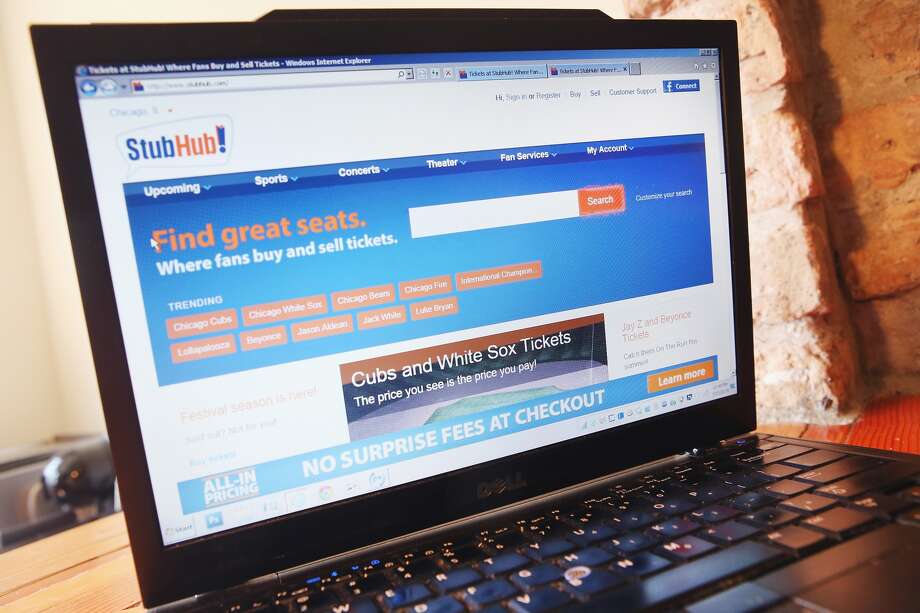
 Tickets are offered for sale through StubHub on July 23, 2014 in Chicago, Illinois. Cyber thieves recently hacked into about 1,000 StubHub customers' accounts and fraudulently bought tickets for events. (Photo Illustration by Scott Olson/Getty Images)
 
A big Lakers fan with a serious hunch that Kobe Bryant's last game in Los Angeles would fall at the end of the 2016 season took a shot and purchased tickets to the team's final seasonal home match on April 13, per the Lead Sports. After all, they were being sold at a great price, and it seemed like a good shot in the dark just in case it ended up being the basketball superstar's last hurrah before retirement.

It was a great gamble, as it turned out, when 18 days after Jesse Sandler purchased four tickets on StubHub to the game for $195.89 a piece, the cost of similar tickets rose almost 1000 percent.

However, before Sandler could truly appreciate his good fortune and intuitive planning, the seller yanked the tickets away. The ticketing site soon sent Sandler an email informing him his tickets were voided, essentially because the price he paid for the four tickets was now too low.
 
"The Seller let us know that these tickets were listed incorrectly," the email read. "Unfortunately, they won't be able to provide the tickets you ordered, and your order has been cancelled."

The message went on to say that the ticket price was too small, and that similar tickets were now going for around $1,490.
 
Sports Illustrated reports that as StubHub's policy currently stands, the site charges ticket sellers a 20 percent ticket cost penalty when they cancel an order. That number, as many believe, isn't a high enough percentage to de-keep a person from canceling a sale to relist the ticket for a much bigger price. As Sandler was told, similar cases occurred when Derek Jeter announced his retirement.

However, as a StubHub representative told SFGATE, this mismanagement of Sandler's case never should have happened. The company's user agreement states clearly that "Under no circumstances may Sellers cancel orders at one price and repost the same tickets for a higher price."

Sandler, being a huge Lakers fan and an even bigger Bryant fan, refused to let that slide. After a flurry of emails, phone calls, and offers of website vouchers (which, as he noted, didn't even add up to the cost of one of the new, more expensive tickets), Sandler resorted to reaching out to the press.

After the story began catching media attention, StubHub found and offered Sandler tickets to the game, according to The Lead Sports. Budweiser, an official NBA sponsor, then swooped in with better tickets to Sandler, only to then be one upped by Tickets For Less. The StubHub competitor not only offered even closer seats, they also sent their company president to hand deliver them.

StubHub, meanwhile, has made it clear to SFGATE that they have learned from their mistake. "Our User Agreement is 100% accurate and should have been implemented in the case of Jesse Sandler," the rep stated. "The handling of this situation was an error that should have not occurred. We hold our sellers to a high standard and we absolutely do not condone market manipulation like this." 
As the representative said, they reached out to Sandler "many times" to apologize and make amends. "We take our customer service very seriously," the company added. "This was a mistake that we will learn from and we will do everything in our power to make sure this doesn't happen to one of our customers again."

StubHub also gave SFGATE the following statement on Sandler's case:
This was a poor experience for Jesse and we will do everything we can to get him into this game. As a marketplace that oversees thousands of transactions a day, buyer and seller errors and discrepancies can occur. The reality is that these instances happen less than 1% of the time. When these instances do occur, buyers are protected by our Fan Protect Guarantee. Oftentimes, we are able to provide the buyer with comparable tickets. Frankly, this is what should have happened in this instance and the way this buyer was treated was a mistake.

Utilizing Digital Market Techniques Via The Cloud

http://cloudtweaks.com/2016/02/cloud-marketing-techniques/

Digital Marketing Trends

In the past, trends in the exceptionally fast-paced digital marketing arena have been quickly adopted or abandoned, keeping marketers and consumers on their toes. 2016 promises a similarly expeditious temperament, with a few new digital marketing offerings taking center stage. According to Gartner’s recent research into Digital Marketing Hubs, brands plan to increase digital commerce investment as they attempt to connect business revenue with digital marketing spend through “digitally led business models.” Thanks in part to the convergence of multimedia, superior machine learning, and the quest for more personalized marketing, this year’s trends and innovations promise even more excitement.
Digi_Mktg_Map_Final_April_2015
(Infographic Source: Gartner)

Custom-Made Advertising

A top-performing trend right now, advertising made to fit seamlessly into a website’s general content is more a necessity than novelty. The impact on user experience is significant, particularly when one brand purchases all of the advertising space in one area. But the concept often causes contention as ads often ‘trick’ readers into believing they’re part of the standard content. Furthermore, this type of advertising is often perceived negatively as paid endorsements. Objective media is likely to lose any credibility should their audience ever believe they are solely ‘in it for the money’, so the use of advertising that appears to be an extension of the publishing brand should always be executed prudently, if at all.

Personalization

digital-marketing
(Image Source: Shutterstock)
When driven by data, personalization allows marketers to better communicate with their audiences through especially relevant content. This promises greater response rates from correctly targeted consumers and fewer marketing withdrawals thanks to a drop in SPAM-like communications hitting the wrong people. Video portals is a particular area in which increasingly personalized experiences are being created, with some marketers dynamically reconfiguring videos based on a user’s activity. 2016 is sure to see the continued personalization of content marketing, web marketing, and video marketing, with vendors amalgamating trends and offering refined content.

Video: Interactive & Live

The use of interactive video is gaining momentum, allowing marketers the opportunity to develop one on one communications with prospective customers. Viewers have the chance to tailor their experiences, choosing preferred content paths, all the time increasing marketers’ insight. And live video is providing more intimate experiences for customers and companies worlds apart. Customers are provided more engaging and positive experiences with the brands they use, thus heightening the sense of personalization.

The Cloud & Marketing

As evidenced in Gartner’s Magic Quadrant, the top tools take into account today’s not-so-secret weapon: Cloud. Digital marketing in the cloud promises all of the essential digital marketing tools, but with the flexibility and speed to ensure to-the-minute solutions are always available and personally customizable. Though Adobe, Marketo, Oracle, and Salesforce dominate, competition in the sector is stiff, fortuitously guaranteeing today’s digital marketers user-friendly, cost-effective, and cutting-edge possibilities.


How Internet of Things Will Change Digital Marketing

http://www.business2community.com/digital-marketing/internet-things-will-change-digital-marketing-01441101

Internet of things pretty much dominated the digital space during last year and has now left everyone waiting to see its significant results across our homes, workplaces, streets as well as across the digital marketing platforms. The Internet of Things technology brings with it the power to change everything physical around us and people have now started to take the entire connectivity factor of IoT more seriously than ever. With billions of our devices connected over the same cloud network, it is needless to say that there is going to be an effect of IoT seen across all the digital marketing platforms as well. So how exactly do you think that the Internet of Things technology can benefit the field of digital marketing?

How exactly will Internet of Things transform Digital Marketing

Over the last few years, it was predicted that there is going to be a hike in the number of things that are going to be available online that will also be able to share information among one another in the real time, which of course we can see happening around us! This not only helps in cutting down the cost of connectivity; rather it also makes sure that there is ample conservation of resources, such as fuel and energy.
If you have already heard about Amazon tide buttons, then you can easily make out the difference in resources spent both during online as well as offline shopping. Using these Amazon tide buttons, users can simply press a button on their connected smart phone which will trigger an action of placing order for any commodity that is going out of stock in your home! This means that you not only were capable of making the optimum use of the Internet of Things technology, rather you were also able to save a lot of your time, energy as well as fuel which you would have spent otherwise.
 
Turning products into interactive media
Another advantage of Internet of Things in digital marketing is that once it comes into force, all products available on the internet will become a platform of direct relationship/ interaction with the respective customer base. This means that IoT will encourage the idea of digital marketing since all customers will be capable of forming a direct connection with the products that they are using without the intervention from any third-party vendor or merchant. There will also never arise the need for machine- generated bills as well as vouchers as the digital aspects of marketing will take charge over our traditional shopping means.
In the coming times, we will also be able to scan our products for procuring its ingredients and user manuals, which is nothing short of a boon for coming generations. In fact, there are already several new Internet of Things companies which are focusing on the creation of such 1:1 customer relationship by digitalizing products so that their information can be retrieved by its users.
 
Products capable of shifting ecosystems
Providing any particular product with the power to shift across ecosystems/ categories on its own is one of the most sought- after advantages of IoT meeting digital marketing. This will help isolated products in moving to data centres/ apps where there are higher scopes of getting accepted by the customers; hence creating more value and a better brand name for itself.

Presenting products as a service

All physical products, when combined with a digital layer, will help in developing a personalized as well as interactive bond with its consumers. These consumers can interact with the brand without any third- party intervention and hence get a chance to put their preferences in the front seat in an attempt to improve their experience with any particular product/ service.
The more interactive our products and digital marketing becomes, the more benefits of Internet of Things we can reap in the coming times.

Facebook is changing which posts you'll see first in the News Feed — again - Sean O'Neill

http://mashable.com/2016/02/01/facebook-news-feed-surveys/#qKX8mk_gBkqU


Facebook is once again tweaking its News Feed algorithm to help weed out posts you may not want to see.
The company said Monday that it is updating the News Feed based on feedback from user surveys; the changes will affect which updates will appear at the top of your feed.


Facebook has been surveying users about the content of their News Feeds for quite some time, making it easier to ignore viral posts and asking "tens of thousands" of users to rate stories in their feeds daily.
The newest change will take those ratings into account, using "qualitative feedback to show relevant stories," according to a blog post from the company.

The post continues:
News Feed will begin to look at both the probability that you would want to see the story at the top of your feed and the probability that you will like, comment on, click or share a story. We will rank stories higher in feed which we think people might take action on, and which people might want to see near the top of their News Feed.
In other words, the posts you see first will be determined by the likelihood you'll want to see a particular update, as well as how likely you are to engage with a post — via Liking, commenting or sharing.
As usual, you can still manually choose specific friends whose updates you want to see first.

It may sound like a small change, but it's a significant one, particularly to publishers and other Page owners — some of whom could see declines in referral traffic, the company warns. Facebook software engineers Cheng Zhang and Si Chen note that page owners should try to avoid asking users to take specific actions (like clicking) in posts to avoid negative changes to referral traffic.

Saturday, January 30, 2016

Is Social Media Working for the Hotel Industry?

In late 2013, little known Sydney hotel 1888 was featured in news articles around the world for their latest promotional strategy: they would be the first hotel to give out free stays to guests with over 10,000 followers on Instagram.  Everything about The 1888 - from the name (the year Kodak released its first box camera) to the decor (printed Instagram pictures) - reflected their photo-focus and their promotion quickly gained attention across Instagram's 150 million user base (as of September 2013).  Their original post garnered a whopping 72% engagement and rocketed the small boutique hotel to the #1 Sydney hotel on TripAdvisor.


Over the subsequent years, hotels have continued to embrace increased opportunities to interact with guests via social media.  Other boutique hotels have mimicked 1888's strategy, like the Sol Wave House in Spain that conducts nearly all its guest operations - from reservations to check-in to the concierge - over Twitter.  The hotel itself is peppered with hashtags and their Twitter presence sees regular customer engagement.

And it's not just the little guys that are jumping on the social media bandwagon.  Hilton Hotels launched an incredibly successful multi-platform campaign titled "Our Stage. Your Story." that integrated posts across Twitter, Facebook, and Instagram and awarded free stays to posters every week.  I got to experience the impact of social media myself when staying at the Waldorf Astoria's Arizona Biltmore hotel.  After tweeting about a trail map left next to my running shoes, The Biltmore staff responded by leaving an array of "post-run snacks" in my room.


The jury seems to still be out as to how much social media engagement has really delivered in terms of increased patronage.  But it's clear that hotel chains can enrich their brand awareness by embracing new social channels and allowing their customers to interact with the company in new ways.  Social media in the hotel industry seems to be most successful when positioned as a customer engagement tool that bridges across social platforms and across the virtual/physical space.  

So how has social media strategy worked out for The 1888?  They still embrace photography culture, and were acquired by Ovolo Hotels this year.  It seems The 1888 - now known as the Ovolo 1888 Darling Harbour - still honors the offer of a free stay for high profile Instagramers, though it has been scaled back to only one free night.  Yet the Ovolo 1888 Instagram account itself only garners 695 followers, not enough to buy a night at their own hotel, and the various hashtags associated with the hotel barely manage more than a couple posts a week.  #1888hotel, which feeds directly to a screen behind the hotel's check-in desk, has only 2,745 posts.

Thursday, January 28, 2016

Digital Engagement Strategies: Mixing Social Media & Mobile Gifting Platforms

It’s not always easy for a company to enter an adjacent market, but WeChat has successfully leveraged a mobile and social media strategy to do so.  WeChat is a messaging and calling platform and app, similar to WhatsApp.  In 2014, with a focus on the Chinese market, WeChat allowed users to send their friends and family “virtual red envelopes.”  In Chinese tradition, these are gifts of money delivered in red envelopes on holidays and special occasions.

WeChat offered users the option to either send a specified amount direct to a friend or to distribute a fixed amount randomly across friends, lottery style.  The response from users was astounding, as billions of yuan were exchanged over the holiday period.  Users felt that even if the envelopes only contained a few cents, it was still a great way to engage with friends.

They went on to add a strategy last year that the user had to shake their device to reveal their gift.  And for 2016, their campaign has a new feature.  Users can upload a ‘secret’ photo that is blurred.  Friends will have the image revealed once they send through a red envelope.  (A funny example cited is that a user posted a comment ‘Come to see my secret honey,’ and it ended up being a photo of her cat).

We can learn from WeChat how a simple digital engagement strategy can create sticky, repeat users.  Not only have they entered a new market with peer-to-peer payments, but this drives further chat behavior between friends.  Hundreds of millions of WeChat users have since adopted the brand new payment system as a result, migrating from the traditional chat platform.

Tenpay, the owner of WeChat and competitor to Alipay of Alibaba, more than doubled its market share as a result of the red envelope campaign.  And Vouchr, a new player in mobile gifting, is now mimicking WeChat’s strategy with mobile game sharing to ‘unwrap’ a payment.  It will be interesting to see what other companies might take advantage of a ‘red envelope’ type campaign, especially in the US market.


Sunday, January 24, 2016

Navneet Kaushal, CEO of PageTraffic, Discusses Best Ways to Master SEO in 2016

AJ Agrawal: What do you see as the single most important emerging trend in SEO in 2016?
Navneet Kaushal: That’s easy. Clearly, mobile optimization will take front and center stage this year. Marketers who neglect to specifically target people using mobile devices will not only be limiting their reach, but they’ll also be effectively committing SEO suicide. We’re at the point now where mobile devices have surpassed desktop devices in terms of the number of users. It’s more important than ever to ensure that part of your marketing reach includes people on mobile devices. Further, there are more searches  on mobile devices now than there are on desktop devices. That means search engine marketers are going to have to be certain that their sites are responsive. Otherwise, users will get frustrated with unprofessional or unusable output and visit another site – probably a competitor’s.

Agrawal: How do you see social media impacting SEO this year?
Kaushal: I think it’s going to be challenging for new sites to keep pace with social media. When people on the Internet can get their news in real time from Twitter Moments, they’re likely to prefer that channel than to a blog with popups and annoying banner ads. That could put pressure on news sites that optimize their stories for search engine results. It’s likely that people will just go to social media to get their news as opposed to browsing around the web as they did years ago. Also, social media influence will diminish the number of backlinks that some sites receive from one-man-shop blogs. That could hurt their rank in the search engine results pages.

Agrawal: How else do you think social media will impact SEO?
Kaushal: You’re going to see more social media updates in search results. Google is already working with Twitter to show relevant information in its search results. Right now, when you search for a keyword that’s getting buzz on Twitter, you’ll see relevant tweets towards the top of the first page. That first page, as any SEO professional knows, is prime digital real estate and could limit the reach of search results near the top, but below the tweets. Beyond that, though, you can expect to see updates from other social media channels in the search results. That will make things even more challenging for brands that are hoping to get traffic from search engine marketing efforts.

Agrawal: What kinds of technological innovations will have an impact on SEO?
Kaushal: There’s almost certainly going to be more of a focus on micro-local search. I say “micro-local” search because it really goes beyond local search. Local search involves a geographic region, such as a city or town. However, micro-local search takes it a step further to a particular place of business or even a street corner. Thanks to the emergence of wearable technology and advancements in the Google algorithm, expect to see people search for terms on mobile devices that return results promoting a retail outlet within walking distance. Digital marketers who ignore geo-targeting do so at their own risk.

Agrawal: What else is going to complicate things for digital marketers?
Kaushal: Simply put: competition. Blogs are being created every day. Businesses, recognizing the value of content marketing, are going to post more content and, probably, use longform content to give themselves a boost in the search results. All of that competition is more pressure for SEO professionals who are trying to rank content.

Agrawal: What can digital marketers do in the face of that competition?
Kaushal: There are a couple of things they can do. First, they can practice some micro-niche targeting. Instead of optimizing results for keywords that have broad appeal, they should employ keywords relevant to a very specific subset of people within their target market. Also, they should optimize for longtail keywords that don’t have as much competition.  SEO, like every other type of technology, is constantly changing. If you just stick to “old school” methods, you’ll be throwing away some great opportunities to reach people based on emerging trends.

Saturday, January 23, 2016

SEO analytics tool - Botify raises Series A round

French startup Botify just raised a $7.2 million Series A round from Indivest and Ventech. Botify uses a SaaS approach to make it as seamless as possible to crawl websites and give users insights into their search engine optimization strategy.  Botify gives users data so that they can make optimizations. Botify is an analytics tool to designed to support SEO assumptions with tangible numbers. Currently, the company as more than 300 customers, including BlaBlaCar, eBay, Expedia and Farfetch.

Botify has three different components. First, it developed a server-based crawler. The company then gives users an overview of your website’s structure.  Then, it also gives users more information about Google’s or Bing’s indexing crawlers. The company knows which page was crawled by search engines. Finally, Botify gives uses a complete dashboard with detailed reports about their SEO strategy.

There are two things that make Botify unique. Botify targets big companies that rely heavily on search engine traffic — e-commerce, transportation, media, etc. Bringing more traffic to these websites is a great way to create new customers.  In other words, improving SEO isn’t just something nice to do, it’s a good way to generate purchases.  Naturally, anything that can improve a company’s bottom line is a good thing.  Also, there is the recurring pricing model. Botify costs between $569 and $999 per month. With 300 customers already, you can see that the startup has a healthy business model.  New features should help Botify retain these customers by bringing them more value.