You may have heard this term and it means that people are cancelling their cable TV subscriptions, so they are not paying for traditional cable TV content. Instead they are getting their content from sources on the internet via their internet connection.
The paradox is that you need an internet connection, hence the same cord that gives you internet access is also the one that provides cable TV content.
In reality, what consumers are doing is that they are cancelling the TV portion of their cable subscriptions and only paying for the internet connection piece.
Consequently you are seeing the cable TV providers raise the rates on internet only services and bundling internet with TV or telephone at a very attractive price to coax you into spending a little more and buying both, to blunt the subscription TV losses.
If wireless is able to deliver the needed bandwidth, then you may really be able to cut the cord, but for now the cord still lives!
Saturday, August 03, 2013


Instagram is my new facebook
Facebook has failed me........I don't claim to be different than anyone else but I have too many friends and I don't care about most of them.....so I don't go on facebook. My solution to staying up to speed with my friends was to sign up for instagram. Currently, I follow only 20 of my closest friends and can see their lives in real time through pictures. What is the first thing I do on a Sunday morning? Open up instagram and see what my friends uploaded last night.
The other failure of facebook is that it asks for too much information. Instagram requires none. As a user I just want to stay in touch with my social network. They don't need to know where I went to school and what my political affiliation is. I understand why facebook does what it does but I just feel that instagram is better for staying in touch with friends. Instagram is visual and if a picture really strikes me I can "like it" with a simple touch or even post a comment.
Move over facebook.....instagram is here.
The other failure of facebook is that it asks for too much information. Instagram requires none. As a user I just want to stay in touch with my social network. They don't need to know where I went to school and what my political affiliation is. I understand why facebook does what it does but I just feel that instagram is better for staying in touch with friends. Instagram is visual and if a picture really strikes me I can "like it" with a simple touch or even post a comment.
Move over facebook.....instagram is here.
Chirpify, A Service That Lets You Shop By Replying “Buy” On Social Media, Raises $6M
Chirpify, a startup aiming to simplify online commerce by bringing it to the platforms where people congregate, like Twitter, and more recently, Facebook, and Instagram, has raised $6 million in Series A funding.
I believe it will increase the number of impulse buyers by adding convenience to customers. Chirpify is able to connects social medias to direct sales without intermediate website.
Here is the news:
http://m.techcrunch.com/2013/07/31/chirpify-a-service-that-lets-you-shop-by-replying-buy-on-social-media-raises-6m-series-a/
User Generated Content
We are all editors, our stories are important and it's evident with the increase of user generated content on the web. Larger publishers, such as the New York Times, continue to find ways to include user generated content on their site. The newest development having users comments highlighted within New York Times articles. It will be interesting to see how this "experiment" works.
http://gigaom.com/2013/07/30/making-readers-a-part-of-the-story-the-new-york-times-experiments-with-highlighting-comments/?utm_source=General+Users&utm_campaign=f53af0a862-c%3Amed+d%3A07-31&utm_medium=email&utm_term=0_1dd83065c6-f53af0a862-99185201
http://gigaom.com/2013/07/30/making-readers-a-part-of-the-story-the-new-york-times-experiments-with-highlighting-comments/?utm_source=General+Users&utm_campaign=f53af0a862-c%3Amed+d%3A07-31&utm_medium=email&utm_term=0_1dd83065c6-f53af0a862-99185201
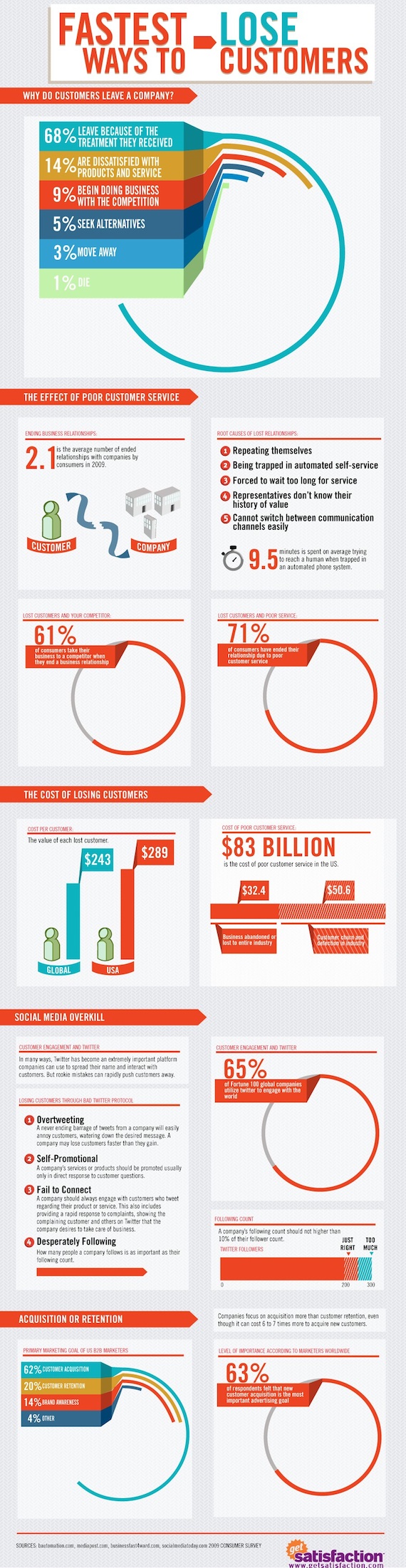
Marketing $$$ on customer acquisition vs customer retention
While there are new social media platforms launched continuously, it increases complexity for product managers to optimize marketing budget for different channels. Small Mid-sized Businesses (SMBs) have started to shift more dollars for customer retention.
http://www.marketingcharts.com/wp/direct/smbs-devoting-more-marketing-dollars-to-customer-acquisition-than-retention-27385/
Indeed, improving customer service can help improve retention, which essentially is a low hanging fruit granted enough attention has been paid. In addition, in today's tough financial times, it becomes even more important to track your customers and provide personalized services. To improve retention in financial services, web analytics softwares can track customers' browsing behavior, providing clues about customers intentions. Hence, providing personalized content and improving customer experience will generate new cross-sell opportunities and improve returns on marketing dollars.
Friday, August 02, 2013
NYT Moves to Video Advertising
With advertising revenue falling 6% during Q2, as reported during last Thursday's earnings call, the New York Times announced that it will be making a push towards video.
With an industry wide advertising slump the move to video isn't surprising. Finding new advertising revenue streams is essential for a company like the NYT and advertisers have expressed significant demand.
Where the NYT will need to be careful is on the frequency of the video ads. Many loyal NYT customers (including myself) already pay to access the content and will potentially be turned away if the videos appear too frequently. Perhaps a model that excludes digital subscribers from seeing too many ads would make sense to maintain the loyal customer base.
http://adage.com/article/media/york-times-invests-video-boost-ad-revenue/243426/
With an industry wide advertising slump the move to video isn't surprising. Finding new advertising revenue streams is essential for a company like the NYT and advertisers have expressed significant demand.
Where the NYT will need to be careful is on the frequency of the video ads. Many loyal NYT customers (including myself) already pay to access the content and will potentially be turned away if the videos appear too frequently. Perhaps a model that excludes digital subscribers from seeing too many ads would make sense to maintain the loyal customer base.
http://adage.com/article/media/york-times-invests-video-boost-ad-revenue/243426/
Thursday, August 01, 2013
Home 3-D printing a game changer
Imagine if you can print you own shower heads, Kitchen stuff like spoons, forks, spatulas etc.... for a much lower price than you can get them in the marketplace. This is going to bring a phenomenal change in the manufacturing industry. How is this going to effect the global economy as US is a big consumer and China is a big producer ? Interesting to see how this will impact our lives. I am excited and looking forward to this technology.
http://whatsnext.blogs.cnn.com/2013/07/31/study-at-home-3-d-printing-could-save-consumers-thousands/?hpt=te_r1
http://whatsnext.blogs.cnn.com/2013/07/31/study-at-home-3-d-printing-could-save-consumers-thousands/?hpt=te_r1
Wednesday, July 31, 2013
Continuing to Innovate
With the innovation of new technology devices (smartphones, tablets, etc) its become an issue for websites and developers to adapt their creations. The problem for developers comes into play when you are view websites from smaller and smaller screen sizes. The dimensions change but the user is still expecting a high level of service. This is the same for companies running ads.
Fortunately for developers, websites with ad revenue models and even the advertisers big brother Google has their back. Google announced today that is has launched its new responsive AdSense unit. The technology giant has built an adaptive code which allows for ads to conform themselves to the renderings your site displays on different devices.
What does this mean for advertisers?
This is reassurance that your ad isn't going to be misconstrued if someone looks information from a smartphone or tablet. They ad will be proportional to the rest of the website. These little innovations don't seem like much but allows Google to continue to print money daily.
How else do you see this type of solution helping advertisers?
Fortunately for developers, websites with ad revenue models and even the advertisers big brother Google has their back. Google announced today that is has launched its new responsive AdSense unit. The technology giant has built an adaptive code which allows for ads to conform themselves to the renderings your site displays on different devices.
What does this mean for advertisers?
This is reassurance that your ad isn't going to be misconstrued if someone looks information from a smartphone or tablet. They ad will be proportional to the rest of the website. These little innovations don't seem like much but allows Google to continue to print money daily.
How else do you see this type of solution helping advertisers?
Tuesday, July 30, 2013
Omnicom & Publicis Merger
Yesterday, Omnicom and Publicis announced their merger to create the largest advertising company in the world- worth up to $35B. Many cried foul as this news broke since the deal would surely create anti-competitive environment for advertising. However, this announcement goes to prove that the web and social advertising has become such a big force that the more traditional advertising firms must adjust their strategy and respond.
It was interesting to read about how quickly in the last few decades, advertising shifted from being creative and artistic to data mining. (As a Mad Men fan, I'm sad to see this change...) Sites such as Google, Facebook, and Yahoo are able to gather and store so much information each consumer and target advertising based on each person's profile and preferences in a much more effective way. I guess we will see if Omnicom and Publicis joining forces can help them ride the wave into the new ad age.
To read more:
http://www.reuters.com/article/2013/07/28/us-publicis-omnicom-idUSBRE96Q01F20130728
It was interesting to read about how quickly in the last few decades, advertising shifted from being creative and artistic to data mining. (As a Mad Men fan, I'm sad to see this change...) Sites such as Google, Facebook, and Yahoo are able to gather and store so much information each consumer and target advertising based on each person's profile and preferences in a much more effective way. I guess we will see if Omnicom and Publicis joining forces can help them ride the wave into the new ad age.
To read more:
http://www.reuters.com/article/2013/07/28/us-publicis-omnicom-idUSBRE96Q01F20130728
The Perils of Email Marketing - LinkedIn Edition
Last night on the Daily Show with John Stewart, John Oliver decided to go after LinkedIn and email marketing.
At the 4:30 mark of the first segment of the clip below, you have John Oliver literally screaming at the TV screen, begging to please unsubscribe him from the LinkedIn email updates. "I don't even know what you do LinkedIn! You seemed to have monitized irritating people!"
It's hilarious, and we all know what he is talking about, because as much as you try to unsubscribe from LinkedIn emails, somehow you keep getting them.
It will be interesting to see if LinkedIn can come up with some sort of clever, viral, social media response or if it will just take the insults or ignore them. Does LinkedIn even have a PR team or a PR firm? We'll find out.
While LinkedIn is the darling of Wall Street social media (The stock is up over 100% since its IPO and in the last year), it still faces risks that every other digital media company faces.
Email marketing can be extremely effective, but if you piss off the wrong person, a person with a voice, your control of the message can go downhill pretty quickly
It's hilarious, and we all know what he is talking about, because as much as you try to unsubscribe from LinkedIn emails, somehow you keep getting them.
It will be interesting to see if LinkedIn can come up with some sort of clever, viral, social media response or if it will just take the insults or ignore them. Does LinkedIn even have a PR team or a PR firm? We'll find out.
While LinkedIn is the darling of Wall Street social media (The stock is up over 100% since its IPO and in the last year), it still faces risks that every other digital media company faces.
Email marketing can be extremely effective, but if you piss off the wrong person, a person with a voice, your control of the message can go downhill pretty quickly
Monday, July 29, 2013
The Internet Never Forgets
Like most people, I was shocked when Anthony Weiner admitted to showing extremely poor judgement in a sexting incident. However, after resignation and rehab; it seemed like he was ready to redeem himself and re-enter the public space, maybe. Then new scandals came out. What is so bizarre about this is the risk and reward of the equation, it is as if the man has a naughty typing fetish. This typing fetish seems to mean more to him than his family, career, or the trust placed in him by his former and potential constituents. Are there support groups for this? What is the payoff? The internet never forgets, and although painful, I think that this will help people to be more honest and accountable. On the other hand, alot of otherwise good people that want to run for public office, might not because of what they posted on Facebook when they were 28. Just sayin'
Urban Airship adds an in-app message center
Urban Airship is a push notification company that allows marketers a way to reach customers on their mobile phones. The new addition allows marketers to send a message to an in-app message center rather than placing a message across the home screen. As the company states in the below excerpt, they don't believe every communication or message is worth disrupting customers. Marketers can also use Urban Airship's GPS functionality to send geo-targeted marketing messages.
I think there is a big opportunity for push notifications and the addition of this in-app message center over the next few quarters and years. Based on trends we're already seeing in the market, it is clear that mobile advertising will grow substantially over the next few years. Push notifications allow for brands and marketers to reach customers who may not be engaged in other post-acquisition methods, such as email. I think the concept of the in-app message center is especially great since it is less invasive and disruptive, and allows the customer to determine when they want to read your marketing message.
Urban airship has already closed almost $50M in funding so venture capitalists are also betting on this technology in the mobile space. I'm excited to see how well this marketing can convert consumers who download apps into paid subscribers.
http://venturebeat.com/2013/07/10/urban-airship-message-center/
“Not every single customer engagement opportunity we believe is worthy of interrupting a consumer’s screen, but there’s times when a brand wants to reach their customers with important communication,” said Brent Hieggelke, Urban Airship’s chief marketing officer, in an interview at our MobileBeat conference in San Francisco.
Marketers can now choose to send a note to their app’s messaging center just as easily as they can already send push messages. The feature will also take advantage of Urban Airship’s Location Messaging functionality, which lets marketers target consumers in specific locations.
I think there is a big opportunity for push notifications and the addition of this in-app message center over the next few quarters and years. Based on trends we're already seeing in the market, it is clear that mobile advertising will grow substantially over the next few years. Push notifications allow for brands and marketers to reach customers who may not be engaged in other post-acquisition methods, such as email. I think the concept of the in-app message center is especially great since it is less invasive and disruptive, and allows the customer to determine when they want to read your marketing message.
Urban airship has already closed almost $50M in funding so venture capitalists are also betting on this technology in the mobile space. I'm excited to see how well this marketing can convert consumers who download apps into paid subscribers.
http://venturebeat.com/2013/07/10/urban-airship-message-center/
“Not every single customer engagement opportunity we believe is worthy of interrupting a consumer’s screen, but there’s times when a brand wants to reach their customers with important communication,” said Brent Hieggelke, Urban Airship’s chief marketing officer, in an interview at our MobileBeat conference in San Francisco.
Marketers can now choose to send a note to their app’s messaging center just as easily as they can already send push messages. The feature will also take advantage of Urban Airship’s Location Messaging functionality, which lets marketers target consumers in specific locations.
In addition to disrupting users less, Hieggelke says the new messaging center can also train users to look in a specific spot for deals.
Digital Marketing is not complicate

Recently just visited a friend of mine. After she get married and move to california (because her husband find a job there), she started to learn making cakes and cookies since she can't work in the state. At the beginning, it is just a thing she does to distract her from boringness. Then she found out she has talent in this. She started to upload photos on her own Facebook and has many great response. Next, she start a fan page and welcome any order from friends.
Those who has own fan page by yourself will now how hard to get fans coming and stay. Even you have ask 1000 friends to like your page, less than 10% will really do so. However, my friend got 7000+ fan in a year. She didn't hire anyone to manage the fan page. By word of mouth and her hard working on both develop new product (new design on the cakes and cookies) and upload/manage the fan page.
Now, if you want to order her work, you have to wait for 2 months. Her marketing spending? 0.

Google Chromecast
I was quite excited upon reading about the launch of Google Chromecast. It's something I've been envisioning and hoping would exist for quite some time and I believe is a better foray into TV than Apple TV. With Chromecast, one will be able to plug a tiny device that fits in the palm of your hand into one of your HDMI ports on your TV, connect to WiFi on your smartphone, tablet, or computer and be able to project media from Netflix, YouTube, Google Play, and even your Chrome Internet browser onto your TV. Over time, it will integrate with additional media formats online as well like HBO Go, Hulu Plus, etc.
Beyond being excited by this because of it's practical applications in my life, I believe that this has powerful implications for the value and size of the video industry and to a lesser extent, the online display industry. One potential barrier for the less tech savvy among us to spending more time on our Internet connected devices when watching online content is the fact that we want to have a better home viewing experience on our TV. By removing the hassle of plugging your laptop into HDMI and making it a simple wireless process that just about anyone can figure out, you will see individuals spending more time online and thus being exposed to advertising via the online channels.
For instance, one can easily watch YouTube and other ad-supported video platforms on their TV. This should mean that more individuals are exposed to online video ads more frequently. This should increase their importance relative to traditional TV advertising via cable. Being able to easily browse non-video content on Chrome should also increase exposure to online display ads.
Finally, I think this will help prompt the emergence of more traditional cable channels like TNT as they realize more and more of their audience is not accessing content via cable. It should, I believe, also generate more ad revenue and visibility for online only video-content channels like Funny or Die. Finally, I see it as removing further barriers to entry for individuals / companies to enter the entertainment industry by creating an online-only distribution channel that is not nearly as expensive as getting your channel onto a cable network.
Source: http://www.google.com/intl/en/chrome/devices/chromecast/#netflix
Beyond being excited by this because of it's practical applications in my life, I believe that this has powerful implications for the value and size of the video industry and to a lesser extent, the online display industry. One potential barrier for the less tech savvy among us to spending more time on our Internet connected devices when watching online content is the fact that we want to have a better home viewing experience on our TV. By removing the hassle of plugging your laptop into HDMI and making it a simple wireless process that just about anyone can figure out, you will see individuals spending more time online and thus being exposed to advertising via the online channels.
For instance, one can easily watch YouTube and other ad-supported video platforms on their TV. This should mean that more individuals are exposed to online video ads more frequently. This should increase their importance relative to traditional TV advertising via cable. Being able to easily browse non-video content on Chrome should also increase exposure to online display ads.
Finally, I think this will help prompt the emergence of more traditional cable channels like TNT as they realize more and more of their audience is not accessing content via cable. It should, I believe, also generate more ad revenue and visibility for online only video-content channels like Funny or Die. Finally, I see it as removing further barriers to entry for individuals / companies to enter the entertainment industry by creating an online-only distribution channel that is not nearly as expensive as getting your channel onto a cable network.
Source: http://www.google.com/intl/en/chrome/devices/chromecast/#netflix
Pinterest ad potential
We have recently discussed Pinterest as part of our Social media lecture. Pinterest has been one of the fastest growing social media platforms during current year. The article below discusses a great potential for Pinterest Ad Business that they are not yet involved in. Since people actually "pin" things they like on this social media platform, Pinterest might be able to monetize by actually selling "pins" to related retailers so they can directly approach the user again with a product they already expressed interest in. This would be huge for retailers and would definitely pay off as they would not be marketing unwanted products to many users. Read on for more details:
http://adage.com/article/digital/tracking-users-pinterest-lays-groundwork-ad-business/243340/
http://adage.com/article/digital/tracking-users-pinterest-lays-groundwork-ad-business/243340/
Big money?
I and my wife
usually see blogs introducing restaurant before we go to the restaurant. It’s
useful for me and wife because we can assess the restraint menu, food and
service in advance. Also, we check TripAdvisor and Yelp to see other people’s
opinions and pictures but we definitely rely on the personal blog comments
because they keep writing blogs and avoid writing false information, I believe.
Some of those who
write blogs make money utilizing affiliate advertisement on their blogs. If we
clicked the ad and bought some products via their blogs, they could get some
points or money. If there is some ad for the restaurant, I tend to click this
because I’m searching for good and valuable restaurant at that time. Generally,
those who write blogs of food and restaurant utilize food and restaurant
affiliate marketing on their blogs. I believe that this target segment is
reasonable and effective.
However, my friend
who utilizes ad and makes money said, “maybe more effective than other blog but
cannot make big money via affiliate marketing.” Effective marketing doesn’t
always make big money.
Propertyshark - another DISINTERMEDIATION real estate website
On the topic of real estate disintermediation, I want to share a powerful, one-stop-shop real estate research tools for making NYC and NYS home buying decisions.
The site offers detail property report available for virtually every property in NYC, find NYC foreclosed homes and REOs (bank-owned properties), run comparable.
This data is based on public and proprietary sources updated regularly so savvy buyers and real estate professional can enjoy transparency and accuracy to evaluate real estate. The site will provide you property information such as year built, square footage, permits, recent sales, loan history, ownership, zoning (for development, toxic sites, FEMA flood zones, NYC school district and crime maps) and property taxes.
Propertyshark celebrates its 10th anniversary and has more than 1 million registered members.
With that said, try it for yourself.
http://www.propertyshark.com/mason/
Sunday, July 28, 2013
What makes content go viral?
The holy grail for digital marketers, create content that goes viral. But what makes content goes viral? This question has been researched, debated and pondered from the beginning of time (well, at least a few years now). Here is an interesting article that I came across that tries to offer some suggestions on what makes content go viral.
I may not agree with everything mentioned in this article, however, it does offer some interesting perspectives.
So after you read my blog entry, and use it to create the next gangnam style video that goes viral, please make sure to give me a shout out on the Ellen Degeneres Show.
ESPN3 | WatchESPN
As another example of the digital media outlets that were discussed in class yesterday, ESPN launched an on-demand video website in 2005, initially branded as ESPN360.com, and over time this initiative has transformed and rebranded into ESPN3 and incorporated into the WatchESPN platform that also carries simulcasts of the cable distributed mainstream ESPN channels. Now, ESPN3 in addition to the mainstream US sports like baseball, basketball etc., carries live streams of other niche sports (at least considered niche in the US) for which there is a significant total audience, just not concentrated in one particular regional market to be of interest to cable service providers.
Cricket, a popular international sport, was previously hard to watch in the US. In the past, you could view it either through websites that had questionable distribution rights (allegedly!), or through overpriced specialized websites like www.willow.tv. However, in either case, the quality of streams provided were less than ideal. However, with WatchESPN, the writer gets to enjoy his beloved cricket games every weekend (much to the dislike of his bride) in stunning HD quality. Good work ESPN!
Facebook Back in the Game
After reading the Facebook Effect, I was convinced of the long term value created by Facebook. Their ubiquity across the Internet landscape, made all the more powerful by Facebook Connect and the Open Graph API, coupled with their incomparable data makes them an invaluable tool for marketing. Post IPO, the concern seems to have been that Facebook would not adopt successfully to mobile. As the most recent earning show, these concerns are unfounded. Facebook now receives half of its advertising revenue from mobile ads, having shown an ability to adapt. The stock was up 20% on the earnings news-- still a far cry from it's $38 IPO price, but a positive sign nonetheless!
Subscribe to:
Posts (Atom)